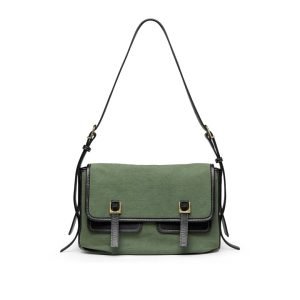
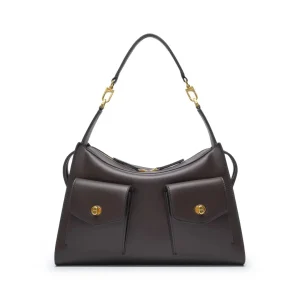
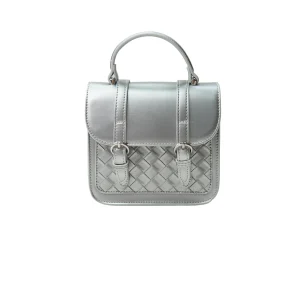
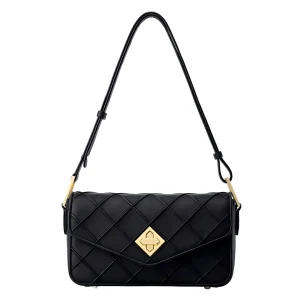
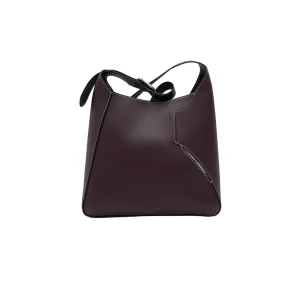
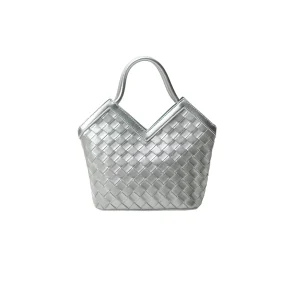
Celine Bag Prices now outline a particularly clear path from a $1,000 leather envelope to new handbags priced above $4,000. The September 2026 US assortment places fresh Le 17, Le 16 Side-to-Side, Record Box, Soft Triomphe, canvas, and small-leather-goods offers in closely spaced bands. For B2B range planners, that public retail map is useful because it shows how price can guide product discovery without serving as a shortcut for estimating factory cost.
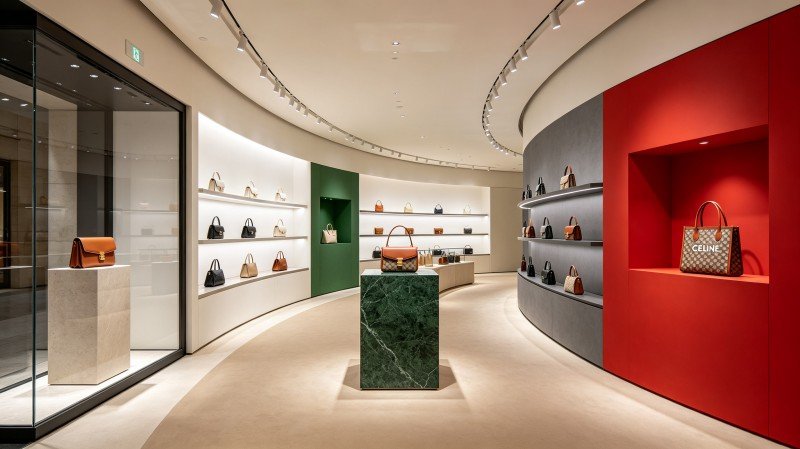
This retail and merchandising analysis uses eight observable signals reviewed on September 8, 2026: a new $1,000 Envelope; a $1,250 online-exclusive Little Bucket; related canvas pieces between $1,100 and $1,750; new shoppers at $1,950 and $2,100; Soft Triomphe entries from $2,600 to $3,450; the $3,000 Record Box; Le 17 versions at $3,550 and $3,650; and the new Le 16 Side-to-Side at $4,100. Availability and prices can change, so every figure below is a dated US-site snapshot rather than a permanent claim.
Celine Bag Prices Work as Retail Navigation
A price ladder is often described as good, better, and best. That language is too simple for luxury accessories. Customers do not necessarily move upward because a larger number means a universally better object. They move between product jobs, materials, recognizable lines, novelty, availability, and the kind of commitment they are ready to make. Celine Bag Prices are instructive because adjacent figures frequently lead to meaningfully different categories rather than a mechanical increase in size.
The $1,000 Envelope sits within small leather goods, not the main handbag category. At $1,250, the online-exclusive Little Bucket enters mini-bag territory. Around $2,000, a shopper can access a larger canvas format. At $2,600 to $2,700, the Soft Triomphe Little Halfmoon presents leather handbag options. The $3,000 Record Box and $3,450 Soft Triomphe Bucket occupy a central luxury commitment zone. Le 17 arrives at $3,550 or $3,650, while the Le 16 Side-to-Side reaches $4,100.
The important merchandising move is the spacing. Each step is close enough to invite comparison but distinct enough to change the product proposition. Celine Bag Prices therefore act like signposts. A shopper who arrives for one product may discover a nearby alternative with more capacity, a different material, a newer line, or a different selling channel. The website does not need to explain a formal ladder; category labels, “new” markers, online exclusivity, prices, and related-product modules make the ladder visible.
Viewed as navigation, Celine Bag Prices organize decisions before they communicate hierarchy.
The $1,000 Entry Point Is a Product, Not a Discount
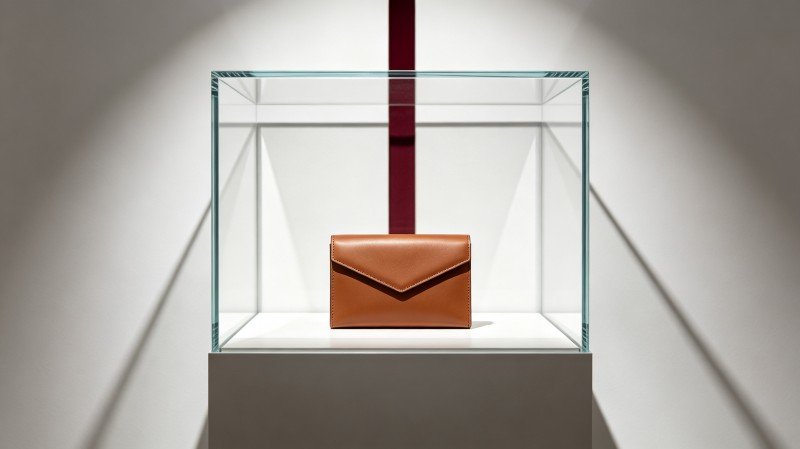
The new Envelope in shiny calfskin was listed at $1,000 in black, with other colors visible in the current catalog. Its role is significant because it establishes an entry point through a complete leather object rather than a reduced version of a larger handbag. That distinction protects category clarity: a pouch can be judged by its own use, finish, and gift potential.
For a customer, $1,000 is still a substantial luxury purchase. For merchandising analysis, however, it sits at the opening of the current Celine Bag Prices map. The item can attract searches around Celine pouches, small leather goods, gifts, and compact organization while also introducing shoppers to the wider bag environment. Its “new” status adds a reason to revisit the site even for customers who are not prepared to buy a full-size handbag.
Entry products work best when they are not treated as leftovers. They need a clear object role, satisfying presentation, and enough visual authority to stand alone. Private-label brands can apply that principle without copying any Celine expression: build an original small leather good around one precise use, then decide whether it introduces the brand, supports gifting, or completes an existing bag collection. The retail price should reflect the brand’s own materials, margin plan, channel costs, and positioning.
At this threshold, Celine Bag Prices show how novelty can support entry without using promotional discount language.
Online Exclusivity Changes the Meaning of $1,250
The Little Bucket in Triomphe canvas was marked online exclusive at $1,250 in a red, black, and white combination. On the same page, Celine’s recommendation module showed a Small Note Book at $1,250, a Trio at $1,450, a Micro Sailor at $1,450, a Duo Wallet on Strap at $1,750, and a Clutch on Chain at $1,100. These neighboring prices create a compact digital discovery zone.
Exclusivity adds a channel attribute without automatically requiring the highest price. In the current Celine Bag Prices structure, the online-exclusive marker makes the Little Bucket special through access location, while the price remains close to related mini and compact products. That creates a different reason to buy: not “most expensive,” but “available here, in this configuration, through this channel.”
This zone also demonstrates how a narrow price interval can contain different carrying jobs. A clutch on chain, notebook-like bag, small bucket, trio format, and wallet on strap are not interchangeable even when their prices sit within several hundred dollars. The shopper can compare function without jumping immediately to the core leather handbag tier. For retailers, that comparison can reduce the feeling of a single hard threshold.
Here, Celine Bag Prices support horizontal choice among uses rather than a forced climb toward one product.
A private-label brand should not imitate an exclusivity claim it cannot operationally support. Inventory must truly be reserved for the stated channel, product photography must answer fit and capacity questions, and returns must be planned. The transferable lesson from Celine Bag Prices is that channel can help define a tier, but only when the product remains useful and the promise is accurate.
The $1,950–$2,100 Bridge Broadens the Basket
Celine’s current catalog listed a new Soft Shopper in canvas and calfskin at $1,950 and a new Large Flat Shopper in canvas at $2,100. This interval is a bridge between compact accessories and higher-priced leather handbags. It changes the value conversation from intimacy and gifting to usable surface area and everyday volume, yet it remains well below the $3,000 center of the new leather offer.
Celine Bag Prices in this bridge zone show why assortment planners should not use one straight line between size and price. The $2,100 shopper can be physically larger than products priced above it. Its role is to offer volume through a particular category and material proposition, not to compete on craftsmanship claims that the public page does not make. Price architecture can therefore accommodate a large accessible format beside smaller, more expensive leather bags.
The bridge tier also creates a logical second-purchase or first-handbag route. A customer introduced through a pouch or mini product sees a larger carrying solution without doubling the price. Another shopper may enter directly through tote searches and then browse upward into leather lines. The tier serves two traffic directions at once: entry customers moving toward bags and practical-bag customers moving toward the house.
That two-way route makes Celine Bag Prices useful for both acquisition and category discovery analysis.
For original assortment planning, a bridge product should resolve a genuine gap. It might offer workday volume, travel utility, or a seasonal fabrication that supports a different ticket. The price cannot be copied from Celine Bag Prices; it must be built from the brand’s own landed cost, wholesale structure, retailer margin, duties, returns allowance, marketing, and desired gross margin.
Soft Triomphe Builds a $2,600–$3,450 Core Zone
The current women’s catalog marked several Soft Triomphe items as new. A Little Halfmoon in suede appeared at $2,600, while a shiny-lambskin version was listed at $2,700. Soft Triomphe Buckets in shiny lambskin appeared at $3,450. These figures create a core zone with an $850 internal span, enough room for material, product type, and capacity to change while the line name maintains continuity.
The $100 difference between the two Little Halfmoon listings is especially useful. It makes surface choice visible without creating a dramatic price leap. The bucket then moves substantially higher, giving the customer a different capacity and category decision. Celine Bag Prices here operate on two axes: a close comparison between material expressions and a wider comparison between product roles.
This is different from offering many colors at one price. Color breadth can increase choice inside a product, but a merchandising ladder needs reasons to move between products. A suede halfmoon, lambskin halfmoon, and lambskin bucket create a sequence of touch, shape, and volume decisions. A customer may remain within the named line while changing the intended use.
Within one named line, Celine Bag Prices distinguish a surface comparison from a broader product-role upgrade.
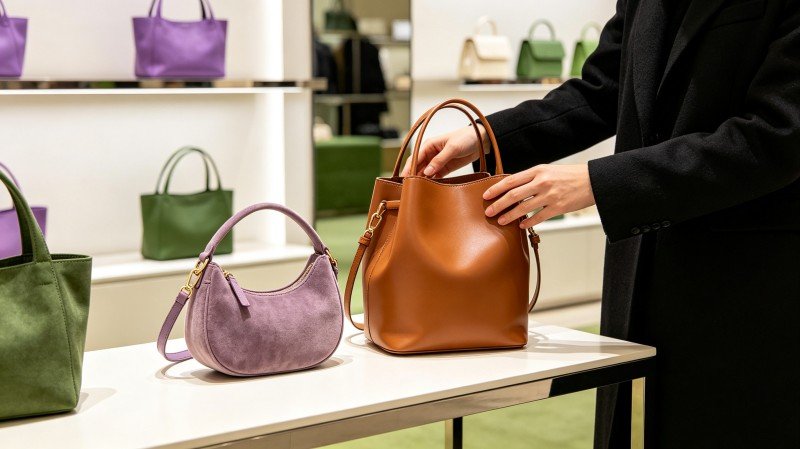
For B2B teams, the lesson is to establish the role of each step before approving multiple materials. If a new material adds cost but does not change the customer’s understanding, the SKU may add operational burden without adding merchandising value. Celine Bag Prices demonstrate how small and large price gaps can coexist when each gap corresponds to a legible choice.
The $3,000 Record Box Holds the Center
The new Record Box in supple smooth calfskin was listed at $3,000 in burnt red. That exact position matters. It sits $300 above the shiny-lambskin Little Halfmoon, $450 below the Soft Triomphe Bucket, and $550 below the grained-calfskin Le 17. It can therefore function as a central comparison point rather than an isolated statement.
A price center gives the assortment gravity. Shoppers below it can see a manageable next step; shoppers above it can see what added spend changes. In the current Celine Bag Prices map, $3,000 is not the median of every bag on the site, and it should not be described as such. It is simply a useful midpoint within the specific new-product signals examined here.
Burnt red also helps the product carry novelty without relying only on its price. A new item in a distinctive color can attract editorial attention and search interest, while the surrounding black, purple, white, camel, and other visible options give the wider catalog continuity. Color functions as discovery support, not proof of popularity. No sales or demand claim is necessary to understand the merchandising role.
At the center, Celine Bag Prices become easier to interpret when color and newness provide additional context.
Independent brands can use a center product as the clearest expression of their own assortment promise. It should not be a compromise assembled from average specifications. It should state the target customer, primary occasion, and expected quality level plainly. The relevant insight from Celine Bag Prices is positional: a center is valuable because the products around it make comparison meaningful.
Le 17 Separates Surface Without Splitting the Story
The new Le 17 in shiny calfskin was listed at $3,650 in black. The official details gave dimensions of 10.8 by 5.9 by 5.5 inches, cross-body and shoulder carry, an adjustable strap, a turn-lock closure, four inner compartments, one zipped compartment, one snap-button compartment, and one inner flat pocket. A grained-calfskin version appeared in the related module at $3,550.
That $100 separation is a clean merchandising signal. The main product story remains Le 17, while the surface and price offer a reason to compare. Celine Bag Prices do not imply that every finish needs its own large premium. A narrow step can be enough when the product name, scale, organization, and carry modes remain constant.
The Le 17 page also turns product information into value evidence. Dimensions, carry methods, strap range, closure, and internal organization help a shopper understand what the price buys in use. This is especially important near the upper center of the ladder, where a customer may compare products that look similarly compact in photographs. Specific details reduce ambiguity without exposing confidential production information.
Detailed product facts give Celine Bag Prices practical meaning beyond a number shown beside an image.
For an original private-label line, the appropriate lesson is documentation. If two surface options differ in price, explain the legitimate product difference and keep the base experience consistent. Do not borrow the Le 17’s protected closure, proportions, layout, or identity. Use Celine Bag Prices only as public evidence that a small retail increment can clarify surface choice when the family story is already strong.
At $4,100, Size Stops Being a Reliable Price Shortcut
The new Le 16 Side-to-Side in satinated calfskin was listed at $4,100 in ultra red. The recommendation module on that page also showed a Mini 16 in satinated calfskin at the same $4,100 price, Small 16 options at $4,650 and $5,300, and a crocodile version at $32,300. Those related listings make one point unmistakable: physical size alone does not explain the ticket.
Within Celine Bag Prices, two products with “Side-to-Side” and “Mini” naming can share a price while presenting different propositions. Higher entries in the recommendation set may change material or product execution. The crocodile listing occupies an exceptional material tier far outside the main range discussed in this article. It should not distort planning for a commercial leather assortment, but it shows how broad the house’s price environment can become.
Retail teams should therefore avoid a size-first navigation rule. A customer may understand a horizontal daily bag, compact top-handle bag, and exotic-material piece through different motivations. On product pages, related items should be selected to clarify those alternatives, not merely to show the next larger size. Price is one comparison field among use, category, material, availability, and line identity.
At the statement end, Celine Bag Prices demonstrate why related-product context matters more than size order.
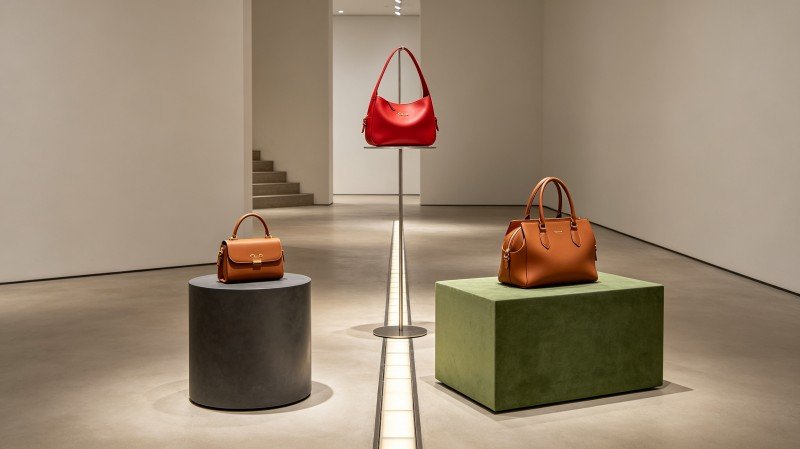
For independent brands, this is a warning against formula pricing. Doubling dimensions does not double material use in a predictable way, and retail positioning involves more than material area. Yet the opposite shortcut is equally risky: a small bag cannot justify a premium merely because another luxury brand charges one. Celine Bag Prices are evidence of Celine’s public retail architecture, not a transferable price card.
Fall 2026 Context Makes the Ladder Feel Wearable
Vogue Runway’s Fall 2026 Celine review, published March 7, 2026, described Michael Rider’s third Celine outing through the idea of “building out a life in clothes.” The review emphasized an expensive-looking but relatable wardrobe. That context matters because a price ladder is more persuasive when products appear to belong to different moments in one life rather than to unrelated merchandising experiments.
The new-product mix supports that reading at retail. An envelope can serve a compact or gifting occasion. A canvas bucket or chain piece addresses a lighter commitment. Shoppers provide everyday volume. Soft leather bags occupy the core. Record Box and Le 17 create distinct central choices. Le 16 Side-to-Side carries the customer toward a higher statement tier. Celine Bag Prices make these roles discoverable without requiring every customer to follow the same route.
This article does not claim that runway styling directly caused any price or product decision. The connection is interpretive: a wardrobe-led public message and a broad current retail ladder both prioritize use across different situations. That alignment is valuable for private-label brands because it reminds teams to connect price bands to customer occasions rather than abstract prestige labels.
In this context, Celine Bag Prices help translate wardrobe breadth into a readable retail journey.
How Private-Label Teams Should Build Their Own Price Bands
A private-label range should begin with its own economics. Calculate target retail, wholesale price where applicable, landed cost ceiling, duty, freight, packaging, payment fees, markdown allowance, returns, retailer margin, marketing, and required gross margin. Do not take a visible luxury price and work backward using an assumed multiplier. Celine Bag Prices include brand equity, channel strategy, product context, and commercial decisions that an outside observer cannot decompose.
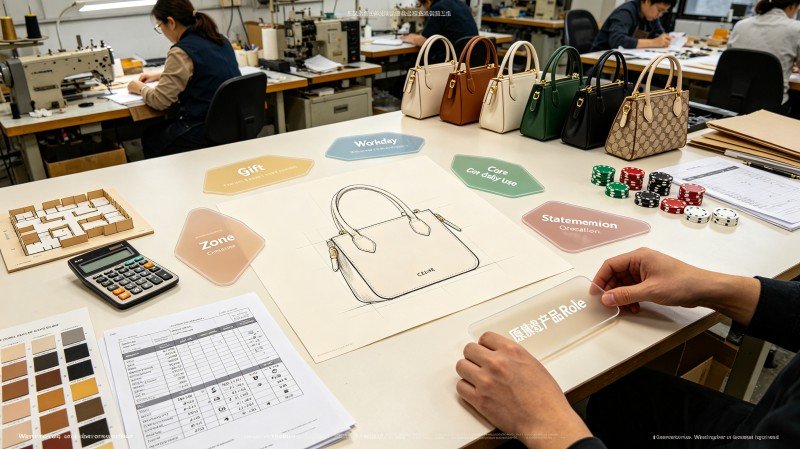
Next, assign every band a customer job. An entry band may introduce workmanship through a wallet, pouch, or compact crossbody. A bridge band may add volume or seasonal material. The core band should express the brand most clearly. A statement band may support richer construction, limited availability, or a distinct occasion. A private-label bag manufacturing service can quote more meaningfully when each proposed item has a target price and a defined role.
Then test the distance between bands. If the customer gains nothing clear by spending 15 percent more, the higher SKU may struggle to explain itself. If the jump is too large, the range may lose customers between entry and core. Use product-page mockups to compare the names, images, dimensions, materials, capacity statements, and prices side by side before approving samples. This exercise treats Celine Bag Prices as a case study in navigation, never as a template.
Finally, confirm manufacturability at the intended volume. Different price bands may require different materials, hardware, packaging, inspection levels, or minimum order quantities. Complexity can spread quickly when every band introduces new components. An original custom handbag range should share invisible efficiencies where possible while preserving clear customer-facing differences.
Sourcing Questions for a Defensible Retail Ladder
- What customer job belongs exclusively to each proposed price band?
- Which visible product difference explains the step from entry to bridge and from core to statement?
- Are retail, wholesale, landed-cost, returns, and markdown assumptions documented separately?
- Does an online-exclusive SKU have dedicated inventory, photography, and fulfillment support?
- Can shared components reduce complexity without making adjacent products feel repetitive?
- Which product should act as the range center, and what alternatives should appear beside it online?
- Have all logos, signature motifs, protected hardware, and brand-identifying designs been excluded from the original brief?
These questions convert the public Celine Bag Prices evidence into responsible planning. They do not require a factory to know why Celine selected any particular ticket. Instead, they ask an independent brand to make its own price logic visible, financially supported, operationally realistic, and connected to customer use.
What the 2026 Celine Bag Prices Map Reveals
The current ladder works because it offers more than a low, middle, and high number. The $1,000 Envelope introduces a complete leather object. The $1,100 to $1,750 zone offers compact canvas and chain-carried alternatives. Shoppers bridge toward the main handbag offer near $2,000. Soft Triomphe creates a broad core. Record Box holds a useful center. Le 17 separates surfaces with a narrow increment. Le 16 Side-to-Side reaches $4,100 while showing that size is not a sufficient pricing explanation.
For retailers and emerging brands, Celine Bag Prices demonstrate that a range can guide discovery through adjacent but distinct decisions. The most useful question is not “How can we charge the same?” It is “What changes for our customer at each step, and can our economics support that promise?” Answering that question produces a stronger assortment than copying a luxury ticket or filling arbitrary gaps.
Dongguan Junhao Handbag Co., Ltd. does not claim any relationship with Celine and does not offer reproduction of its brand-identifying elements. Public Celine Bag Prices can inform independent retail analysis, but every private-label product must use original proportions, construction, hardware, graphics, naming, and identity.
Retail-range CTA: Prepare your target customer, channel plan, retail and wholesale assumptions, intended price bands, volume forecast, and original product concepts, then send your RFQ for an assortment feasibility and sampling discussion.
This article is an independent educational analysis. It is not affiliated with Celine. We do not produce counterfeit or replica goods, and we do not reproduce protected logos, trademarks, patterns, proprietary designs, hardware, silhouettes, or brand-identifying elements.