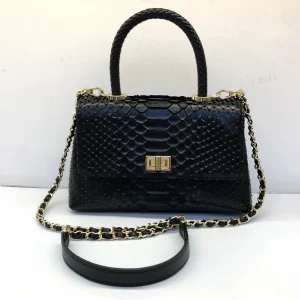
Chloé folk craft makes provenance as important as surface beauty. Winter 2026 brings traditional costume, folkloric technique, embroidery, knitted thread, printed motifs and talismanic detail into the house’s current creative conversation. For sourcing teams, the useful factory question is how visible handwork can become an original, documented product language without borrowing protected Chloé expression or unexamined cultural material.
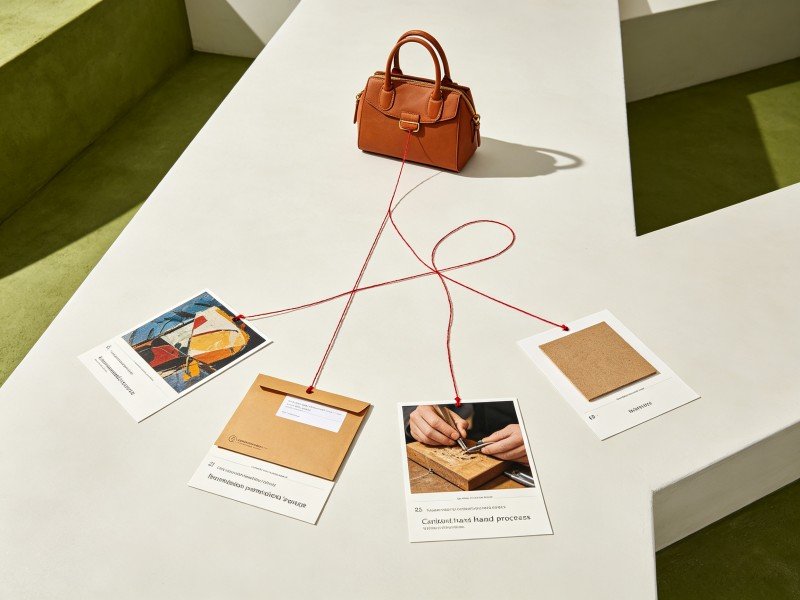
This analysis uses Chloé’s official Winter 2026 show and store pages as public evidence. The official behind-the-scenes page identifies the season as The Devotion Collection, created under Chemena Kamali and revealed at Paris Fashion Week. Product names and US prices cited below were observed on September 15, 2026; they are a retail snapshot, may change, and do not reveal demand, margin, production volume or confidential manufacturing arrangements.
Why Chloé Folk Craft Is a Provenance Question
Chloé’s official language frames Winter 2026 around humanity, empathy and devotion. It points to traditional costume and folkloric craft, but it does not present craft as a generic texture bank. Embroidery, knitted thread and printed motif are described as evidence of the maker’s hand, while symbolic and talismanic details connect objects with community stories, beliefs, rituals and techniques. That framing gives Chloé folk craft an ethical dimension: a surface can carry authorship and memory as well as color.
For an editorial reader, the immediate attraction may be rich tactility. For a buyer, however, provenance changes the questions that precede any purchase order. Who originated the motif? Is it contemporary work, archival material, licensed art or a traditional cultural expression? Who has authority to approve commercial use? Can the maker be named? Can the production method scale without erasing the qualities that made it meaningful? A beautiful sample is not enough when its source cannot be explained.
This is where Chloé folk craft differs from a vague “bohemian” mood. A mood can be imitated through loose references; provenance requires a chain of evidence. The official show narrative emphasizes community, story and technique, so the transferable lesson is to begin with accountable relationships. An original brand can commission an artist, work with a represented artisan group, license a documented archive, or build a new abstract vocabulary from its own research. It should not lift recognizable motifs from a runway image or treat living cultural expression as public-domain ornament.
Provenance also protects the quality of the narrative. When a brand knows the source of a stitch language, symbol or material treatment, product copy can be specific without inventing romance. Dates, locations, collaborators, permissions and process records become verifiable evidence. Chloé folk craft therefore suggests a demanding but commercially useful principle: the story attached to handwork should be able to survive the same scrutiny as the physical product.
The Devotion Collection Makes the Hand Visible
The official Winter 2026 text says surfaces reveal rather than conceal the human hand. That is a precise design proposition. Industrial perfection usually suppresses variation; visible handwork allows rhythm, pressure, density and small irregularities to remain legible. Chloé folk craft uses that visibility to make the object feel inhabited by time and attention rather than merely finished.
Within Chloé folk craft, visible authorship is not the same as uncontrolled variation. A repeated embroidered element can retain changes in tension and spacing while still respecting a defined field, color family and attachment strength. Knitted thread may show a maker’s cadence while meeting snag and abrasion requirements. A printed motif can preserve the grain of an original drawing while controlling registration and colorfastness. The important distinction is between variation that communicates process and inconsistency that compromises function.
The phrase “maker’s hand” also creates a responsibility for attribution. If the commercial narrative celebrates human work, sourcing records should not reduce that work to an unnamed operation. Chloé folk craft invites buyers to ask whether maker contribution is acknowledged in the product story, contract and approval trail. The answer may differ by project, privacy obligation and production model, but authorship should be considered intentionally rather than erased by default.
For original handbag development, this principle can influence more than decoration. Hand-turned edges, individually placed knots, painted components, woven panels and irregularly layered fibers can all create evidence of touch. Yet each technique needs a measurable boundary. The design team should define where expressive variation is welcome, where symmetry matters, and which zones carry load or interact with hardware. Craft character becomes more credible when it is paired with technical clarity.
Irregularity Needs Authorship, Not Random Defects
Chloé’s show notes describe unique irregularities as part of what makes garments feel human. In a sourcing context, that idea needs translation. A buyer cannot simply write “handmade, irregular finish accepted” because the phrase gives neither the maker nor the quality team a usable standard. Chloé folk craft is most instructive when irregularity is treated as designed range, not an exemption from inspection.
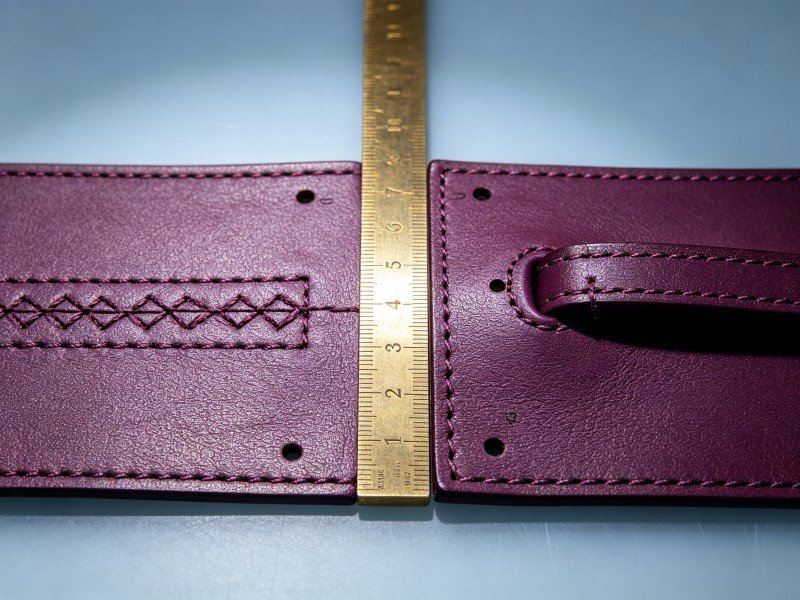
A practical Chloé folk craft interpretation can separate three zones. The expressive zone includes stitch rhythm, brush texture, knot placement or tonal movement where controlled difference is desirable. The alignment zone covers seams, closures, strap anchors and edges where position affects appearance or use. The performance zone covers load-bearing construction, abrasion exposure, color transfer and component security. Variation may be broad in the first zone and narrow in the other two.
Approval samples should show the permitted range rather than one ideal object. A lower-bound sample, target sample and upper-bound sample can communicate acceptable density, scale or color movement more clearly than adjectives. Chloé folk craft points toward this kind of evidence because its aesthetic value depends on the viewer recognizing real work. If every unit looks mechanically identical, the story may feel hollow; if every unit behaves differently, the product becomes unreliable.
Authorship matters here because variation has a cause. A named technique, tool and sequence can explain why two marks differ. Random scratches, loose ends, weak adhesion and misaligned closures cannot gain legitimacy merely by being called artisanal. The goal is not to romanticize defects. It is to preserve intentional traces of process while keeping usability, safety and durability non-negotiable.
Embroidery, Knitted Thread and Print Carry Different Risks
The official collection description groups several expressive techniques, but they do not create the same sourcing problem. Embroidery adds thread, punctures a substrate and concentrates tension. Knitted thread creates loops that can stretch, catch and relax. Print transfers an image through a repeatable color process. Reading Chloé folk craft responsibly means resisting the temptation to specify all three as interchangeable “folk detail.”
Embroidery begins with ownership of the artwork and digitization file. Stitch count, direction, underlay, backing and needle selection influence hand, weight and puckering. On a handbag panel, the decorative field should be tested after reinforcement and construction because a flat embroidered swatch may behave differently once folded around a gusset. Metallic or thick threads can abrade nearby leather, while dense stitching can weaken a soft base if the needle perforations cluster too tightly.
Knitted or looped thread asks different questions. The development team needs to define yarn composition, twist, recovery, fuzzing, snag resistance and the method used to secure ends. If a textile element crosses an opening or handle zone, repeated contact may change its shape. Chloé folk craft highlights the appeal of tactile irregularity, but a private-label brief should still specify how much elongation is acceptable and how repair or replacement will be handled.
Print moves risk toward artwork rights, color control and repeat placement. A motif can be original yet still fail because scale changes unpredictably between sample and production or because important elements disappear into seams. The team should approve the master artwork, color standard, substrate, print method, repeat dimensions and placement rules together. It should also document whether an artwork license covers the intended territories, product categories, quantities and campaign usage.
These distinctions make Chloé folk craft useful to B2B readers. The design language may feel unified on a runway, but the factory evidence must remain technique-specific. A sourcing team that preserves this distinction can budget appropriate sampling, testing and approval time without flattening every handmade element into the same procurement line.
The Tulip Minaudière Turns Motif into Object
The official Winter 2026 store showed the Souvenir Treasures Tulip minaudière as a runway product at an observed US price of $12,000. Its product page describes brass and enameled resin, a hand-painted floral motif and a long chain strap with links of different sizes and textures. The colour was listed as Multicolor Pink. These are public product facts, not evidence of how or where Chloé manufactures the piece.
This object concentrates several themes in Chloé folk craft. The motif is not only printed on a flat panel; flower, painted surface, hard shell and chain become one narrative object. The material combination also makes hand painting unusually exposed. Brush transitions, enamel behavior, edge coverage and surface reflection can be read from multiple angles. Small variation may make the object feel singular, but weak adhesion or inconsistent closure alignment would still impair use.
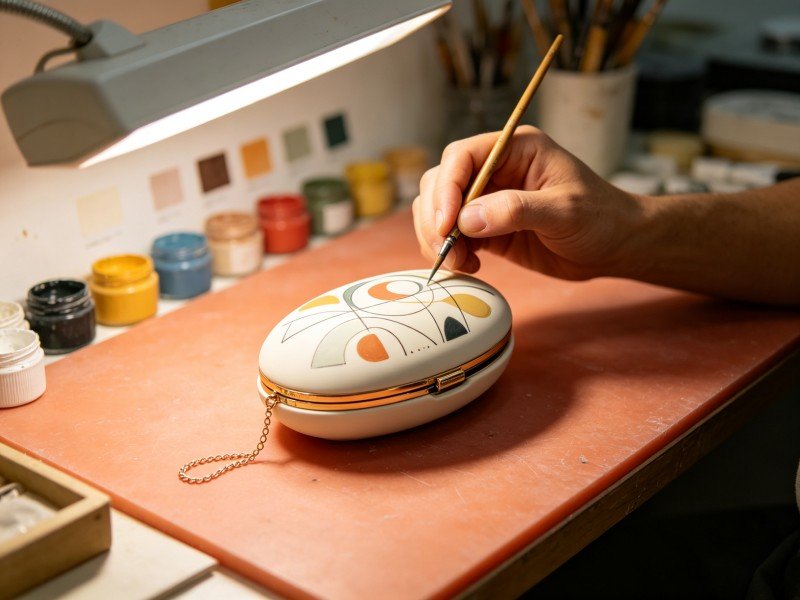
The commercial lesson from Chloé folk craft is not to reproduce a tulip form, Chloé hardware or the protected expression of this product. It is to recognize that a motif-led evening object needs one coherent ownership trail. Shape authorship, surface artwork, component design, chain construction and packaging must be independently cleared and technically compatible. Chloé folk craft shows how quickly a decorative idea can become the entire product architecture.
The same official store page made other Winter 2026 signals visible: a Chloé Folk silk crêpe bandeau scarf at $605, a Chloé Wild medallion belt at $1,190 and a Chloé Bloomcraft pendant necklace at $990, alongside leather bags such as the Paddington in suede at $2,990 and the Small Marcie Foulard hobo at $3,090. The page listed 265 products and displayed 24 in the first visible batch on the observation date. This breadth suggests a collection narrative moving across accessories and materials, but it does not establish consumer demand or sales performance.
For analysis, that cross-category movement matters. A symbol can appear as a textile graphic, a small object, a painted surface or a piece of jewelry, yet rights and production controls change each time. Chloé folk craft is therefore better understood as a system of relationships than as one bag trend. The source story must stay coherent while each category receives its own engineering and permission review.
Talismanic Details Need Cultural Distance and Permission
Calling a detail talismanic is not neutral. Talismans can belong to belief systems, rituals, communities and protected cultural knowledge. The official Winter 2026 narrative openly connects symbolic details with stories and beliefs, which makes context central to Chloé folk craft. A sourcing brief should not translate that signal into a request for “tribal,” “ethnic” or “mystical” decoration without identifying a specific, lawful and respectful source.
For Chloé folk craft analysis, cultural distance is a useful decision tool. The closer a proposed symbol is to a living sacred object, community-owned pattern, ceremonial garment or identifiable heritage tradition, the stronger the need for consultation and permission. A team should ask whether use is appropriate at all, not only whether an image can be found online. Public visibility does not equal commercial availability, and museum access does not automatically confer reproduction rights.
One safer route is to commission a contemporary artist to create a new symbolic vocabulary under a clear agreement. Another is to build abstract marks from the brand’s own story, geography or material process. When a collaboration draws on a community tradition, participation should begin before the visual concept is fixed. Chloé folk craft reminds buyers that respect cannot be added as a caption after design approval.
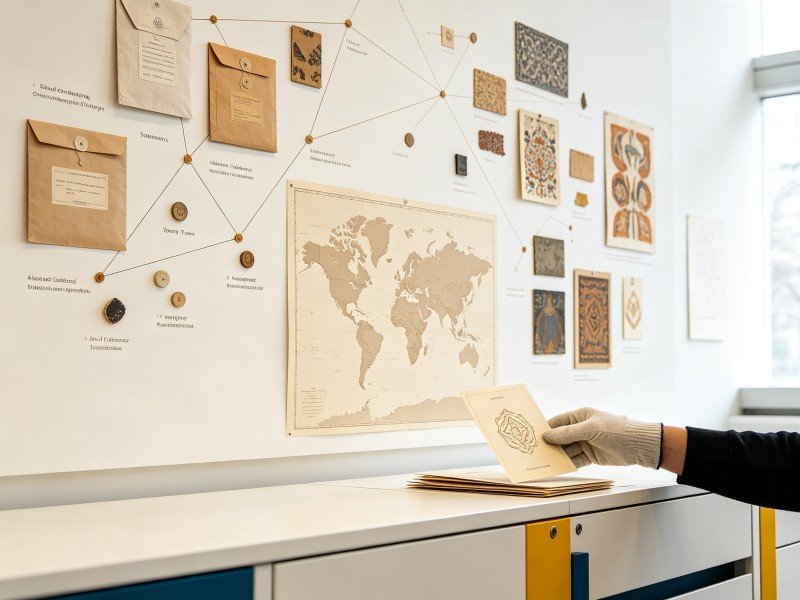
Contracts should capture more than a one-time fee. Relevant fields may include authorship, moral rights treatment, attribution language, permitted adaptations, product categories, channels, territories, term, quantity, approval stages and archival use. The exact agreement requires qualified legal advice in the relevant jurisdictions. The sourcing team should preserve the signed record beside the artwork version so later color or scale changes do not lose their permission context.
Traceability Should Connect Story to Evidence
The official product page for the Tulip minaudière visibly includes a traceability section. Without relying on unseen details from that accordion, its presence is itself relevant: current luxury product presentation increasingly gives traceability a named place. Chloé folk craft strengthens the case for a record that follows the story from source through production rather than ending with a generic country-of-origin statement.
A useful Chloé folk craft sourcing record can connect six evidence groups: artwork origin, permission or commission, material batch, maker or workshop stage, approved variation and final product lot. Not every detail belongs on the public page, but the internal chain should support whatever the brand says externally. If product copy names hand painting, for example, the evidence should show the approved technique and where that stage occurred. If a collaboration is credited, the approved attribution should match the agreement.
Chloé folk craft also exposes a common gap between storytelling and operations. Marketing may receive a poetic narrative while quality teams receive only measurements. The two records need a bridge. A motif version number, process code or approval image can connect a story claim to the production instruction without turning the consumer page into a factory dossier.
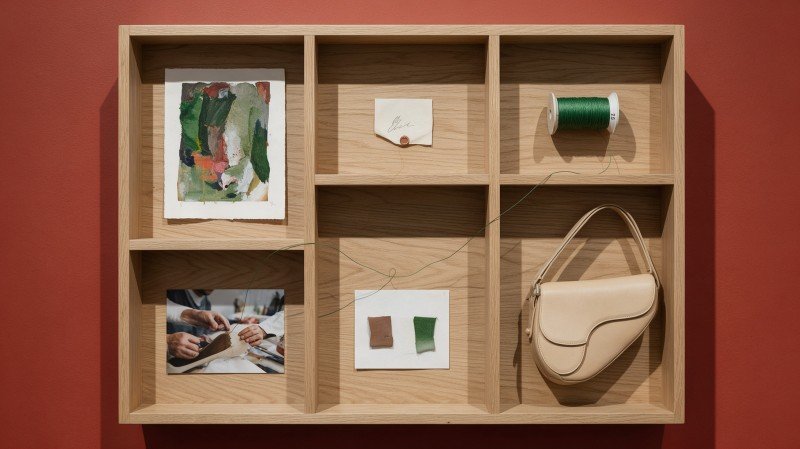
Evidence should also survive handoffs. If artwork moves from an artist to a design agency, then to a material printer and assembly factory, the latest approved file and usage boundaries must travel with it. A beautiful first sample does not prove that the correct artwork version reached bulk production. Chloé folk craft makes version control part of creative integrity, not merely administration.
How to Build a Rights-Cleared Chloé Folk Craft Brief
The following five-step method translates the public design lesson into an original private-label process. It does not attempt to recreate Chloé products. Instead, it uses Chloé folk craft as a prompt to document authorship, cultural context, expressive variation and technical performance before production.
- Define an independent narrative source. Write the product story before collecting visual references. Identify a brand-owned memory, commissioned contemporary idea, material process or authorized collaboration that can support new artwork. Record excluded references, including protected brand identifiers and any cultural material that lacks clear authority.
- Clear artwork and cultural permissions. Confirm who owns each motif, what adaptations are permitted, how the creator will be credited and where the work may be sold or promoted. For living cultural expressions, seek competent community consultation and legal guidance before development proceeds.
- Match each technique to evidence. Create separate requirements for embroidery, knitted thread, print, painting, weaving or other hand processes. Specify material, sequence, placement, attachment, color controls and the records that must accompany each approval.
- Approve a variation envelope. Use physical samples or calibrated images to show the acceptable lower, target and upper bounds for density, spacing, texture and tonal movement. Keep structural, safety and functional tolerances separate from aesthetic variation.
- Link claims to production records. Assign artwork versions, batch references and stage approvals that can support final product copy. Archive the relevant permission, maker, material and inspection evidence so the story remains verifiable after launch.
This workflow is intentionally front-loaded. Chloé folk craft demonstrates that story, symbol and process can become inseparable in the finished object; resolving ownership after a sample is complete creates avoidable redesign and reputational risk. Early documentation gives creators, buyers and factories a shared boundary within which expressive work can develop.
Private Label Sourcing Needs a Different Kind of Sample
A conventional handbag sample proves proportion, function and construction. A craft-led sample must also prove permission, process and variation. Buyers using a private label bag manufacturing service should therefore request an approval set, not one immaculate showroom unit. The set can include the target piece, boundary samples, artwork record, material confirmation and a short statement of what remains handmade.
Our custom handbag sampling process can turn an independently owned brief into prototypes and measurable checkpoints. For craft-led leather bodies, teams may also review custom leather bag development options, while project-specific questions can be sent through the RFQ contact page. These services support original development; they do not imply any relationship with Chloé.
Costing should separate repeatable operations from variable hand stages. An embroidered panel priced only by area may hide major differences in stitch count and density. A painted component may require drying, inspection and rework allowances. A woven element can introduce material yield and maker-time variation. Chloé folk craft is commercially useful precisely because it encourages buyers to see human input as a defined resource rather than free decorative ambiguity.
Capacity planning also needs honest limits. A process may be scalable through training, jigs and approved boundaries, but its value may depend on remaining genuinely hand-executed. A responsible plan defines the number of qualified makers, realistic throughput, rework route and lead-time buffer. It does not promise unlimited volume while selling uniqueness.
Buyer Questions Before Approval
- Can every motif be traced to an owned, licensed, commissioned or appropriately authorized source?
- Does the cultural review explain why the proposed commercial use is appropriate, not merely legal?
- Are aesthetic irregularities shown through boundary samples rather than described with vague adjectives?
- Do embroidery, knit, print, paint and weaving each have technique-specific tests and records?
- Can public claims about handwork, collaboration or material origin be supported by retained evidence?
- Does the private-label sourcing plan preserve creator attribution and artwork version control through every supplier handoff?
These questions keep Chloé folk craft analysis anchored in decisions a buyer can verify. They also prevent a familiar failure: using cultural language to sell a product while leaving the people, permissions and processes behind that language undocumented.
A Responsible 2026 Lesson for Original Brands
Winter 2026 presents craft as devotion, human trace and shared memory. The official narrative, the visible range of symbolic accessories and the concentrated Tulip minaudière example all make Chloé folk craft more than a surface trend. Its strongest B2B lesson is that expressive richness requires a deeper evidence structure: source, rights, attribution, material, maker, approved variation and final claim must stay connected.
That structure can improve creativity rather than constrain it. When ownership and cultural boundaries are clear, designers can explore technique with confidence. When acceptable variation is visible, makers can preserve character without guessing. When production records support product copy, marketing can speak precisely. Chloé folk craft shows why the most convincing handmade story is not the loudest one; it is the one whose relationships remain intact from idea to object.
For an original handbag project, begin with the narrative source and rights record before requesting decorative samples. Then select one or two techniques whose material behavior supports the bag’s function, document the variation envelope, and build traceability around the claims customers will actually see. This is the responsible route from current cultural observation to an independent product language.
CTA: To develop a rights-cleared craft concept with original artwork, technique-specific sampling and documented approval boundaries, send a project brief to Dongguan Junhao Handbag Co., Ltd. Include the artwork ownership status, intended material, target quantity, market, launch window and the handmade characteristics that must remain visible.
This article is an independent educational analysis. It is not affiliated with Chloé. We do not produce counterfeit or replica goods, and we do not reproduce protected logos, trademarks, patterns, proprietary designs, hardware, silhouettes, or brand-identifying elements.