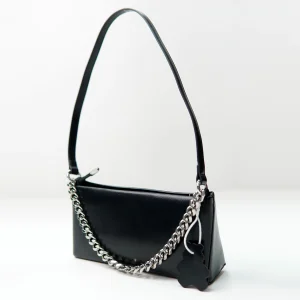
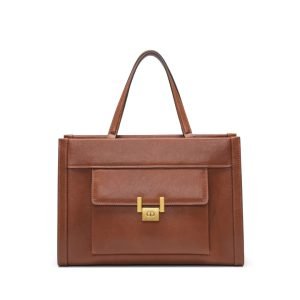
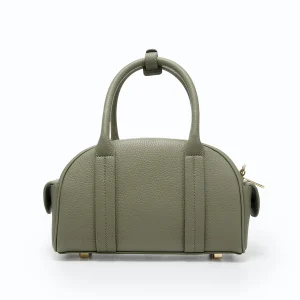
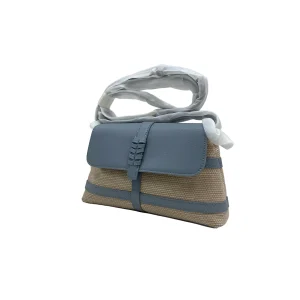
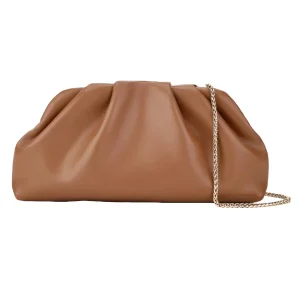
Lancaster Toro Ivy offers a precise 2026 case study in how two related leather bags can serve different retail jobs instead of becoming redundant size variants. On September 30, Lancaster’s official pages presented a small and a larger Toro Ivy satchel with shared materials and colors but different dimensions, weights, strap ranges, pocket systems, carry modes, and prices. For B2B handbag teams, that contrast turns a current product hotspot into a practical question: what must change when a private-label line moves from one size to the next?
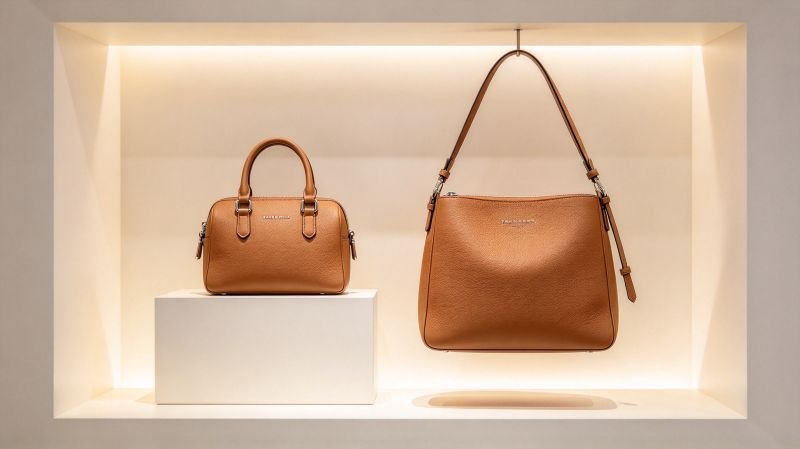
The answer is not simply “make the second bag larger.” The official small Lancaster Toro Ivy product page lists a 24 × 12 × 7 cm body, a 22–94 cm adjustable strap, a 450 g weight, one simple interior pocket, and shoulder, crossbody, or hand carry at €255. The larger Lancaster Toro Ivy product page lists 31 × 15 × 8 cm, a 43–94 cm strap, 675 g, one simple and one zipped interior pocket, shoulder or crossbody carry, and a €295 price. Both pages state that the bag can hold a device up to seven inches.
Both versions also share marked-grain taurillon leather, a microfiber lining, polished silver-tone metal, a magnetic flap, and nine published colors: ecru, rope, camel, taupe, elephant gray, brown, burgundy, dark blue, and black. Those common elements establish the family. The differences establish the reason to buy one size, the other, or potentially both. This article treats Lancaster Toro Ivy as public retail evidence, not as a manufacturing specification or a design to reproduce.
Lancaster Toro Ivy Starts With Two Distinct Retail Jobs
The small and large Lancaster Toro Ivy formats appear closely related, but their official descriptions assign them different behaviors. The small version can be carried by hand as well as on the shoulder or crossbody. Its 22 cm minimum strap supports that shorter carry position. The larger version begins at 43 cm and is described for shoulder or crossbody use. That is a 21 cm difference at the shortest setting, even though both straps reach the same 94 cm maximum.
This makes Lancaster Toro Ivy a stronger merchandising example than a simple small/large naming convention. The small item can participate in compact day, short-trip, and hand-carry styling. The larger item commits more clearly to hands-free wear and a longer strap geometry. A shopper is not asked to choose only how much space is needed; the shopper is choosing how the product should sit and move.
| Published attribute | Small Toro Ivy | Large Toro Ivy | Retail implication |
|---|---|---|---|
| Dimensions | 24 × 12 × 7 cm | 31 × 15 × 8 cm | More horizontal presence with only a modest depth increase |
| Weight | 450 g | 675 g | The larger choice adds 225 g before contents |
| Strap range | 22–94 cm | 43–94 cm | The shorter setting creates a different carry role |
| Interior pockets | One simple pocket | One simple and one zipped pocket | The larger size adds organization, not only space |
| Published price | €255 | €295 | A €40 step must feel meaningful to the shopper |
A good product comparison makes these differences legible before the customer opens a specifications panel. On-body photography should show the strap minimum and maximum on comparable figures. Interior photography should reveal the added zipped pocket. Side views should show that the larger body gains only one centimeter of depth while becoming seven centimeters longer. In a Lancaster Toro Ivy comparison, the facts already contain the selling story; merchandising should not reduce that story to color and price.
The Numbers Show an Uneven Scale-Up
For Lancaster Toro Ivy, moving from 24 to 31 cm in length is an increase of about 29%. Height rises from 12 to 15 cm, or 25%. Depth rises from 7 to 8 cm, only about 14%. Weight rises from 450 to 675 g, a full 50%. Price rises from €255 to €295, about 16%. These percentages are calculations from Lancaster’s published figures, not claims about internal design intent.
The uneven changes matter. If every dimension increased by the same percentage, the second bag would behave like a geometrically enlarged object. Instead, the Lancaster Toro Ivy pair becomes wider and taller much faster than it becomes deeper. The larger body should therefore read as more horizontally present rather than dramatically bulkier from the side. That distinction can make the upgrade feel useful without turning the product into a different category.
Weight tells another story. The larger format adds 225 g before the user places anything inside. The increase may reflect more leather, a larger lining, reinforcement, a longer opening, additional pocket components, or other construction differences, but the public page does not disclose a bill of materials. It would be irresponsible to assign the weight to one hidden cause. The defensible observation is that the customer accepts 50% more empty weight for a 16% retail-price increase and a changed organization system.
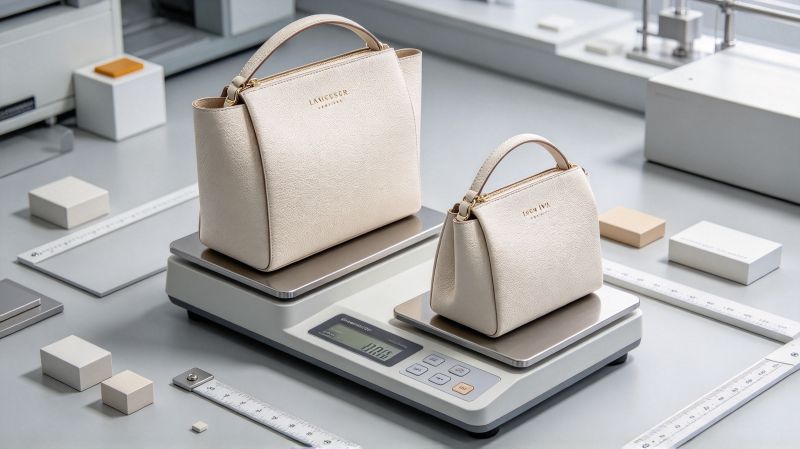
For retailers, this creates a useful conversation about perceived value. A customer who prioritizes a lighter bag may prefer the small format even if the larger option is affordable. A customer who needs organization may see the zipped pocket as more important than the added length. The Lancaster Toro Ivy ladder therefore should not be merchandised as good and better. It is closer to light versatility versus broader daily organization.
For original development, teams should build a ratio sheet before creating the second size. Record percentage changes in exterior dimensions, empty weight, opening length, strap minimum, pocket count, target contents, and price. If the weight grows faster than the utility, revise the construction. If the price grows faster than visible benefit, strengthen the role. The purpose is not to match the Lancaster Toro Ivy ratios, but to learn from the clarity of comparing them.
The Strap Minimum Rewrites the Carry Story
Both official Lancaster Toro Ivy pages publish a 94 cm maximum strap length. At the long end, the two versions can support a crossbody proposition. The important difference appears at the short end: 22 cm for the small bag and 43 cm for the larger one. That 21 cm gap is not a minor fit tolerance. It changes how the product can be handled, styled, photographed, and described.
The small Lancaster Toro Ivy is explicitly listed for shoulder, crossbody, and hand carry. The large version lists shoulder and crossbody only. A shorter adjustable setting can draw the small body nearer to the hand and torso, while its lower 450 g empty weight makes short carry more plausible. The larger bag’s 675 g weight and longer minimum setting reinforce a hands-free role before contents are added.
This is a retail lesson because “convertible” is often treated as an automatic benefit. Extra carry modes are valuable only when they remain comfortable and visually resolved. A small body can tolerate a short setting that would cause a larger body to crowd the arm. A large bag may be more coherent when it commits to the shoulder and crossbody positions. The Lancaster Toro Ivy pair shows that removing a nominal carry mode can make a size difference more honest.
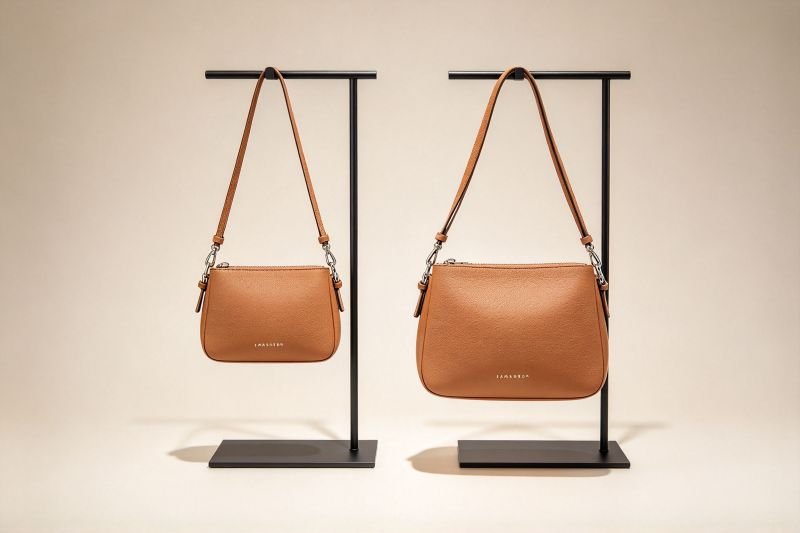
Private-label briefs should define strap range through body positions rather than one number. State where the upper edge should sit at the shortest shoulder setting, where the base should sit crossbody at the longest setting, and how the tail should be controlled throughout adjustment. Test the bag with the intended empty and loaded weight. A strap that works on an empty sample can slip, twist, or dig into clothing after the product is packed.
Photography should match the specification. If the small version claims hand carry, show the hand relationship clearly without hiding the strap. If the large version is a crossbody product, show the body at a realistic filled weight. A Lancaster Toro Ivy search visitor comparing sizes needs evidence of position and scale, not two isolated front views rendered to the same apparent dimensions.
One Device Claim, Two Pocket Systems
Both pages state that the product can hold a device up to seven inches. That shared statement is commercially interesting because the larger format does not claim a larger device category. A customer upgrading from the small to the large Lancaster Toro Ivy is therefore not necessarily buying a bigger screen envelope. The upgrade case must come from surrounding space, organization, carry comfort, styling, or another use difference.
The pocket systems support that interpretation. The small version lists one simple interior pocket. The larger version lists one simple pocket plus one zipped pocket. The zipped compartment creates a security tier inside the broader body. It can separate a small valuable item from the general space, while the open pocket preserves quick access. The change is modest, but it is functionally more meaningful than adding an undifferentiated patch pocket.
The Lancaster Toro Ivy comparison also warns against inferring capacity from an exterior box. Multiplying length, height, and depth would produce a theoretical rectangular envelope, not usable interior volume. Curves, seam turns, leather thickness, flap geometry, lining, pocket assemblies, and the actual opening reduce capacity. The two official seven-inch statements are more defensible than an invented liter figure.

For an original size ladder, start with a content map. The small style might prioritize phone, card case, keys, and glasses. The larger style might add a compact notebook, charger, or cosmetic pouch while protecting one item in a zipped zone. Those are hypothetical development examples, not statements about Lancaster’s intended packing list. Each brand should define its own objects, test the opening, and document the loaded silhouette.
This approach helps ecommerce copy stay accurate. Rather than saying the large bag is simply “more spacious,” describe the additional organization and the customer situation it supports. Rather than implying the small bag is compromised, emphasize lower empty weight and an additional hand-carry position. The Lancaster Toro Ivy pair demonstrates how factual product fields can produce differentiated copy without relying on unsupported lifestyle claims.
Shared Materials Hold the Family Together
The two Lancaster Toro Ivy pages repeat the same material language: taurillon leather with a pronounced grain, microfiber lining, polished silver-tone metal, and a magnetic flap closure. The description presents taurillon as both resistant and supple, with a pigmented finish intended to support color retention. These are Lancaster’s public product statements; they should not be treated as universal properties of every leather sold under the taurillon name.
For the Lancaster Toro Ivy family, shared material and finish allow size-specific changes to remain recognizable. The shopper can compare length, weight, strap position, and pockets without also decoding a different surface or metal tone. The magnetic flap provides another common interaction. Consistency in the closure experience can make the pair feel related even when the larger body adds a zipped interior zone.
Material consistency across sizes still requires separate sampling. A longer front panel can reveal grain variation that is less visible on a smaller cut. A larger flap can respond differently to leather temper and reinforcement. The added weight can change how the strap anchors and top edge behave. Using the same leather article does not guarantee that the two finished sizes will drape, recover, or photograph identically.
An original brand working with custom leather bag development should approve the leather on finished-size panels, not only on hand swatches. Review grain scale, pigment coverage, bend response, edge finish, and color under the lighting used for ecommerce. Test the magnetic closure through the actual leather and reinforcement stack. These checks translate the broad Lancaster Toro Ivy lesson into independent quality decisions without adopting protected shapes or details.
Nine Colors Multiply Choice and Inventory Exposure
Both product pages expose nine color options: ecru, rope, camel, taupe, elephant gray, brown, burgundy, dark blue, and black. The palette moves from pale neutrals through warm earth tones to dark continuity colors. Because the small and large Lancaster Toro Ivy share the same listed palette, a retailer can present a coherent family wall or let customers move between sizes without abandoning a preferred color.
That breadth also creates inventory exposure. Nine colors across two sizes produce eighteen possible size-color combinations before any regional or channel edit. Equal depth across all eighteen would assume that size demand and color demand behave identically, which is unlikely for most private-label launches. A pale shade may attract attention in the small hand-carry format while a dark shade may carry more replenishment value in the larger everyday role.

The Lancaster Toro Ivy case suggests a disciplined buying method: separate palette availability from initial order depth. A brand can approve a broad color library while launching a smaller core. Black, dark blue, or brown might support continuity; burgundy may carry seasonal emphasis; ecru or rope may provide a lighter visual entry. Those role assignments are examples, not claims about Lancaster sales.
Retail photography should keep color comparison honest. Taurillon grain, a pigmented finish, and polished silver-tone metal react differently under hard and soft light. The same lighting and white balance should be used across the size pair when customers are expected to compare shades. If one size is photographed warmer, a shared camel or taupe can appear like a different SKU even when the physical standard matches.
For sourcing teams, the color plan should include minimums, lot tolerances, replacement rules, and a decision about whether small and large panels may be cut from the same hide selection. The objective is not to reproduce Lancaster’s palette. It is to understand how the Lancaster Toro Ivy family uses a common color field to reduce the cognitive distance between two different retail jobs.
A €40 Upgrade Must Be Visible
The published step from €255 to €295 is €40, or about 16% of the small bag’s price. At the same time, the larger format adds 29% in length, 25% in height, 14% in depth, 50% in empty weight, and one zipped pocket. Retail price cannot be reverse-engineered into factory cost, margin, or material consumption. It can, however, show how the customer-facing ladder is framed.
The Lancaster Toro Ivy upgrade is narrow enough to encourage comparison rather than place the two products in separate price worlds. A customer who is already comfortable at €255 may view €40 as a reachable step for greater presence and organization. The smaller version retains an advantage through lower weight and an extra carry mode. Each product keeps a reason to exist, which reduces the risk that one becomes an obviously inferior option.
This is where product-page design matters. The larger bag’s zipped pocket, 31 cm length, and 675 g weight should be discoverable before checkout. The small bag’s 22 cm strap minimum and hand-carry option should be equally visible. If a retailer hides these facts behind generic descriptions, the price difference becomes harder to interpret. Lancaster Toro Ivy shows that transparent specifications can do more selling work than an unsupported claim of premium versatility.
Private-label teams should set price ladders after role ladders. First define the customer job, target contents, carry positions, organization, and weight tolerance of each size. Then cost the materials and construction needed to deliver those differences. A private-label bag manufacturing service can quote a meaningful pair only when both products have distinct acceptance criteria.
Private-Label Size-Ladder Scorecard
A buyer can use the Lancaster Toro Ivy comparison as a prompt for a proprietary scorecard. The scorecard should evaluate difference, not resemblance. Each proposed size needs evidence that it adds a customer choice while preserving the commissioning brand’s own design language.
- Role clarity: Can the sales team explain each size in one sentence without using only “small” and “large”?
- Dimension logic: Do length, height, and depth change according to intended contents rather than one automatic scale factor?
- Weight discipline: Is the increase in empty weight justified by useful space, organization, stability, or durability?
- Carry distinction: Does the strap range support the promised shoulder, crossbody, or hand positions at realistic load?
- Organization: Does the larger format introduce a meaningful pocket or security change instead of empty volume?
- Price legibility: Can a shopper see why the higher-priced size costs more while the entry size retains an advantage?
- Color depth: Are launch quantities assigned by size-color role rather than spread equally across every combination?
- Originality: Are outline, panel map, hardware, artwork, naming, strap expression, and closure language independently created?
This scorecard should be applied before both sizes reach final sampling. If the second size cannot earn a distinct customer job, a brand may be better served by improving one product. If the size roles are strong, the custom handbag sampling process should test them separately. Approving the small sample does not automatically approve the larger pattern, leather behavior, strap geometry, or loaded silhouette.
Evidence should follow the merchandising claim. Record empty weight, target load, opening clearance, strap positions, pocket access, closure force, recovery after packing, and ecommerce dimensions for each size. Use identical photography angles for comparison, then add role-specific views. This turns the Lancaster Toro Ivy observation into a decision system rather than a visual reference.
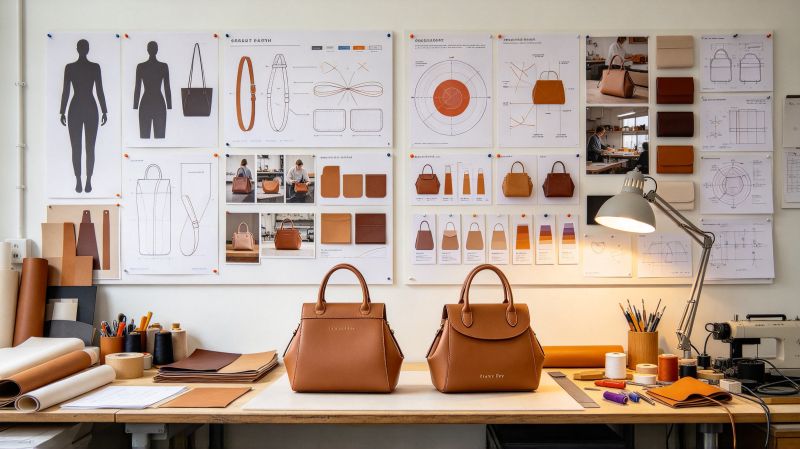
Compliance and ownership remain separate gates. Public dimensions, prices, and product descriptions can inform market analysis, but they do not grant rights to brand-identifying design expression. An original project should begin from its own customer, drawings, proportions, materials, closure system, and identity. Teams using luxury handbag OEM manufacturing capabilities should document those original inputs and obtain appropriate legal review for their sales markets.
What the Toro Ivy Pair Proves
The current Lancaster Toro Ivy pair makes a concise retail argument. Shared taurillon leather, microfiber lining, polished silver-tone metal, magnetic closure, nine-color availability, and a 94 cm maximum strap establish continuity. Different dimensions, empty weights, minimum strap lengths, carry modes, pocket systems, and prices establish choice.
The most revealing facts are not the largest numbers. Both sizes retain the same seven-inch device statement, so the upgrade is not framed around a new device class. Depth grows only one centimeter, while length and weight move much more. The small format adds hand carry through a 22 cm minimum setting; the larger format adds a zipped pocket and commits to shoulder or crossbody use. Lancaster Toro Ivy therefore demonstrates that a size ladder can change behavior without abandoning family recognition.
For an original brand, the goal is to create its own equally clear logic. Decide what the customer gains, what remains familiar, and what the lighter or lower-priced option still does better. Then align dimensions, weight, strap range, pockets, color depth, price, photography, and product copy around those decisions. That is the commercial value of the Lancaster Toro Ivy study.
Dongguan Junhao Handbag Co., Ltd. can review original two-size concepts, material behavior, strap geometry, pocket hierarchy, weight targets, and size-specific sampling criteria. Prepare your own sketches, intended contents, target positions, sales market, quantities, and price assumptions, then send your two-size handbag RFQ for a development review.
This article is an independent educational analysis. It is not affiliated with Lancaster. We do not produce counterfeit or replica goods, and we do not reproduce protected logos, trademarks, patterns, proprietary designs, hardware, silhouettes, or brand-identifying elements.