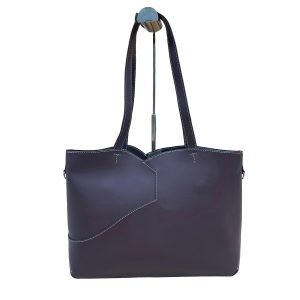
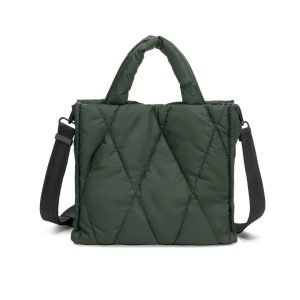
But if the edges are soft, the metallic finish feels harsh, or the foil does not transfer evenly onto the leather, that small detail can change the impression of the entire product.
This is why we do not select hot stamping foil simply by looking at the color of the roll.
We test it on the actual leather first.
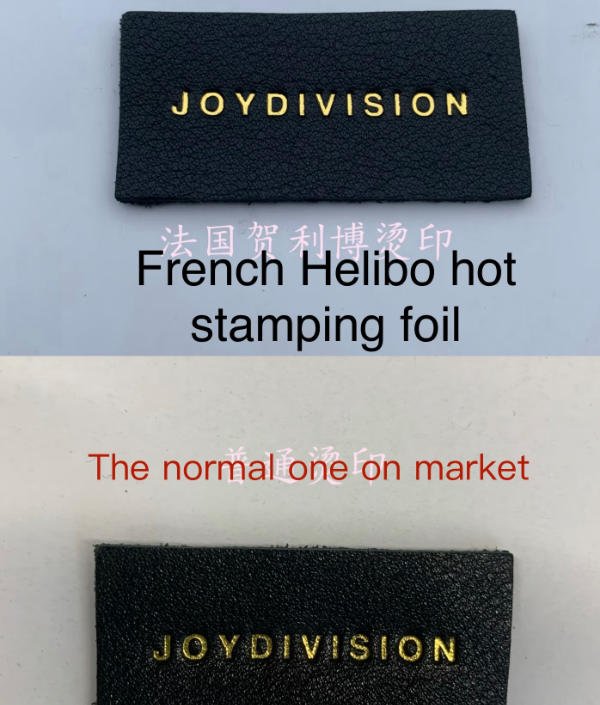
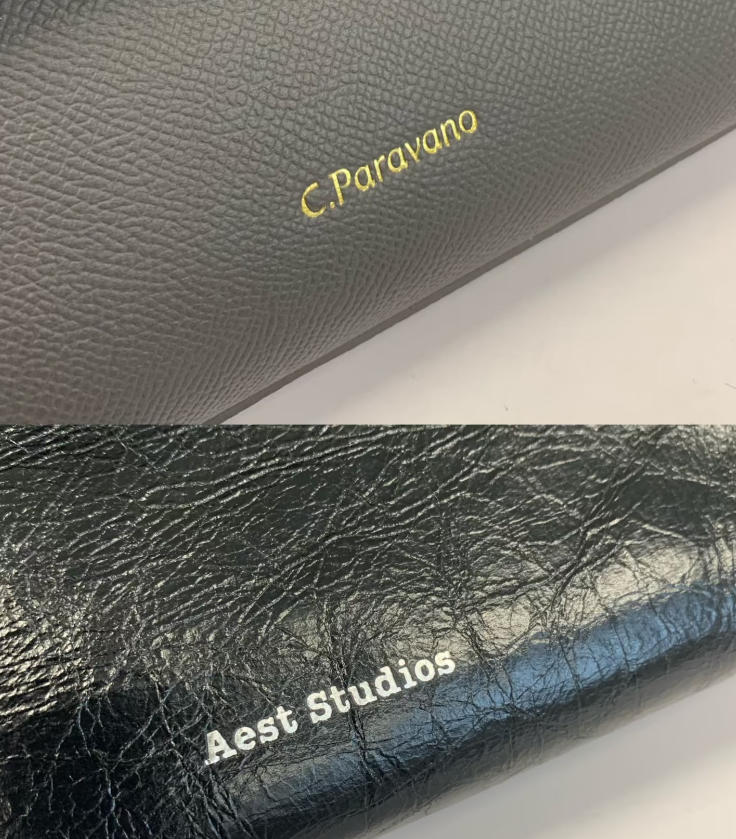
The Difference Becomes Clear Once the Foil Is on Leather
Two gold hot stamping foils can look almost identical while they are still on the roll.
Once they are transferred onto leather, the difference can become much easier to see.
We look closely at the outline of each letter, the consistency of the metallic surface, how the foil sits across the leather grain, and whether small details remain clean after stamping.
With fine lettering, even slight spreading, incomplete transfer or rough edges can make a logo feel less precise.
The comparison above is exactly why we prefer to evaluate actual stamped samples rather than approving a foil only from a color chart.
What Makes a Hot-Stamped Logo Production-Ready?
We do not approve a foil simply because the metallic color looks attractive.
The final decision is based on how the foil, leather, die and stamping parameters perform together.
| Evaluation Point | Result That Needs Adjustment | Production-Approved Result |
|---|---|---|
| Logo Edge Definition | Letter edges appear soft, spread slightly or lose definition. | Clean, controlled edges that remain sharp at the intended logo size. |
| Fine Lettering | Thin strokes or narrow spaces begin to fill in or transfer incompletely. | Fine strokes, spacing and small characters remain clearly recognizable. |
| Metallic Tone | The gold or silver appears overly bright, harsh or disconnected from the leather. | The metallic finish works naturally with the leather color and intended brand aesthetic. |
| Transfer Coverage | Visible gaps, weak areas or inconsistent transfer across the leather grain. | Even metallic coverage across the required logo area. |
| Leather Grain Response | Deep grain interrupts the logo or creates an uneven appearance. | Foil and stamping settings are adjusted to suit the actual leather surface. |
| Surface Appearance | The stamped area appears rough, overly compressed or visually inconsistent with the surrounding leather. | The logo sits cleanly on the surface while preserving the intended appearance of the leather. |
| Adhesion | The transfer shows weak or inconsistent bonding during testing. | The selected foil and process settings provide stable transfer on the approved material. |
| Repeatability | One test looks good, but the appearance changes noticeably between repeated samples. | The approved appearance can be reproduced consistently across multiple pieces. |
The best foil is not necessarily the brightest or the most expensive one. It is the one that produces the right result consistently on the actual material selected for the bag.
Gold Is Not Just One Gold
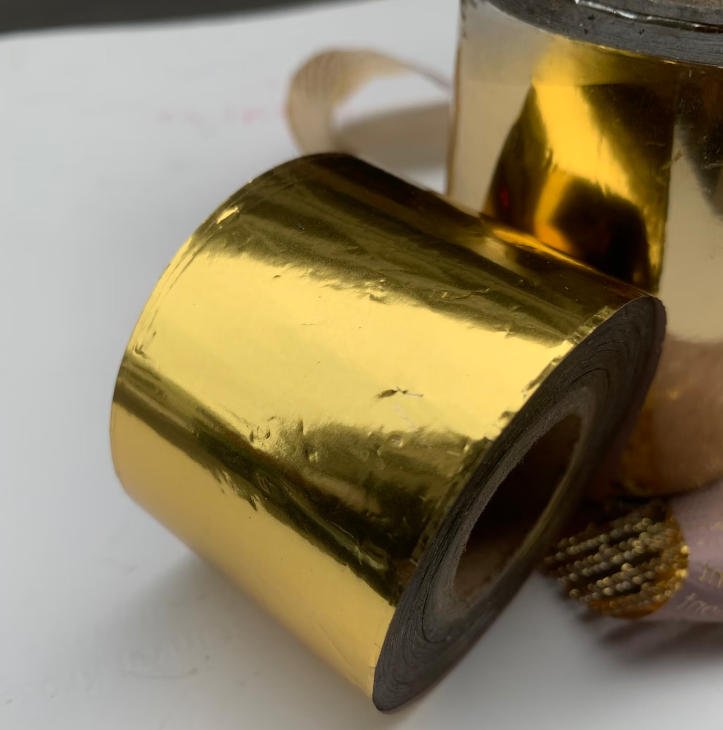
Metallic foils can create very different visual effects.
One gold may be bright and highly reflective. Another may feel warmer, softer or more restrained. Silver can range from a strong mirror-like finish to a quieter metallic appearance.
The right choice depends on the leather, the brand direction, the size of the logo and the visual effect the client wants to achieve.
A foil that looks beautiful on a white sample card may feel completely different once it is transferred onto black pebbled leather, smooth calf leather, PU or another bag material.
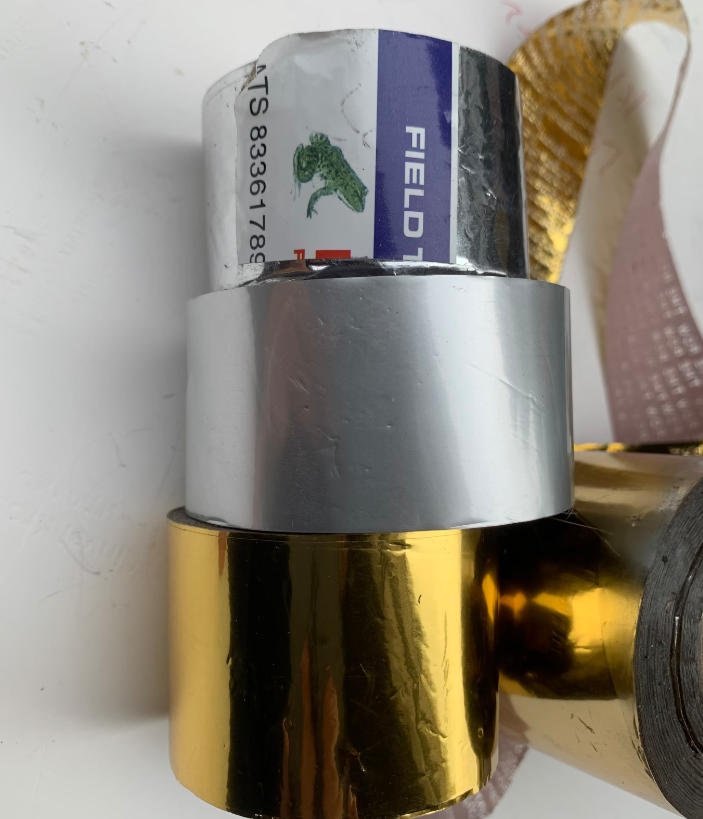
The Foil Has to Match the Leather Surface
Leather is not a perfectly flat printing surface.
Grain depth, surface coating, softness, finish and material structure can all influence the way a stamped logo transfers.
A foil that performs well on one leather may not produce the same result on another.
For this reason, a new bag project may require several combinations to be tested before the stamping specification is finalized.
During development, we typically evaluate:
- Logo edge definition
- Clarity of fine lettering
- Metallic tone and sheen
- Coverage across the leather grain
- Transfer consistency
- Adhesion on the selected material
- Surface appearance after stamping
- Repeatability across multiple pieces
The Foil Is Only One Part of the Result
Even a suitable high-quality foil does not automatically guarantee a clean logo.
Hot stamping is the result of material selection, tooling and process control working together.
The die must reproduce the artwork accurately. Temperature, pressure and contact time have to suit both the foil and the leather. At the same time, the leather surface needs to remain stable throughout the process.
If one of these factors is wrong, even the right foil can produce an uneven result.
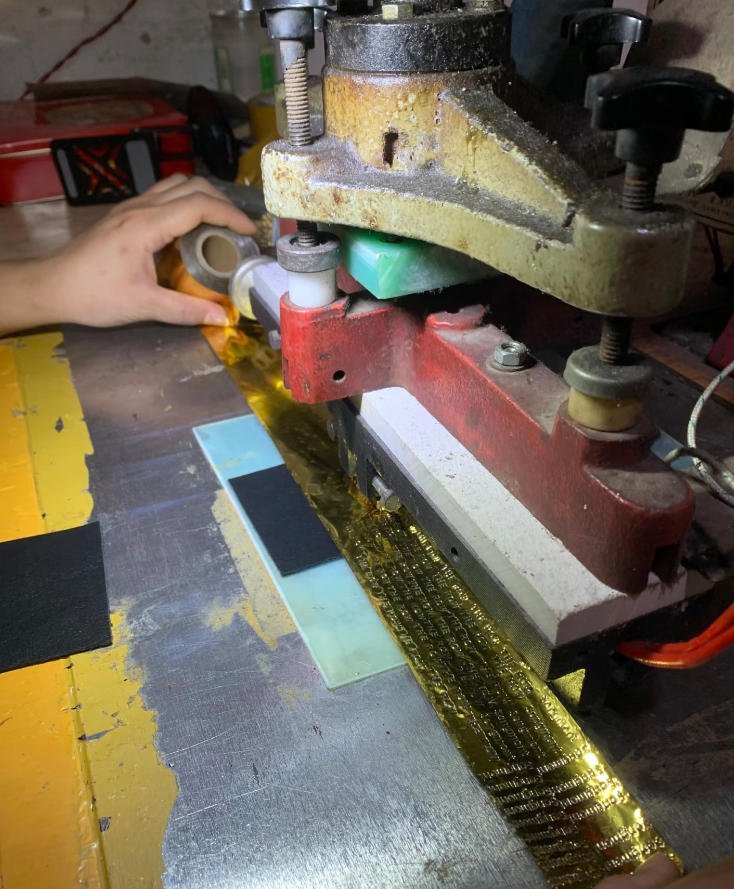
That is why we treat hot stamping as a development process rather than simply loading a foil roll into a machine and starting production.
Fine Logos Leave Very Little Room for Error
Large foil areas may immediately attract attention, but small lettering is often a more revealing test of process control.
Thin strokes, narrow spacing and small characters require clean foil release and accurate contact with the leather.
Too much transfer can soften the edges of the lettering. Too little transfer can leave gaps or incomplete areas.
On a premium leather product, these differences become very visible when the brand team or end customer looks closely at the logo.
Before production approval, we therefore prefer to test the actual artwork at its intended size rather than relying only on an enlarged test design.
We Test Gold, Silver and Other Metallic Finishes Before Approval
Different products call for different metallic effects.
A brighter gold may complement one leather color, while another project may require a softer, warmer or less reflective finish.
The same applies to silver and other metallic tones.
During sampling, we can compare different foil options directly on the project material so the client can evaluate the finished appearance rather than making a decision from the foil roll alone.
The Final Test Has to Be on the Actual Bag Material
A foil supplier can provide technical information and recommended applications, but the final decision still needs to be made on the material used for the project.
For a custom handbag, we normally want to see the logo stamped onto the selected leather, or onto a closely comparable production material, before approving the final specification.
This allows us to evaluate not only the metallic finish, but also how the leather itself responds to the stamping process.
If the result is not clean enough, we can still adjust the foil, die, temperature, pressure, dwell time or artwork before the bag moves into production.
From Logo Artwork to Bulk Production
A typical hot stamping development process for a custom bag may follow this sequence:
Artwork Review → Leather Confirmation → Foil Selection → Die Preparation → Stamping Test → Client Approval → Production Setting → Bulk Stamping → Bag Assembly
Once the client approves the logo size, position, metallic finish and stamped sample, those details become part of the production specification.
The goal in bulk production is not to create one perfect logo.
The goal is to reproduce the approved result consistently across every bag in the order.
A Small Logo Can Carry a Large Part of the Brand
The end customer will probably never know which foil was selected, how many test pieces were rejected or how the stamping parameters were adjusted.
They simply see the finished logo.
And on a bag with restrained branding, that logo may be one of the first details the eye notices.
After years of custom bag development, we have learned not to treat that small area as an afterthought.
If the logo represents the brand, the material and process used to apply it deserve the same level of attention as the leather around it.