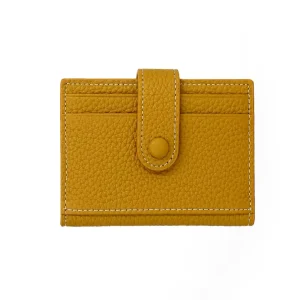
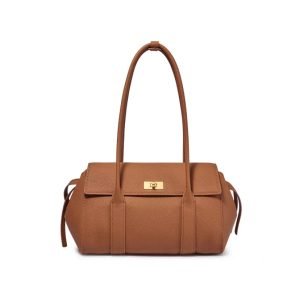
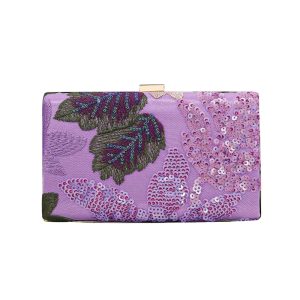
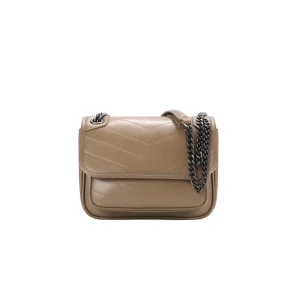
Manu Atelier materials provide a timely case study in how tactile surfaces must be routed through product function instead of approved as isolated swatches. The accessible 2026 assortment connects suede Le Cambon formats, smooth-grain Fidèle, suede and raffia Tote du Jour options, a perforated Cylinder mini, gold-tone details, and concealed closures across distinct customer uses. For B2B teams, the factory lesson is to convert each material story into a separate risk map covering structure, contact, consistency, packaging, care, and claims.
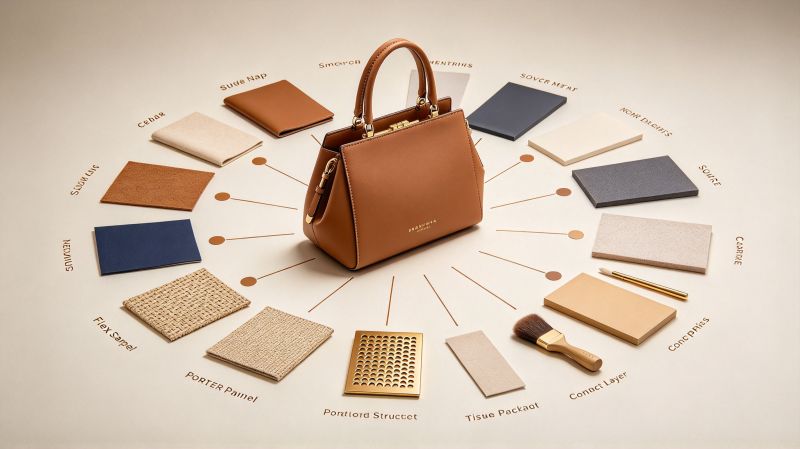
The evidence base combines the official Manu Atelier storefront with a public Farfetch Manu Atelier assortment recorded in August 2026. That snapshot sits inside the latest 6–12 month review window and includes official collection signals for Spring/Summer and Pre-Fall 2026. Product descriptions, prices, markdowns, and availability can change, so this article treats them as dated public observations rather than demand, cost, or supplier evidence.
Why Manu Atelier materials need a risk-routing approach
Manu Atelier materials are publicly visible across products that do very different jobs. A suede top-handle body must hold a sculptural posture around a broad facade. A long shoulder bag creates repeated contact with clothing. A raffia tote faces open-fiber abrasion and trim transitions. A perforated mini concentrates stress around cut edges. A concealed magnet creates a pressure zone beneath a surface that may otherwise look soft and uninterrupted.
A universal material approval cannot resolve those differences. The same hide, backing, split, edge paint, adhesive, or hardware finish can perform well on one construction and poorly on another. Manu Atelier materials therefore suggest a sourcing question that is more useful than “Is this suede premium?” The better question is “Does this exact material assembly meet the use, geometry, load, care, and visual tolerance of this exact product?”
Risk routing gives every product a material path. Begin with the public signal, define the customer benefit, identify the likely stress zones, select an original construction, and then test a production-relevant assembly. This approach does not claim knowledge of Manu Atelier’s suppliers or confidential methods. It translates visible categories into independent factory decisions for an original brand.
Hotspot one: suede across Le Cambon changes with scale
The August retailer snapshot showed suede across Le Cambon 25, 35, East-West, and other family positions, including navy-blue and cedar-brown descriptions. The previous public analysis also recorded a 35 product with calf suede, suede lining, concealed magnetic fastening, rounded top handles, a decorative buckle, and gold-tone hardware. Manu Atelier materials appear coherent at the merchandising level, but each size creates a different engineering environment.
A compact body uses small panels and tight turns, making nap direction and edge cleanliness conspicuous. A medium body exposes more surface, where shade variation, pressure marks, or backing transitions become easier to see. A horizontal East-West body increases the length of the opening and base, potentially changing sag, handle pull, and the way the nap catches light. A large body needs a weight and reinforcement strategy that does not erase the intended softness.
For original sourcing, approve suede on cut components rather than on a small supplier swatch alone. Mark nap direction before cutting. Review color from front, side, and raking light. Build at least one corner, one handle attachment, one closure zone, and one edge transition at production thickness. Manu Atelier materials make the visual appeal obvious; the risk map reveals where that appeal can be lost.
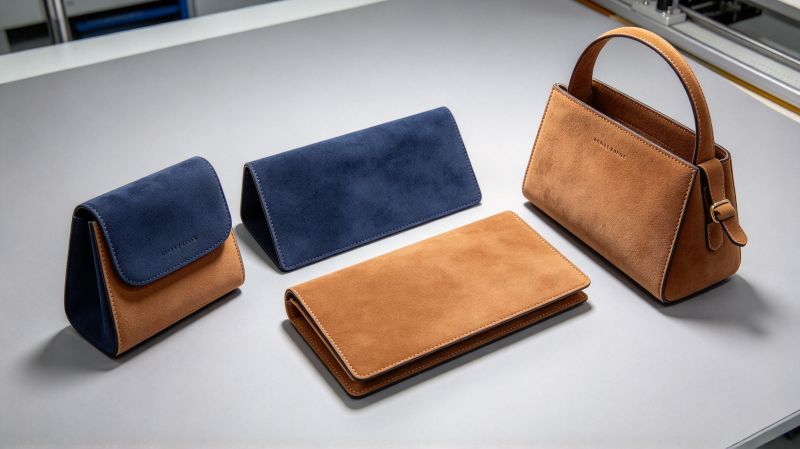
Packaging belongs in the suede route. Tissue folds can leave pressure lines; hardware can imprint or polish the nap; dark suede may transfer color to pale dust bags; desiccant placement can create localized contact. Pack the finished sample in the proposed retail configuration, expose it to a realistic transit cycle, then inspect under the same controlled light used for material approval.
Seen through Manu Atelier materials, transit protection is part of the surface specification rather than a separate logistics note.
Hotspot two: smooth-grain Fidèle changes the tolerance language
The captured new-season Fidèle shoulder bag was described in dark-brown smooth-grain leather with a long shoulder strap, gold-tone lettering, and a main compartment. Compared with suede, smooth leather shifts attention toward grain consistency, surface reflection, edge execution, crease recovery, and the precision of every visible junction. Manu Atelier materials show that a quieter surface does not mean a simpler approval.
A long shoulder strap experiences flex, clothing contact, adjustment friction, and repeated load at the anchors. The body may rub against coats, denim, or knitwear. The relevant test assembly therefore includes the strap, edge, reinforcement, and body material together. A flat leather strip approved on a table cannot prove that the finished strap stays comfortable, resists twisting, or avoids premature finish change.
For an independent product, define acceptable grain and natural marking by panel zone. A front panel may require a tighter visual standard than a concealed gusset, but that does not justify hidden structural weakness. Record gloss range, color tolerance, flex recovery, edge adhesion, rub behavior, and care language. Manu Atelier materials encourage a refined visual reading; sourcing must translate refinement into measurable acceptance criteria.
Manu Atelier materials also show why the strap and body need one shared wear standard instead of two isolated approvals.
Hotspot three: raffia and leather require an interface specification
The public snapshot included Tote du Jour in raffia as well as suede, placing two very different material systems inside a shared daily-use category. Raffia can provide seasonal lightness and texture, while leather trim can stabilize handles, edges, closures, or high-contact zones. Manu Atelier materials demonstrate why mixed construction must be approved at the interface rather than as two independent swatches.
Open or woven fiber can vary in thickness, density, color, and edge behavior. Leather is more stable but may concentrate stress where it is stitched to a flexible field. The risk map should identify every transition: top edge, handle base, corner, closure, pocket, base, and lining attachment. Stitch spacing, needle choice, reinforcement width, and seam allowance need to suit both materials without cutting the fiber or creating a hard ridge.
Moisture and storage affect the pair differently. A woven body may relax or distort; leather trim may retain its shape and pull unevenly. Dark trim can transfer color to pale fiber. Adhesive can migrate through an open structure. Manu Atelier materials make the contrast commercially legible, but the factory brief must define how the materials age together.
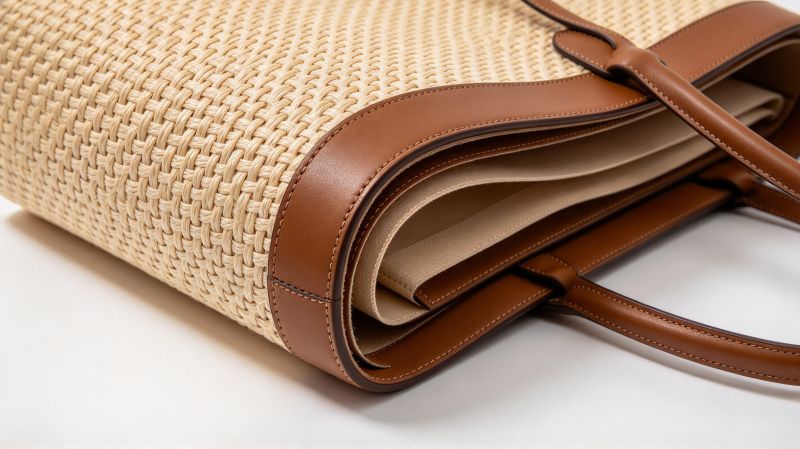
Care content should reflect the combined product. A customer cannot follow one instruction for leather and another for the woven field if the suggested treatment reaches both surfaces. Test any brush, cloth, protector, or cleaning direction on the finished junction. The safest public advice may emphasize dry handling, controlled storage, and professional care rather than making broad maintenance promises.
For Manu Atelier materials, the customer experiences one bag, so the care system must resolve the entire mixed assembly.
Hotspot four: Cylinder perforation moves risk to the cut edge
The observed Cylinder was presented as a perforated mini shoulder bag. Perforation changes the material by removing area and multiplying edges. Manu Atelier materials therefore point to a structural question: how large, close, and strategically placed can openings be before the panel loses tear resistance, shape, or clean visual rhythm?
An original perforation system should be created from independent artwork. Test it on the intended hide, split, backing, and curvature. Holes near seams, corners, strap attachments, or closures require different spacing from holes in a quiet central field. A perforated mini may carry little weight, but its small scale makes alignment errors, ragged cuts, exposed backing, and color mismatch more visible.
Edge finish also changes. Laser, punch, die, or other approved processes can leave different heat, compression, or fiber effects. The process must suit the material and design rather than be chosen only for pattern speed. Manu Atelier materials make perforation a visible seasonal signal; a sourcing plan must define cut quality, spacing tolerance, panel registration, backing appearance, and snag behavior.
If the opening reveals lining or a contrast layer, test rubbing between the layers and how the color appears under different light. If it remains open, evaluate dust entry, small-object containment, and garment snag. Product content should explain the intended use without implying that an open structure protects contents like a closed leather wall.
Manu Atelier materials make perforation visually memorable, while the sourcing record must make every exposed edge measurable.
Hotspot five: gold-tone detail creates a surface-contact system
Gold-tone details were visible in the Le Cambon and Fidèle descriptions, while the 35 Le Cambon record separated a decorative buckle from a concealed magnetic closure. For Manu Atelier materials, metal is not an isolated trim category. It creates a contact system with suede, smooth leather, lining, magnets, packaging, hands, fragrance, humidity, and repeated movement.
A decorative focal component still needs a defined base metal, finish color, gloss, edge radius, attachment method, and backing. A magnet needs a holding target, alignment tolerance, shield or reinforcement, and a cycle test. If the visible detail does not perform the closure function, the product page should not imply that it does. Sourcing teams should document which component carries visual identity and which carries mechanical load.
Manu Atelier materials also raise a cross-surface consistency issue. The same warm metal can look different against navy suede, cedar brown, dark smooth leather, or pale raffia. Approve the finish beside each primary material under controlled light. Test contact staining, pile compression, plate imprint, edge rubbing, and hardware-to-hardware abrasion in the packed product.
The lesson from Manu Atelier materials is that hardware color approval belongs beside each surface, not on a detached metal card.

Hotspot six: concealed closures shift proof beneath the surface
A concealed magnetic fastening supports a calm exterior, but invisibility increases the need for internal control. Manu Atelier materials place soft suede around a closure zone that must repeatedly meet, separate, and realign. If the backing is too small, the force may concentrate at one point. If it is too rigid, a hard rectangle can telegraph through the surface.
For an original bag, map the force path from the user’s hand through the magnet and reinforcement into the body. Test one-handed opening, misaligned closing, overfilled carry, lining movement, and repeated cycles. Inspect the exterior after testing for darkening, compression, puckering, or a visible plate outline. The magnet should feel deliberate without becoming difficult to release.
Manu Atelier materials also suggest a content opportunity: show the opening honestly. A clean exterior photograph cannot explain whether a buckle is decorative, whether a magnet is concealed, or how wide the opening becomes. A short interaction view and accurate description can reduce misuse and give retailers a consistent way to explain the product.
Hotspot seven: material change should alter the supplier route
The same named family can appear in different surfaces, but procurement should not assume one supplier route fits all. Manu Atelier materials span suede, smooth leather, raffia combinations, perforated constructions, metal finishes, and lining relationships. Each may require a different minimum order, lead time, color-control method, inspection plan, or packaging protocol.
A material matrix should show commercial as well as physical risk. Record source, minimum order, usable area, yield assumption, shade range, seasonal availability, replenishment time, test status, substitute options, care burden, and claim documentation. A high-variation surface may be acceptable for a limited seasonal item but risky for a replenished core product sold across several markets.
Manu Atelier materials become a useful sourcing reference when this matrix links every visual choice to supply continuity and service burden.
Price snapshots do not reveal these costs. The August retailer view placed different Manu Atelier products and materials at different consumer price points, sometimes with markdowns. Those public numbers cannot be reverse-engineered into material budgets or margins. An original quotation must be built from the new pattern, yield, construction, hardware, labor, tests, packaging, freight, duties, channel, and after-sales plan.
Six-step material approval route for private-label sourcing
This workflow turns Manu Atelier materials into a sourcing discipline while keeping the final product original. Each step produces a decision record that can be reviewed before bulk material is committed.
- Define the product-material job. Record the target customer, carry setting, load, posture, surface character, climate, care expectation, and price goal for the original product.
- Map the stress and contact zones. Mark folds, corners, handle bases, closure zones, body-contact areas, exposed edges, lining junctions, base, and packaging contact on the independent pattern.
- Build production-thickness assemblies. Combine the actual surface, backing, reinforcement, adhesive, thread, edge method, hardware, and lining in representative corners and junctions.
- Test behavior and appearance together. Review flex, load, abrasion, rub, color transfer, closure cycles, recovery, shade, nap, reflection, cut quality, and surface change under controlled light.
- Run a packed-product trial. Pack the complete sample with proposed tissue, supports, dust bag, hardware protection, and carton, then inspect after a realistic transport and storage cycle.
- Lock evidence and communication. Approve the physical standard, tolerance, supplier record, care guidance, claims, product description, and replacement process before bulk production.
Factory sourcing questions that expose hidden material risk
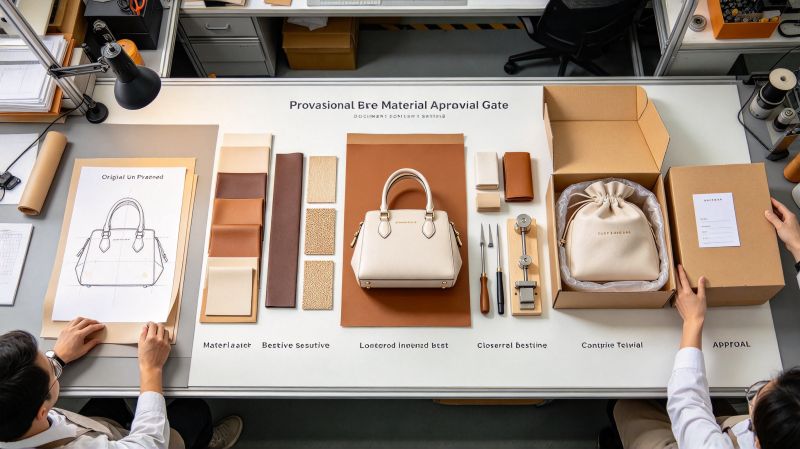
A buyer using a private label bag manufacturing service should ask questions that connect material and product rather than requesting a generic “premium” grade. Which panel zones have tighter appearance criteria? How are shade and nap grouped? Which junction has the highest tear or distortion risk? What changes when a suede body becomes larger or a woven product adds leather trim?
The custom handbag sampling process can include a material gate before the final photo sample. Teams reviewing handbag factory capabilities should examine cutting controls, component traceability, retained standards, in-process protection, shade management, assembly testing, packing trials, and the way substitutions are approved. No supplier should substitute a surface, split, backing, or finish without written comparison and buyer approval.
Original-design compliance remains separate from material quality. Do not request Manu Atelier family names, silhouettes, buckles, proportions, graphics, imagery, or other protected combinations. Use the public evidence to define performance questions, then create independently owned geometry, component language, palette, naming, and communication.
Release gate for a material-led handbag
- Visual standard: Are color, nap, grain, reflection, perforation, and mixed-material transitions approved on full-size panels?
- Structural standard: Do the material and reinforcement meet the load, closure, corner, edge, and attachment requirements of the exact body?
- Use standard: Has the loaded product been carried, opened, set down, rubbed against clothing, and handled in the intended environment?
- Packaging standard: Does the complete pack prevent pressure, transfer, snagging, hardware contact, and unwanted shape change?
- Evidence standard: Are composition, origin, care, responsibility, and performance claims supported for the exact product and market?
- Originality standard: Are the final form, details, material map, name, images, and overall combination independently created?
Manu Atelier materials as a disciplined sourcing reference
Manu Atelier materials make several 2026 signals visible: suede across sculptural size and orientation changes, smooth-grain leather in a long shoulder role, raffia and leather in a daily tote context, perforation on a mini body, gold-tone details across surfaces, and concealed closure beneath a quiet facade. The sourcing value is not a single preferred material. It is the need to give every material-product combination its own approval path.
For an original brand, the strongest result is a product whose material story survives use. The suede retains an acceptable appearance, the smooth strap carries comfortably, the raffia-leather junction stays secure, the perforation remains clean, the hardware does not damage the surface, and the packaging protects what the product page promises. Manu Atelier materials offer a public reference for asking better questions, not a template for reproducing another company’s products.
Dongguan Junhao Handbag Co., Ltd. can review an independently designed material and construction brief through its luxury handbag OEM manufacturing solutions. To plan a production-relevant material trial, send your RFQ with original drawings, product role, target materials, quantities, markets, testing priorities, packaging concept, and required claim evidence.
Disclaimer: This article is an independent educational analysis. It is not affiliated with Manu Atelier. We do not produce counterfeit or replica goods, and we do not reproduce protected logos, trademarks, patterns, proprietary designs, hardware, silhouettes, or brand-identifying elements.