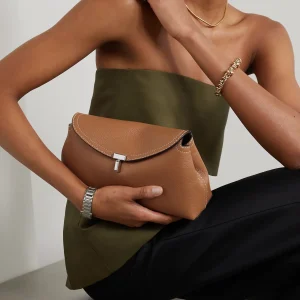
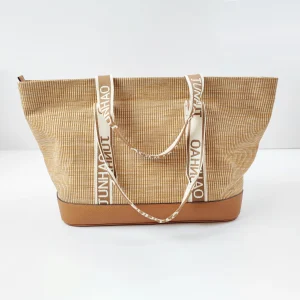
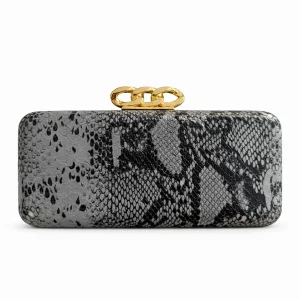
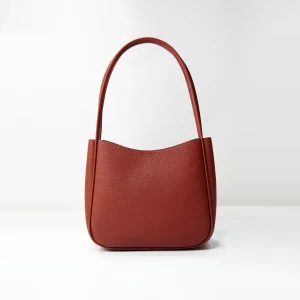
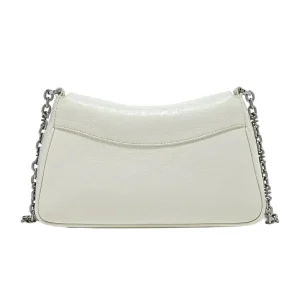
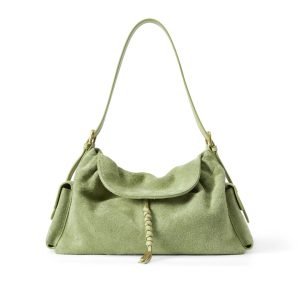
Turning a design reference into a manufacturable leather bag involves much more than reproducing its appearance.
The proportions must work. The opening needs to be practical. The leather thickness must suit the structure. The weight has to remain comfortable. Every curve, seam and reinforcement point must be translated into patterns that can eventually support consistent production.
Recently, our development team worked on a custom leather backpack project starting from a visual reference.
The first prototype is now complete.
It is not yet the final approved sample — and that is exactly why this stage matters.
For us, the first sample is where design intention meets construction reality.
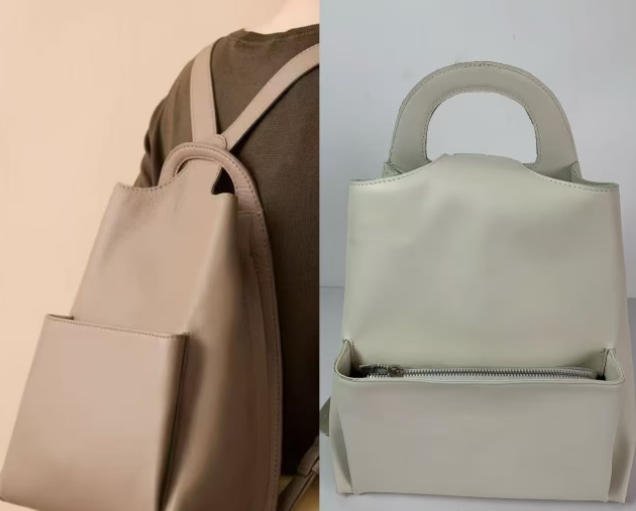
From Visual Reference to a Workable Bag Structure
A reference image can communicate the overall character of a bag, but it does not provide all the technical information required for manufacturing.
Before making the first sample, our pattern-making team studies the design from a construction perspective, including:
- Overall proportions
- Front and side silhouette
- Handle shape
- Backpack strap position
- Opening structure
- Pocket construction
- Leather thickness
- Seam placement
- Reinforcement areas
- Expected carrying experience
From there, the visual concept is translated into workable paper patterns.
This stage is critical because even a small adjustment to one pattern can affect several parts of the finished bag.
A wider opening, for example, may change the geometry of the side panels. A lighter construction may require changes to reinforcement. Adjusting the top curve can influence both the appearance and the way the handle sits when the backpack is carried.
For this reason, we do not treat pattern making as simply tracing a shape.
It is part of the product engineering process.
Building the First Leather Prototype
Once the initial patterns were completed, we produced the first development sample.
For this project, we selected calf leather to evaluate how the material would behave with the intended soft yet structured silhouette.
Leather selection is not only about appearance.
Natural leather varies in grain, stretch, firmness and thickness. Our craftsmen inspect the leather carefully and determine which sections are best suited to larger body panels, handles, straps and structural areas.
For large visible panels, careful cutting is particularly important because the natural characteristics of the leather directly influence the appearance and consistency of the finished bag.
Once assembled, the physical prototype allows our development team to evaluate the design in three dimensions.
A bag that looks balanced in a drawing or reference image may behave differently after the leather, reinforcement, lining and hardware are brought together.
That is why physical sampling remains such an important part of professional bag development.
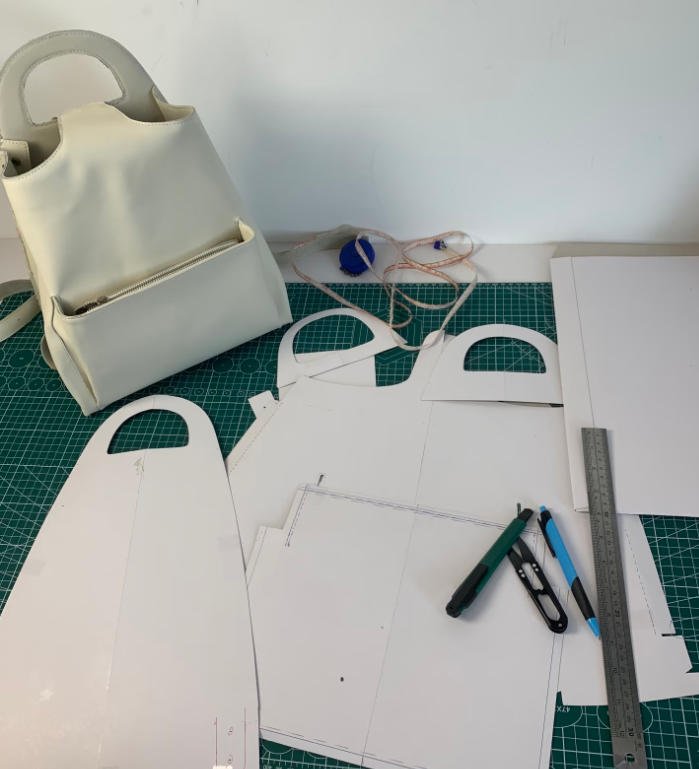
Development Challenge 1: Improving the Side Opening
One of the first areas we reviewed was accessibility.
This backpack uses a distinctive construction in which the upper body and front compartment influence the opening of the main compartment.
During the first prototype review, we found that the side opening could be improved to provide easier access to the interior.
Our pattern maker therefore adjusted the side construction to create a wider opening range.
The goal, however, was not simply to make the opening larger.
We needed to improve accessibility while maintaining:
- The intended visual proportions
- Side-panel stability
- A clean leather edge
- Proper positioning of the front compartment
- The overall silhouette of the backpack
This is a good example of why professional bag development often requires several rounds of pattern refinement.
A functional improvement in one area should not create a new problem somewhere else.
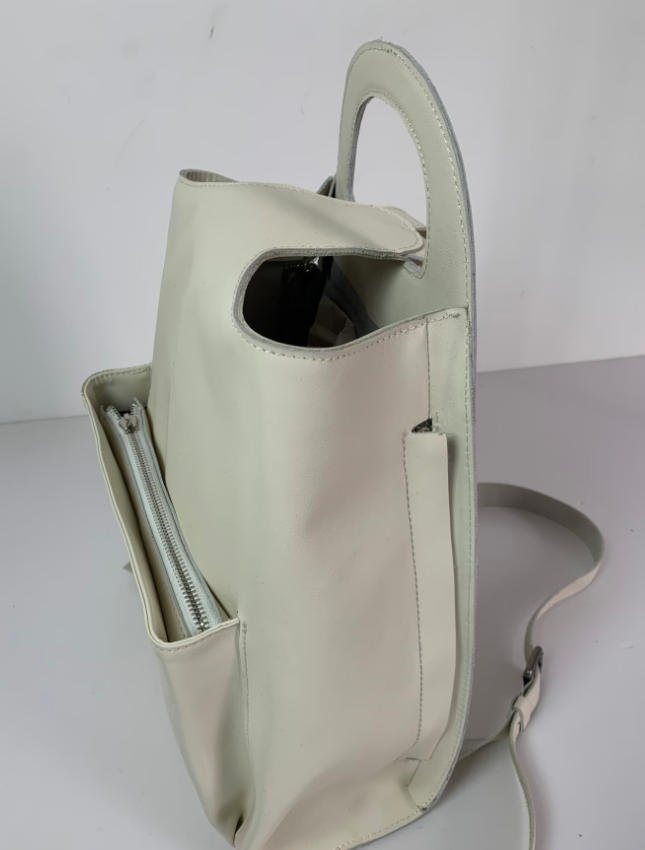
Development Challenge 2: Reducing the Weight by 135 Grams
Weight is another important consideration in leather backpack development.
Genuine leather naturally provides a premium hand feel and durability, but an unnecessarily heavy backpack can negatively affect the everyday carrying experience.
During the development process, our team reviewed the construction and identified areas where unnecessary weight could be removed without compromising the character and stability of the bag.
Through material and construction adjustments, we successfully reduced the projected weight by approximately 135 grams.
The objective was to maintain the substantial feel expected from a genuine leather backpack while making the product more comfortable for everyday use.
Weight optimization can involve several factors, including:
- Leather thickness
- Reinforcement materials
- Lining construction
- Internal components
- Structural overlaps
- Hardware selection
- Pattern efficiency
The lightest construction is not always the best construction.
The goal is to find the right balance between structure, durability, appearance and carrying comfort.
For brands developing leather bags, this type of optimization is best completed during the sampling stage — before the final sample is approved and before bulk production begins.
Development Challenge 3: Maintaining the Triangular Side Silhouette
One of the recognizable characteristics of this backpack is its side profile.
Rather than building the body from many small leather sections, the construction uses two larger leather pieces to help create the intended triangular silhouette.
This creates an interesting pattern-making challenge.
The leather needs to curve naturally after assembly while still maintaining a clean and controlled profile.
If the pattern angle is incorrect, the bag can become too flat, too wide or unstable when viewed from the side.
If the leather is too soft, the structure may collapse. If it is too rigid, the bag may lose the intended natural shape.
Our development team therefore evaluated both the pattern geometry and the behavior of the leather during the first prototype stage.
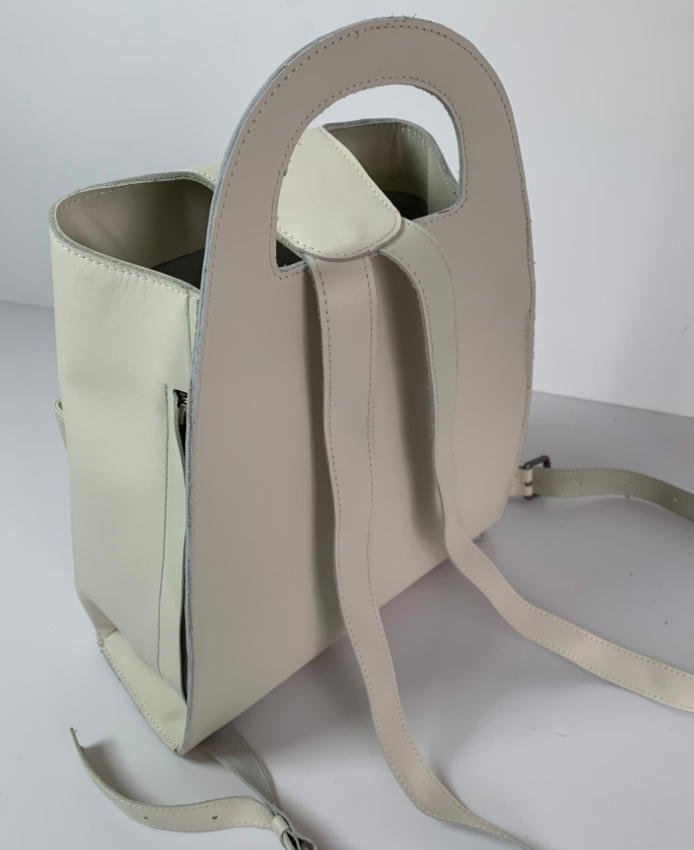
Why We Produce a Prototype Before the Corrected Sample
Clients sometimes ask why several samples may be necessary before a bag moves into production.
The reason is simple: a physical prototype reveals information that a drawing cannot.
At the first-sample stage, we can evaluate:
- Overall proportion
- Shape and silhouette
- Opening range
- Pocket position
- Strap placement
- Handle comfort
- Leather behavior
- Structural stability
- Overall weight
- Construction difficulty
We can then determine which details should remain unchanged and which areas require further refinement.
The first prototype shown in this project is therefore not presented as the final product.
It is a development tool.
The next step is to incorporate the technical adjustments into the corrected sample.
This process helps reduce uncertainty before production and gives both our factory and the brand a clearer understanding of the final construction.
From Design Intent to a Manufacturable Product
At Junhao, our role is not limited to sewing together pieces specified by a client.
As a development-oriented handbag manufacturer, we help brands translate design ideas into workable and manufacturable products.
Depending on the project, development may begin with:
- A reference image
- A hand sketch
- A technical drawing
- An existing prototype
- A mood board
- Material references
- A combination of different design inspirations
Our team then works through pattern making, material selection, construction development, sampling and refinement.
For independent and niche brands in particular, this process can be valuable because the original concept often continues to evolve during sampling.
Some details may look beautiful in a drawing but require engineering adjustments before they can work effectively in leather.
Other solutions may be technically possible but unnecessarily heavy, complicated or expensive for production.
A good development partner should be able to identify these issues before bulk production begins.
What Happens Next?
The first prototype has given us the information needed for the next development round.
Our team will now refine the relevant patterns, optimize the opening structure and continue evaluating the construction before producing the corrected sample.
That corrected version will bring the backpack closer to its intended appearance, weight and user experience.
For us, successful bag development is not about making the first sample look perfect.
It is about learning from the first sample so that the next one is better.
That is how a visual idea gradually becomes a production-ready leather product.
Looking for a Leather Bag Development Partner?
If you are developing a leather handbag, backpack or small leather goods collection and need support turning your concept into a workable product, Junhao can assist with pattern development, material selection, sampling and manufacturing.
Whether you are starting from a sketch, reference image or early prototype, our development team can help evaluate the structure and develop it toward production.
Have a bag idea you would like to develop?
Contact Junhao to discuss your next bag development project.
“`