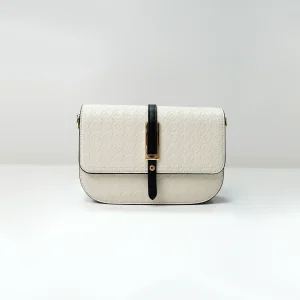
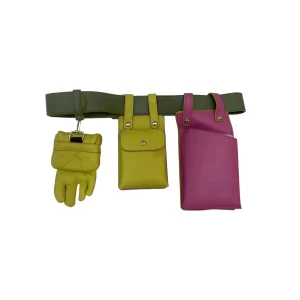
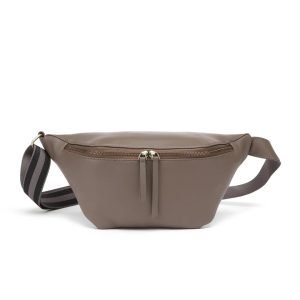
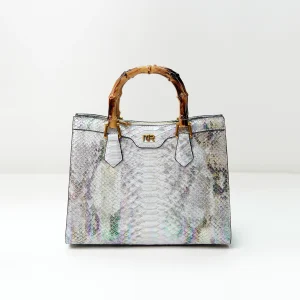
The Polene Shuldo bag gives the brand a focused 2026 launch story built around a single shoulder-bag proposition. Its seven-color debut, sculptural construction language, $880 price, and current notify-me state make it a useful case study in how a new hero is introduced within an active assortment. For private-label teams, the broader lesson is how product architecture, color planning, launch context, and operational readiness can support attention without reducing a collection to one item.
Why the Polene Shuldo bag qualifies as a hero launch
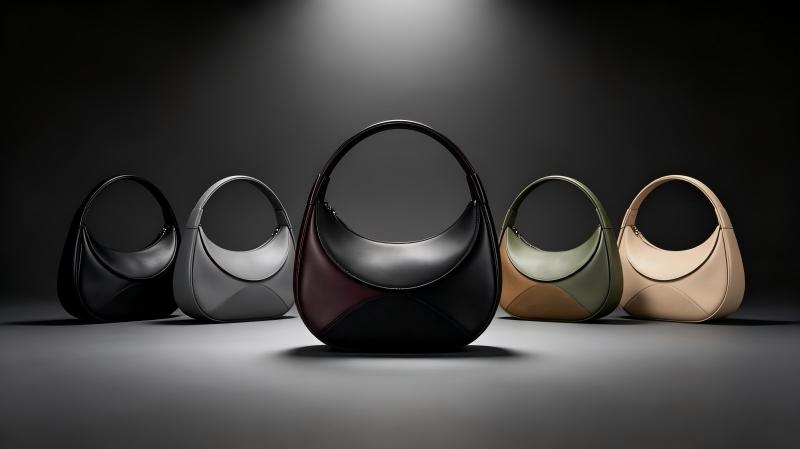
A hero bag is not simply the newest item or the product receiving the largest image on a collection page. It has to carry a clear proposition that buyers can understand quickly, while giving merchandising teams enough material to sustain interest after the first reveal. On Polène’s official Shuldo product page, the bag is described through a tension between free form and structural precision. That contrast is legible at product level: the exterior is presented as supple, while an intricate interior uses stitching, spacing, and rivets to adjust, hold, and structure the form.
That is a more productive launch narrative than a vague claim of timelessness. It tells the customer what to notice and gives editors, store associates, and product-page teams a compact vocabulary for explaining the bag. The shoulder-worn, enveloping character also identifies a use mode rather than leaving the silhouette as a purely decorative object. Form, construction, and wear are therefore joined in one proposition.
Hero status also depends on context. Shuldo appears on Polène’s official New In collection page beside updated established families, other new forms, and limited editions. This makes the launch part of a living range rather than an isolated campaign. The surrounding products can absorb different customer preferences for familiarity, novelty, softness, structure, price, or collectability, while Shuldo remains the clearest focal point.
Hotspot 1: seven colors make one proposition feel like a range
At the time of research, Polène listed Shuldo in seven textured-leather colors: Black, Black Cherry, Brown, Mist, Ebony, Linden, and Desert. Seven launch colors are significant because they let a single shape occupy several emotional and commercial territories. Black and Brown offer familiar anchors. Black Cherry and Ebony add depth. Mist and Desert introduce quieter light neutrals, while Linden supplies a more distinctive seasonal signal.
This color breadth does more than create choice. It allows the brand to repeat the same recognizable silhouette across campaign imagery, retail displays, creator content, and product grids without every appearance looking identical. Repetition builds recognition; tonal variation prevents fatigue. A customer who does not identify with the lead campaign color can still enter through another version without leaving the hero story.
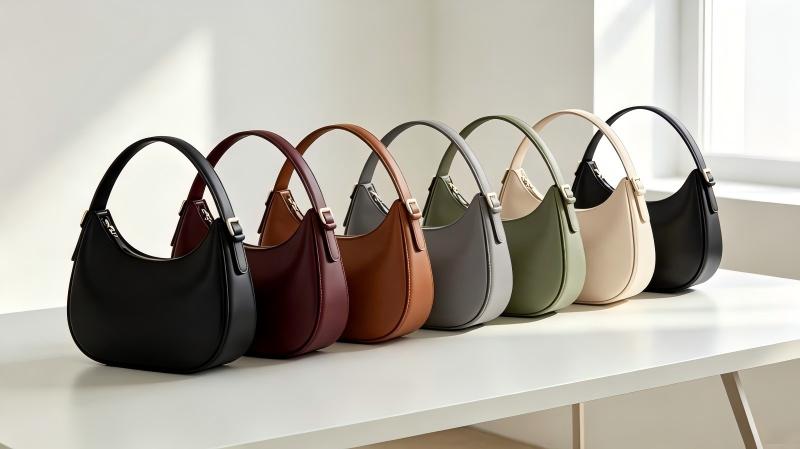
For assortment planners, seven colors should not automatically mean seven equal buys. A useful launch ladder separates core replenishment candidates, directional colors, and editorial colors. The visual campaign can show the full breadth, while initial depth, channel allocation, and reorder rules differ by market. This prevents the color story from turning into undifferentiated inventory and gives the hero launch a measured test structure.
Hotspot 2: supple outside, controlled inside
The strongest design signal in the official Shuldo description is the relationship between a supple exterior and a more complex internal system. Soft-looking bags often create a development challenge: the desired ease can collapse into an indistinct shape, while too much reinforcement can make the product feel rigid. A convincing result has to preserve movement while controlling the points that determine mouth shape, base behavior, shoulder balance, and how the body returns after handling.
Polène attributes the shaping work to stitching, space, and rivets within the interior. Those details matter because they frame structure as a distributed system rather than a single stiff panel. The public description does not reveal a technical specification, and it should not be treated as one. It does, however, highlight a transferable principle: visible softness can depend on carefully placed internal controls.
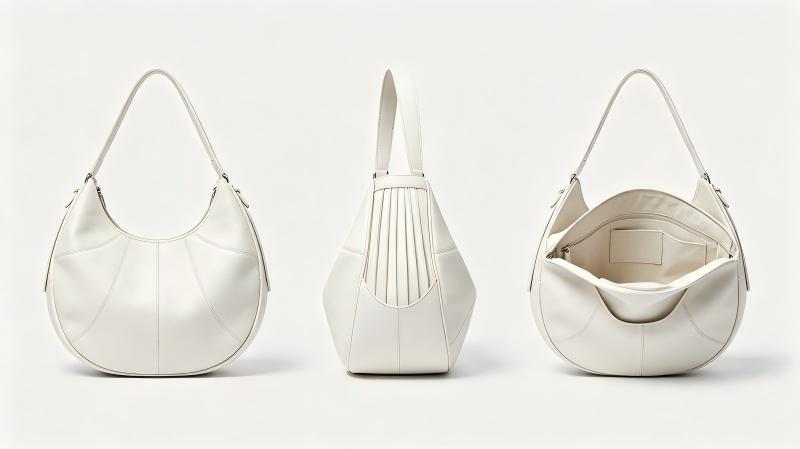
For a brand developing an original sculptural bag, the right questions concern behavior rather than visual imitation. How does the body settle when empty? Does a normal carried load distort the opening? Do attachment points pull the surface unevenly? Can the wearer reach the interior without fighting the intended fold? These questions lead to original engineering choices appropriate to the brand’s own silhouette, material category, price target, and customer.
Hotspot 3: out-of-stock is a customer-state signal, not demand proof
The official Shuldo product page displayed an out-of-stock state and a notify-me option when it was reviewed. That observation is useful, but it has strict limits. A page state does not disclose sales volume, production quantity, sell-through speed, geographic allocation, replenishment timing, or long-term demand. It should therefore never be converted into an unsupported claim that the launch is a commercial success.
What the state does show is the importance of continuity after availability changes. A hero product can continue collecting qualified interest when the purchase button is temporarily unavailable, provided the notification path is clear. The surrounding range also matters: customers who are not willing to wait can continue browsing adjacent new arrivals instead of reaching a dead end.
For a 2026 launch plan, inventory states belong in the content brief from the beginning. Teams need approved language and page behavior for available, low-stock, waitlist, notify-me, preorder, and discontinued conditions. Campaign traffic should not land on a page whose merchandising message no longer matches its transactional state. The customer experience is part of the product launch, not an operational note added later.
Hotspot 4: the $880 price needs neighboring reference points
On the official United States storefront at the time checked, Shuldo was listed at $880. A price becomes more understandable when viewed beside other current arrivals. The same New In page listed the Numéro Neuf textured Ebony at $610, Numéro Dix Galop at $760, Nomad Solé at $860, and the limited-edition Béri Lif at $1,040. Prices and availability can change, so these figures are a dated snapshot rather than a permanent price table.
Within that snapshot, Shuldo sits above familiar and adjacent options while remaining below the limited Béri Lif expression. It is close to Nomad Solé, which helps create a premium newness zone without leaving the customer with a single item at that level. The result is a price ladder that supports comparison: a shopper can move toward a familiar family, a different new silhouette, or a limited edition without abandoning the New In environment.
The Polene Shuldo bag therefore works as both a focal product and a reference point. Its price, breadth of color, and construction narrative help customers interpret the options around it, while those options make the hero’s own position easier to read. That reciprocal relationship is more durable than treating a launch as a sequence of isolated product announcements.
This is why a hero launch should be planned against the range, not against a blank page. Its price must have a reason inside the assortment, whether that reason comes from material consumption, construction complexity, size, function, limited treatment, or channel strategy. The public story and internal cost logic should reinforce each other, even though the customer does not see the costing sheet.
Hotspot 5: continuity comes from Numéro Neuf
The presence of Numéro Neuf in textured Ebony gives Polène’s new-arrival presentation a continuity role. An updated color or treatment in a known family can reassure customers who recognize the brand but are not ready to adopt the newest proposition. It also keeps an established silhouette visually current beside the hero launch.
Continuity products are sometimes treated as background, yet they are essential to range health. They connect previous brand knowledge to the current season, provide a reference price, and reduce the risk that all attention depends on one unfamiliar shape. In merchandising terms, they make the new hero look intentional rather than abrupt.
Hotspot 6: adjacent novelty broadens the new-arrival story
Numéro Dix Galop and Nomad Solé play a different role. On the page reviewed, Numéro Dix Galop appeared in four colors at $760, while Nomad Solé appeared in three colors at $860. Their presence gives customers multiple ways to respond to newness. One person may prefer a recognizable naming connection, another may prioritize a different carry mode, and another may be attracted to a softer or more sculptural proposition.
This adjacency reduces pressure on Shuldo to satisfy every preference. A hero product should be distinctive enough to lead, not so generalized that it becomes the only plausible answer in the range. When nearby new products have clear roles, the launch can maintain a strong point of view while the assortment handles broader demand.
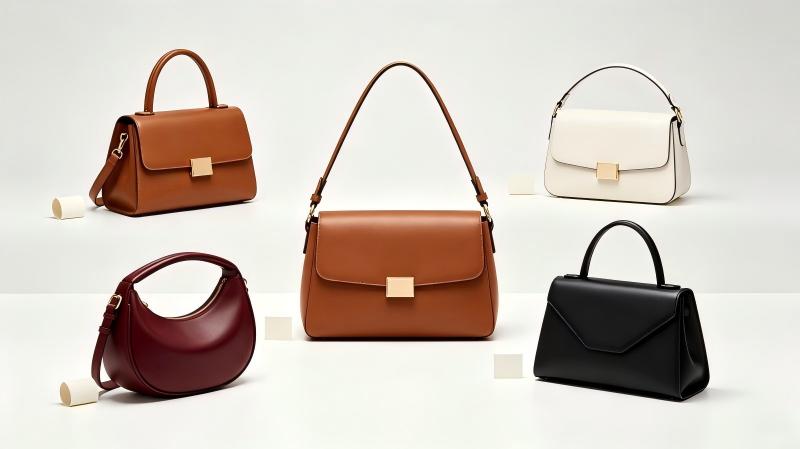
A simple range matrix can make this visible before launch. Place products on axes such as familiarity versus novelty, soft versus controlled form, everyday versus occasion use, and opening versus premium price. The goal is not to force every item into a rigid box. It is to find accidental duplication, missing customer missions, and cases where several products are competing for the same message.
Hotspot 7: limited Béri Lif supplies scarcity contrast
Béri Lif appeared in three limited-edition treatments, Porcelain, Ebony, and Polar, at $1,040 on the New In page reviewed. Limited status and the higher price give it a scarcity role that differs from Shuldo’s broad seven-color launch. That distinction is strategically useful: one product creates a wide color invitation, while another concentrates attention through edition status.
Scarcity should be communicated precisely. Limited edition, limited quantity, temporary color, and temporary availability are not interchangeable claims. A brand should use only the language it can substantiate and make the customer-facing terms consistent across collection pages, product pages, email, and retail. Clear definitions protect trust and help internal teams avoid creating urgency through ambiguous wording.
Packaging and shape recovery support a sculptural hero
Polène states that Shuldo is made by leather-working artisans in Spain and delivered with a protective cotton bag and a paper box made from recycled leather offcuts. These are useful public facts because packaging is especially relevant to a soft, shaped product. A bag may leave final inspection in good condition and still reach the customer with pressure marks, distorted folds, or a compromised opening if its packed geometry is not tested.
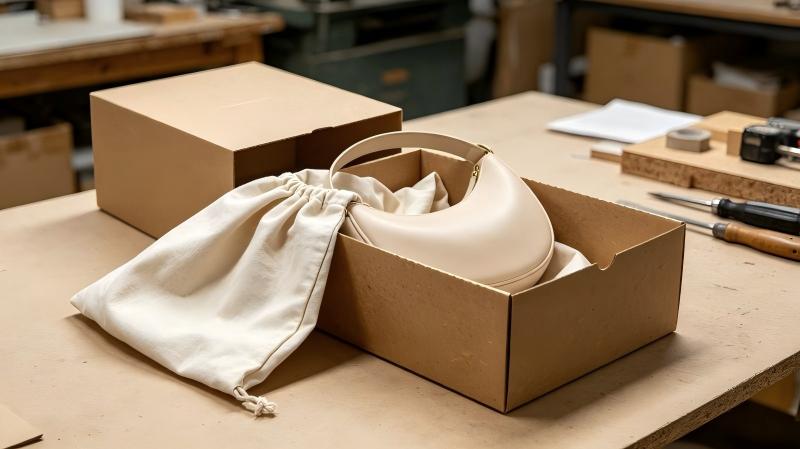
For any original sculptural design, packaging trials should reproduce realistic storage and transport conditions. Teams can document the bag immediately after unpacking, after a defined recovery period, and after light hand shaping according to approved care instructions. Review points may include base flatness, opening alignment, surface impressions, hardware contact, strap deformation, and whether stuffing creates new stress. The purpose is not to make a soft bag look artificially rigid; it is to preserve the form the design intends.
Packaging also affects the first customer photograph and therefore the launch narrative. If the customer must perform unexplained restoration work before the product resembles the page imagery, the product promise and delivery experience diverge. Protective materials, fold plans, carton dimensions, and handling notes deserve the same cross-functional review as campaign assets.
Private-label sourcing lessons from the Polene Shuldo bag strategy
The transferable lesson is not to reproduce Polène’s protected design language. It is to understand the launch system: a strong central proposition, enough color breadth to create repetition, adjacent products with distinct roles, accurate availability messaging, and packaging suited to the intended form. Private-label brands can apply that system to an entirely original silhouette developed from their own customer insight and design brief.
A useful brief begins with the wearing experience and range role. Define whether the proposed bag is the season’s visual lead, a volume anchor, a price bridge, or a limited editorial piece. State the intended capacity, carry mode, access behavior, hand feel, and degree of shape retention. Then establish what must remain visually consistent across colors and what may vary, such as lining tone, edge treatment, or removable components.
Development teams can use a custom handbag program to translate those original requirements into construction options rather than beginning from a reference product. Early prototypes should test opening behavior, loaded hang, attachment reinforcement, balance on the shoulder, and return to shape. A defined custom handbag sampling process helps the brand record decisions across rounds instead of treating each sample as an isolated object.
Commercial readiness should run alongside product development. Build a color architecture with roles and expected channel depth; establish target cost and retail logic; confirm material minimums and shade tolerances; prepare photography samples; and approve customer-state messages before launch. Brands evaluating a partner’s handbag factory capabilities should ask how sampling records, material approvals, inline checks, final inspection, and packing tests are documented for the specific project.
Hero-launch review checkpoints for B2B teams
Is the proposition easy to repeat?
A buyer, product-page editor, sales representative, and store associate should be able to explain the same central idea without relying on vague superlatives. If each team describes a different benefit, the brief may be carrying too many messages.
Does every launch color have a job?
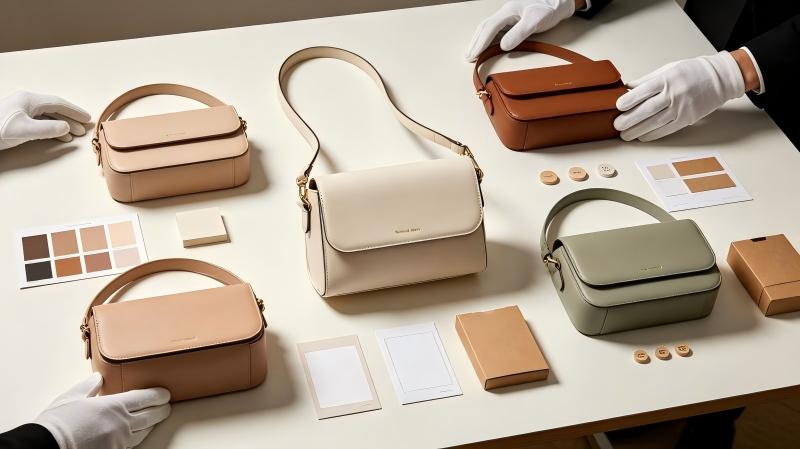
Separate colors that support replenishment, seasonal storytelling, regional testing, and editorial imagery. Confirm minimum quantities, material availability, shade standards, photography timing, and replacement rules before presenting the full palette as available.
Does the construction deliver the promised behavior?
Test the bag empty and loaded, on different shoulders, through repeated opening cycles, and after packed storage. Review both appearance and usability. A sculptural concept succeeds only when its controlled irregularity remains intentional in real handling.
What happens when availability changes?
Decide whether the page will offer notification, preorder, alternatives, or a clear end-of-line message. Assign responsibility for updating collection grids, paid campaigns, email links, and store communication so the same status reaches every customer touchpoint.
Can the rest of the range support the hero?
Identify products that provide continuity, adjacent novelty, entry pricing, premium pricing, and scarcity. The hero should lead customers into the range, while the range gives them credible reasons to stay if their preferred color, price, or carry mode differs.
Before release, run one final cross-functional review using the Polene Shuldo bag case as a strategic prompt, not a design template. Ask whether the original product has a memorable role, whether its neighboring items create useful choices, and whether every customer state has a prepared response. Record owners and approval dates for unresolved decisions so that campaign timing does not conceal product, inventory, or service gaps.
From attention to a durable range
The Polene Shuldo bag demonstrates how a launch can concentrate attention without pretending that one product exists alone. Seven colors amplify one proposition, the internal construction story gives the silhouette substance, and neighboring arrivals provide continuity, comparison, and contrast. The current product-page state also shows why customer communication must adapt when availability changes.
For private-label and sourcing teams, the practical opportunity is to build an original hero program in which design, assortment, costing, testing, packaging, content, and inventory states are approved together. Dongguan Junhao Handbag Co., Ltd. works with brands on original development requirements through its private-label and OEM services. To discuss a project brief, target market, quantities, materials, and sampling needs, send your RFQ.
Disclaimer: This article is an independent educational analysis. It is not affiliated with Polène. We do not produce counterfeit or replica goods, and we do not reproduce protected logos, trademarks, patterns, proprietary designs, hardware, silhouettes, or brand-identifying elements.