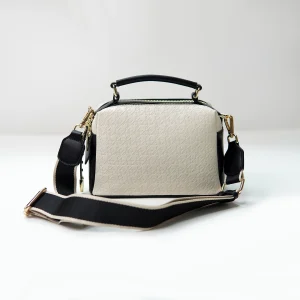
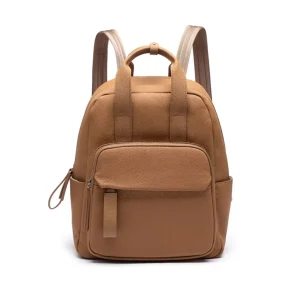
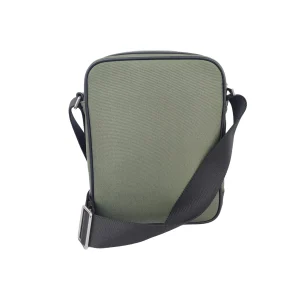
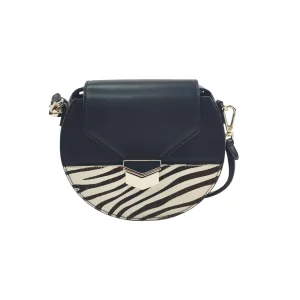
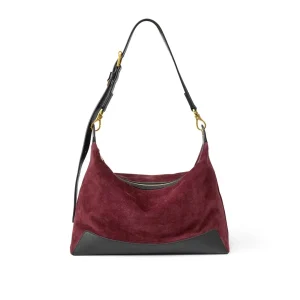
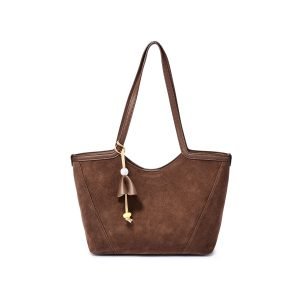
How to identify high-quality cowhide leather is an important question for handbag brands and leather-product buyers. Many sellers describe materials as “imported top-grain leather” or “premium genuine leather,” but these terms are often used too loosely. To judge leather properly, buyers need to look beyond sales descriptions and examine the material itself.
Below are practical ways to compare good cowhide with poor-quality, heavily corrected, split or bonded leather.
First Understand the Main Cowhide Categories
Before learning how to identify high-quality cowhide leather, it helps to understand the basic categories.
- Full-grain leather: The natural grain layer is retained with minimal surface correction.
- Top-grain leather: Made from the upper layer of the hide. It may be lightly corrected or finished.
- Corrected-grain leather: The surface is buffed, coated or embossed to hide natural flaws.
- Split leather: Made from the lower fibrous layer after the hide is split.
- Bonded leather: Made from leather scraps or fibers combined with binders and a surface film.
Not every corrected leather is poor quality, and not every natural-looking leather is premium. The important point is whether the material is accurately described and suitable for the intended bag.
1. Smell the Leather
Good cowhide usually has a mild, natural leather scent. The smell should not be strongly irritating or make you uncomfortable after a short inspection.
Low-grade or heavily coated leather may have a strong chemical, glue or plastic smell. Some materials use fragrance to cover the original odor. This can happen when thick coatings and adhesives are used to hide surface flaws.
However, smell is only a preliminary test. Different tanning and finishing methods produce different odors, so smell alone cannot prove whether leather is top-grain or split leather.
2. Check the Leather Cross-Section
The cross-section is one of the most useful places to inspect.
In premium top-grain cowhide, the upper grain layer is dense, and the fibers gradually become more open toward the bottom. The structure should look continuous rather than like a plastic film attached to a separate base.
Split leather often shows a looser, fluffier fiber structure. When a thick artificial film is applied, the cross-section may reveal a clear surface layer. Bonded leather may look compressed and contain short fibers or leather particles.
Ask the supplier for an unfinished cutting swatch. Raw edges are much easier to inspect than folded or edge-painted bag panels.
3. Look at Pores and Natural Grain
High-quality natural cowhide usually shows subtle pores, grain direction and natural variation. Every area of a hide is slightly different. Growth marks and minor imperfections can be normal.
Low-grade embossed leather often shows highly repetitive patterns. The grain may look identical across a large surface because it has been machine-printed.
However, uniform grain does not automatically mean poor quality. Some good leather is intentionally embossed to improve scratch resistance and consistency. Buyers should evaluate both the surface and the base leather.
4. Press the Surface and Observe the Wrinkles
Press the leather gently with a finger. Good cowhide often forms natural wrinkles around the pressure point and then recovers. The pattern should look irregular and organic rather than perfectly repeated.
Poor-quality coated leather may feel stiff. It may not develop natural creases, or it may show white stress marks when pressed or bent. A weak coating can crack or separate after repeated use.
The correct response also depends on the bag style. A structured top-handle bag requires firmer leather than a soft hobo bag. Quality should be judged according to the intended product.
5. Bend the Leather and Check Elasticity
Fold or bend the test swatch gently. Good leather should flex without immediate cracking or film separation. After the pressure is released, it should recover reasonably well.
Leather that is too loose may form deep wrinkles and lose shape. Leather that is too heavily coated may resist bending and develop sharp white lines.
6. Use the Water Drop Test Carefully
The water drop test can provide some information about the surface finish, but it should not be treated as the final proof of leather quality.
Some good natural cowhide absorbs water slowly because it has breathable pores. Very porous or loose leather may absorb water immediately. Heavily coated leather may cause water to slide off because the surface is sealed.
Premium leather can also be treated with a protective finish, so it may resist water. Always perform this test on a spare swatch because water can leave marks.
7. Check Whether the Surface Is Overly Perfect
Natural premium cowhide is not always completely flawless. Small growth marks, subtle grain differences and minor surface variation are normal characteristics of real hides.
Be cautious when a material looks perfectly uniform, has no natural marks and is surprisingly cheap while being sold as premium top-grain cowhide.
A flawless appearance may come from heavy sanding, embossing and coating. This does not necessarily make the material unusable, but the seller should describe it honestly.
8. Test the Surface Coating
Rub the leather gently with a white cloth. Bend it several times and check for color transfer, cracking, peeling or whitening.
For dark leather, test whether the color transfers to light fabric. For light leather, test whether it easily absorbs color from denim or other materials.
For larger handbag orders, buyers may also request laboratory testing for abrasion, flex resistance, color fastness, coating adhesion and restricted substances.
9. Measure Thickness and Check Consistency
Cowhide thickness should be suitable for the bag structure. Leather that is too thick can create bulky seams. Leather that is too thin may need additional reinforcement and may not hold the intended shape.
Measure several points on the swatch. Natural leather varies, but the range should remain within the agreed specification.
For structured bags, leather thickness must work together with the interfacing lamination process.
10. Match the Cowhide to the Bag Design
A good material can still be wrong for a particular design. Soft leather may be ideal for a relaxed tote but unsuitable for a sharp, structured silhouette. Firm leather may support a boxy bag but feel too rigid for a slouchy shape.
The factory should test how the leather behaves during cutting, skiving, folding, stitching, edge painting and molding.
Leather thickness and temper also affect how smoothly a leather bag zipper follows a curve.
11. Ask the Supplier for Clear Material Information
Do not accept only vague terms such as “luxury leather,” “imported feel” or “high-end cowhide.” Ask for specific information:
- Leather category
- Thickness range
- Surface finish
- Color code
- Supplier or tannery reference when available
- Minimum order quantity
- Performance or test information
Keep an approved leather swatch for future production.
After approving the material, follow our guide to preventing sample and bulk production differences.
How to Identify High-Quality Cowhide Leather: Final Advice
Do not trust one sales phrase or one simple test. The best method is to combine smell, cross-section, pores, grain, elasticity, thickness, coating performance and written material information.
Learning to inspect the actual leather is more reliable than listening only to sales claims. Premium cowhide should not only look attractive. It should also perform correctly during production and long-term use.
A knowledgeable factory can help buyers match leather to the design. Read how to choose a genuine leather bag manufacturer.
Frequently Asked Questions
Does genuine cowhide always have visible pores?
Not always. Surface correction, embossing and protective finishing can reduce the visibility of natural pores.
Is top-grain cowhide always soft?
No. Top-grain cowhide can be soft, medium or firm depending on tanning, thickness and finishing.
Can the water drop test prove leather quality?
No. It is only a supporting test because coatings, waxes and protective finishes affect water absorption.
Are natural marks a sign of poor leather?
Minor growth marks and grain variation can be normal. Deep scars, loose grain and damaged finishes should be evaluated separately.
Need Help Choosing Cowhide for a Handbag Collection?
We support independent brands with leather selection, sample development and custom production. Send us your design, target hand feel, price range and order quantity.