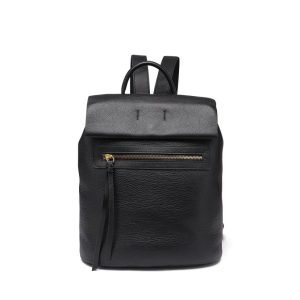
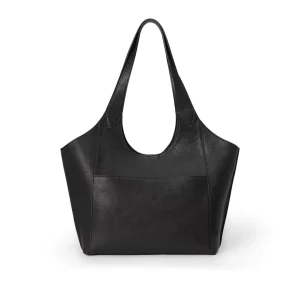
Leather bag interfacing lamination is a hidden process that strongly affects the shape, stiffness and stitching quality of a bag. Most buyers judge the exterior leather and hardware, but the structure of the finished product often begins with the backing material inside.
Even a small wrinkle, air bubble or alignment error can affect later sewing. That is why experienced workers must apply glue evenly, align the layers precisely and press the panels firmly before assembly.
What Is Leather Bag Interfacing Lamination?
Interfacing is a supporting material attached to the back of leather or fabric. It can add firmness, stability, cushioning or shape.
Lamination is the process of bonding the leather and interfacing together so that they behave as one panel.
Different areas of a bag may use different support materials. The body, base, handle connection, zipper opening and hardware areas do not always need the same stiffness.
Why Leather Bag Interfacing Lamination Matters
A structured bag needs stable panels. If the leather and backing move separately, the material may wrinkle during sewing or lose shape after use.
Poor lamination can cause:
- Air bubbles under the leather
- Wrinkles and uneven surfaces
- Crooked stitching
- Misaligned edges
- Hard glue spots
- Soft or sagging panels
- Separation after long-term use
The process is hidden after the lining is installed, but it defines the quality of the finished shape.
Step 1. Choose the Correct Interfacing
The first step is to match the support material to the leather and design.
Soft leather may need broad support to create a structured silhouette. Thick leather may need only local reinforcement. A relaxed tote should not feel as rigid as a box-shaped top-handle bag.
The interfacing must also work with skiving, folding, stitching and edge painting. Material that is too thick creates bulky seams. Material that is too hard may form sharp ridges under the leather.
Step 2. Prepare the Leather and Backing
The leather and backing material should be clean, flat and correctly sized. Dust and loose fibers can weaken the bond.
The worker should check the grain direction, surface condition and panel shape before applying glue.
Step 3. Spray Glue Evenly
Experienced workers spray an appropriate adhesive evenly on the back of the leather and backing material.
There should be no heavy glue buildup and no missing areas. Too much glue can create hard spots or show through delicate leather. Too little glue can cause bubbles or separation.
Eco-friendly adhesive should be used according to the required drying, activation and curing conditions.
Step 4. Align the Panels Precisely
The leather and interfacing must be matched according to the pattern edges and reference points.
Even a small shift can affect seam allowance, edge folding and symmetry. A 1 mm movement may not always ruin the bag, but it can make later stitching and assembly less accurate.
Once the layers touch the adhesive, large corrections may damage the leather. This is why manual skill is important.
Step 5. Laminate From the Center Outward
The worker presses the layers together gradually from the center toward the edges. This helps push out trapped air and reduces wrinkles.
The leather should not be stretched during this process. Stretching can make the panel look flat temporarily but distort it after the tension is released.
Step 6. Use the Roller Press
After alignment, the panel passes through a roller press when suitable for the material.
The roller press helps:
- Squeeze out air bubbles
- Activate the adhesive
- Improve bonding strength
- Flatten the panel
- Create more consistent thickness
The pressure must be controlled. Too much pressure may flatten the natural grain or mark delicate leather. Too little pressure may leave weak areas.
Step 7. Allow the Bond to Set
The laminated panel may need time to stabilize before cutting or sewing. If production moves too quickly, the layers may still shift.
The correct setting time depends on the adhesive and materials.
Step 8. Inspect the Panel Before Sewing
Workers should inspect the laminated panel for bubbles, wrinkles, glue buildup, contamination and misalignment.
Any problem should be corrected before sewing. Once the stitch line is completed, the layers are locked into the structure and become much harder to repair.
How Interfacing Lamination Affects Stitching
A stable panel feeds more evenly through the sewing machine. The operator can keep a cleaner seam allowance and more consistent stitch line.
If the leather and backing move at different speeds, the edge may twist or the stitching may become crooked.
This is especially important around curved openings. See how panel accuracy supports a smooth zipper on leather bags.
How Lamination Affects the Final Bag Shape
Good lamination helps the bag keep its silhouette while still allowing natural movement. Poor bonding may cause soft spots, bubbles or collapse.
The goal is not to make every bag as hard as possible. The goal is to create the correct level of structure for the design.
Leather and Interfacing Must Work Together
Different cowhide types react differently to adhesive and pressure. Soft leather may absorb more glue. Delicate finishes may be marked by excessive pressure. Thick leather may need a different reinforcement system.
Review how to identify high-quality cowhide leather before deciding on the internal structure.
Record the Interfacing in the Pre-Production Sample
Buyers should not approve only the outside appearance. The factory should record which backing and reinforcement materials are used in each part of the bag.
These hidden materials should be included in the specification sheet and repeated in bulk production.
Follow our guide to preventing sample and bulk production differences.
Our Leather Bag Interfacing Lamination Process
Our experienced workers focus on even adhesive application, accurate alignment and controlled pressing. We understand that clean stitching and stable bag shape begin before the sewing stage.
As an integrated leather bag manufacturer with 19 years of experience, we operate a 2,000 m² workshop supporting pattern development, sample making, lamination, production and quality inspection.
Read more about choosing a genuine leather bag manufacturer for detailed custom production.
Frequently Asked Questions
Does every leather bag need interfacing?
No. Soft bags may use minimal support, while structured bags may use several materials in different areas.
Why do bubbles appear under leather panels?
Common causes include uneven glue, trapped air, contamination, weak pressure and incompatible materials.
Can too much interfacing reduce quality?
Yes. Excessively thick or rigid reinforcement can make the bag heavy, bulky and unnatural.
Should interfacing be included in the specification sheet?
Yes. Hidden reinforcement strongly affects shape and should be confirmed before bulk production.
Developing a Structured Leather Bag?
Send us your design, target hand feel, leather preference and structure requirements. Our team can recommend suitable backing and lamination methods.