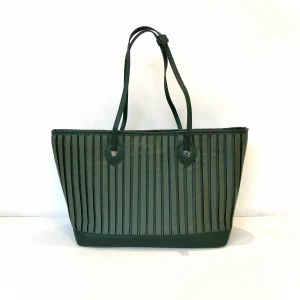
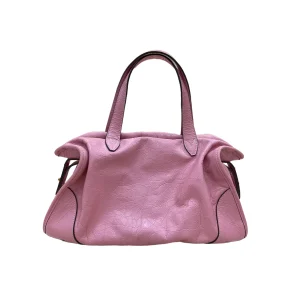
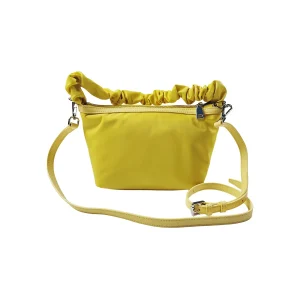
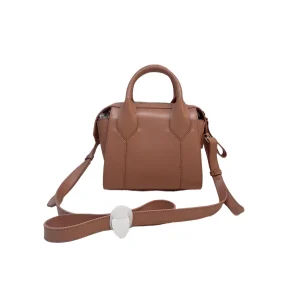
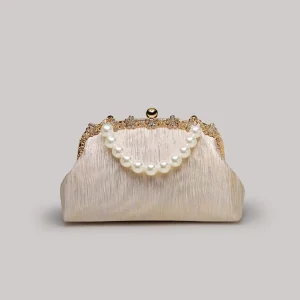
Valentino bag assortment planning in 2026 is a study in controlled contrast rather than one dominant silhouette. The arrival of Panthea alongside the expanding DeVain offer and a broad Rockstud category gives that contrast a visible retail structure. For private-label brands and sourcing teams, the useful factory perspective is how to assign distinct product roles without reproducing Valentino’s protected marks, hardware, patterns, or product identity.
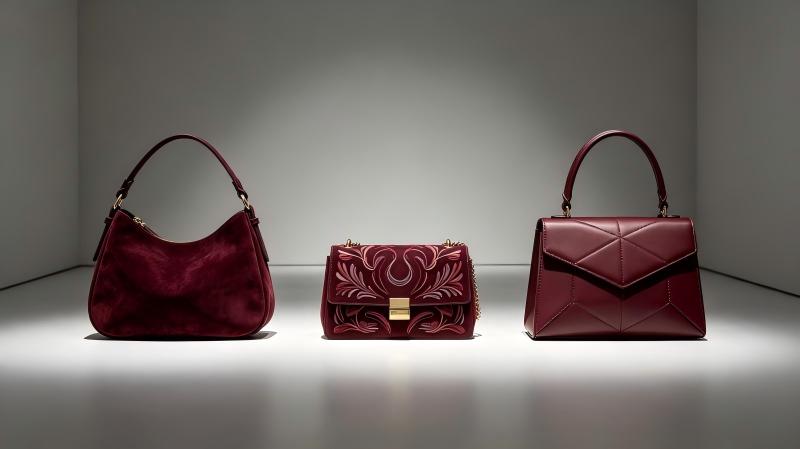
This article examines public information visible on Valentino’s official US store and recent Vogue Runway coverage. Product counts and prices are a snapshot observed on August 6, 2026; availability, market assortments, and prices can change. The goal is not to rank individual bags or infer sales. It is to understand how several clearly different product families can create choice, rhythm, and price architecture for a luxury customer.
Valentino Bag Assortment Is Built on Managed Contrast
Valentino’s current bag navigation presents several named families rather than a single seasonal story. The official pages place Panthea, DeVain, Rockstud, Rockstud Spike, Locò, Djuna, Vsling, Vain, Antibes, AllTime, VLogo Signature, and Nellcôte within the same women’s bag universe. That menu is useful merchandising evidence: a shopper can enter through surface, heritage, logo, attitude, or carry format. It does not establish sales rankings, but it shows how the retailer makes variety legible.
Three families make the contrast especially easy to read. Panthea is shown through soft shoulder shapes, chevron surfaces, suede, nappa leather, and more precious material options. DeVain occupies a richer decorative lane with embroidery, denim, pearls, rhinestones, and multicolored treatments. Rockstud maintains a much larger category spanning shoulder bags, totes, clutches, chain wallets, and pouches. Instead of asking every family to do everything, the assortment gives each one a recognizable retail job.
That distinction matters because assortment breadth alone can become noise. A long product list does not automatically create useful choice. Customers need to understand why one family belongs beside another, what occasion or mood changes, and where the price step is justified. Valentino’s public store gives a current case in which material hand, decorative intensity, and continuity all help separate adjacent offers.
Spring 2026 Establishes Light as a Creative Signal
Vogue Runway’s Spring 2026 Valentino review, published October 5, 2025, records Alessandro Michele’s glow-in-the-dark firefly invitation and a manifesto connected to Pier Paolo Pasolini’s writing about fireflies. Vogue describes Michele’s use of the image as a response to darkness and opens with Pamela Anderson’s spoken-word performance. These are runway-context facts, not bag sales data, but they establish luminosity, resistance, and emotional intensity as part of the collection’s public frame.
For bag merchandising, the transferable point is not to place literal insects on products. It is to understand how a seasonal idea can change the role of surface. A reflective thread, a controlled metallic finish, a polished edge, or a saturated lining can create a moment of light without becoming a costume object. The strongest retail use would be selective: one illuminated accent lane beside calmer leather foundations, supported by original artwork and independently developed details.
The Spring 2026 context also explains why a purely minimalist reading of Valentino would be incomplete. The collection’s message relied on expressive staging and layered cultural reference. A bag range tied to that environment needs at least one family capable of carrying visual charge. DeVain’s decorative breadth fits that retail need, while Panthea provides the pause that makes the decoration easier to see.
Pre-Fall and Resort Keep Eccentricity in the System
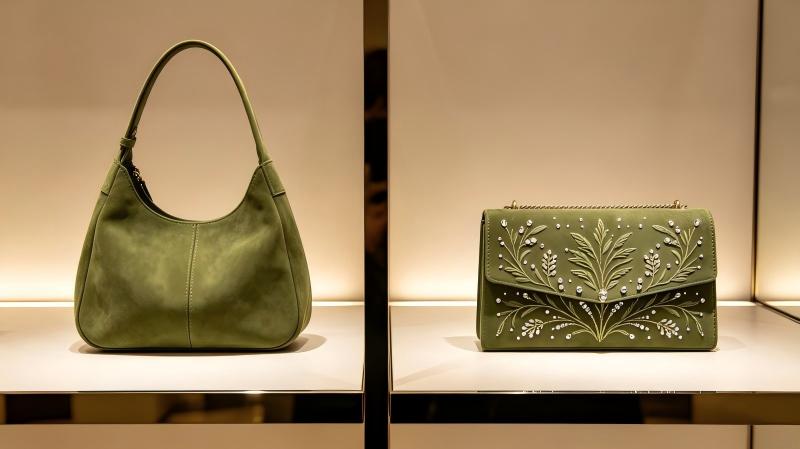
The Pre-Fall 2026 review, dated December 12, 2025, describes the tension between Michele’s expansive approach and Valentino’s reputation for pristine haute-bourgeois chic. Vogue quotes the designer questioning canonical ideas of elegance while remaining fascinated by the word. This is a useful merchandising tension: polish does not have to mean visual silence, and eccentricity does not have to eliminate structure.
Vogue’s Resort 2027 review, published June 18, 2026, extends that interpretation. It characterizes Michele’s eccentricity as integral rather than detachable and describes his work at Valentino as a graft between a formed creative vision and a historic house. That language is the critic’s analysis, but it helps explain the public assortment’s breadth. Newness can enter through texture and ornament while established families preserve recognition.
Retailers often make a mistake here: they translate a broad creative universe into too many equally loud SKUs. A better response is to use eccentricity as a controlled allocation. A small number of statement pieces can create editorial energy, while commercial colors and versatile sizes support repeat handling and daily use. The ratio depends on channel, customer, and price, but the roles must be declared before buying depth is set.
Panthea Creates the Quiet-Tactile Lane
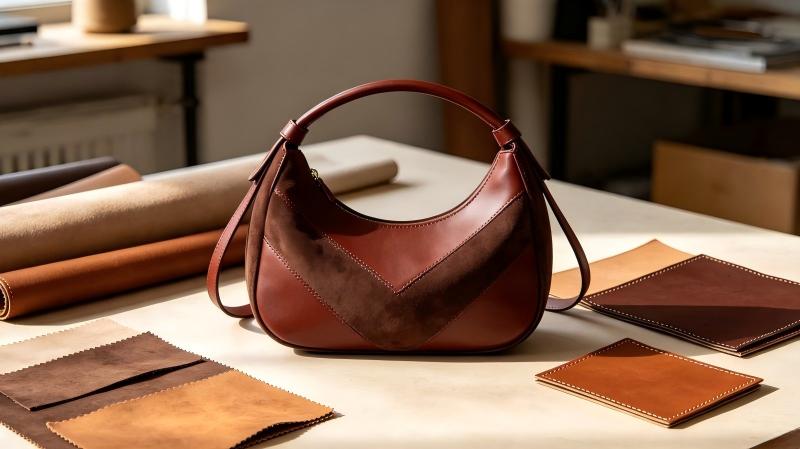
On the official Panthea page, Valentino displayed 16 items in the US market snapshot. Visible new arrivals included medium shoulder bags in suede and nappa leather with a chevron motif at $3,800 and small versions at $2,300. The page also showed nappa-only versions and more precious combinations. These prices describe the page on August 6, 2026 and should not be treated as permanent global pricing.
Panthea’s merchandising role begins with touch and drape. Suede absorbs light, nappa leather offers a smoother hand, and a chevron surface gives the soft body visual direction. The shoulder format keeps the proposition close to the body rather than turning it into a rigid display object. Even when the material value rises, the central message remains tactile and intimate.
This quiet lane does not mean featureless. Chevron paneling introduces construction rhythm; material transitions define edges; the shoulder relationship determines comfort and fall. The customer can read workmanship through surface continuity and proportion rather than through a dense field of separate ornaments. In a mixed display, that makes Panthea an effective visual rest point between more embellished products.
The assortment implication is important. A quiet family earns its place when the difference is perceptible at handling distance. If several colors use the same silhouette, each material and color needs a reason: seasonal warmth, wardrobe compatibility, day-to-evening use, or tactile novelty. Repeating nearly identical SKUs without a clear customer decision can dilute both inventory and presentation.
DeVain Turns Decoration into a Product Ladder
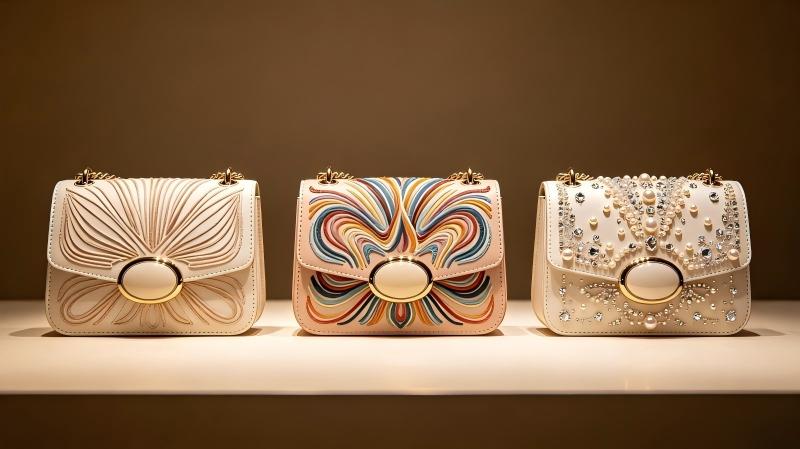
The official DeVain category presented 27 items in the same US snapshot. The visible opening products included a small embroidered shoulder bag at $3,900, embroidered denim at $3,500, several embroidery treatments at $3,200, and a pearls-and-rhinestones version at $4,700. The names and prices show a family differentiated through surface work rather than through radical changes of base carry format.
This is a different retail engine from Panthea. DeVain can hold a recognizable proportion while decoration creates reasons to revisit the family. Denim lowers the formality of the surface; pearls and rhinestones raise occasion intensity; multicolored embroidery adds collectible variation. A shopper can understand that the silhouette belongs to one family while the finish determines mood and price.
The strength of this model is also its risk. Decoration has physical weight, attachment points, abrasion behavior, and repair implications. It can affect flap closing, edge stability, garment contact, and packing. At retail, two treatments that look distinct online may appear too similar on a shelf, while a highly detailed style may need more display space and explanation. Merchandising and product engineering therefore meet at the surface plan.
Valentino’s public page also shows how decorated products can be organized by named treatment. That naming helps the customer understand why the family contains multiple expressions. An original brand should create its own vocabulary and artwork, document ownership, and ensure that the decorative method supports a clear story. Decoration is most useful when it changes the customer proposition, not when it merely adds cost.
Rockstud Works as the Continuity Anchor
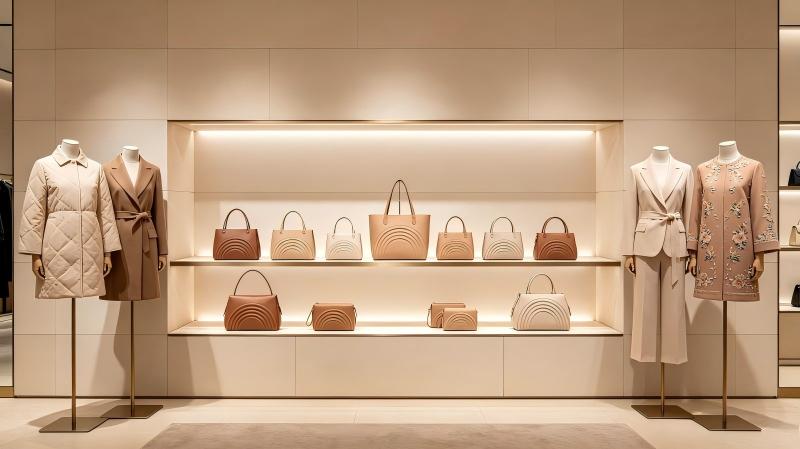
The official Rockstud page listed 52 items across shoulder bags, totes, clutches, chain wallets, and pouches. Visible Pre-Fall 2026 new arrivals included small suede shoulder bags at $1,950 in several colors. The category’s breadth is evidence of a wide current retail offer, not proof that every item carries equal demand.
Within the Valentino bag assortment, Rockstud performs a continuity role. It gives the store a family that can extend across formats and price positions while newer stories take on more seasonal risk. This type of anchor can help a customer recognize the brand’s internal navigation even as fabrication and styling change. It also offers retailers more ways to build a display across bag and small-goods categories.
For other brands, continuity should come from owned design codes, not from Valentino’s stud geometry or placement. A lawful transferable principle is to select an original detail system that can scale: perhaps a proprietary seam path, edge profile, closure logic, handle joint, color-block rule, or independently designed fitting. The test is whether the code remains useful across formats without becoming decorative clutter or creating avoidable service problems.
A continuity family also needs restraint. Extending one code into every possible size can create false breadth, where many SKUs answer the same need. The Rockstud category demonstrates how the brand currently uses multiple categories, but a smaller label may need only a shoulder bag, a day tote, and one small leather goods item to establish a credible system. Depth should follow channel evidence rather than the scale of a global luxury house.
Fall 2026 Reconnects New Direction with House Memory
Vogue Runway’s Fall 2026 review, dated March 12, 2026, opens with Michele’s first Valentino show in Rome. It describes a full-length red closing dress with a V-shaped back as both a salute to the late founder and a release after a complex exercise. The observation concerns clothing, yet it clarifies a larger brand-positioning issue: a new creative direction still needs visible points of connection with house memory.
That balance helps explain why new bag families and continuity categories can coexist. Panthea and DeVain provide current seasonal emphasis; Rockstud maintains an established navigational anchor. The customer is not asked to choose between total reinvention and total repetition. Instead, the retail architecture holds both, with different levels of texture, ornament, familiarity, and occasion.
For merchandising teams, this is more actionable than chasing a single “it bag” prediction. Hero attention can move quickly, while an assortment must cover traffic, conversion, gifting, replenishment, and wardrobe use. A balanced range needs at least one editorial magnet, one tactile commercial proposition, and one continuity code. The exact mix changes by market, but the jobs remain separate enough to measure.
A Merchandising Grid, Not a Mood Board
The most useful way to read the current Valentino offer is as a grid with three axes. The first is visual intensity, running from tactile restraint to dense embellishment. The second is continuity, running from a seasonal new arrival to a broad established family. The third is occasion, moving from daily shoulder carry to evening or collectible use. Each SKU should occupy a purposeful cell rather than exist only because its material is available.
Panthea sits toward tactile restraint and contemporary newness, with shoulder-led use. DeVain moves toward expressive surface and occasion, while still supporting multiple treatments within a shared form. Rockstud occupies the continuity axis and stretches across more categories. The runway contexts add a fourth layer: Spring’s light, Pre-Fall’s debate over elegance, Fall’s link to founder memory, and Resort’s eccentric graft all reinforce the value of contrast.
This grid prevents two common buying errors. The first is over-indexing on statement pieces because they photograph well. The second is filling the range with commercially safe products that look interchangeable. A retailer needs attention and conversion, but those jobs do not have to be performed by the same SKU. Display hierarchy, product descriptions, staff training, and inventory depth should reflect the assigned role.
Private-Label Range Planning Starts with Product Roles
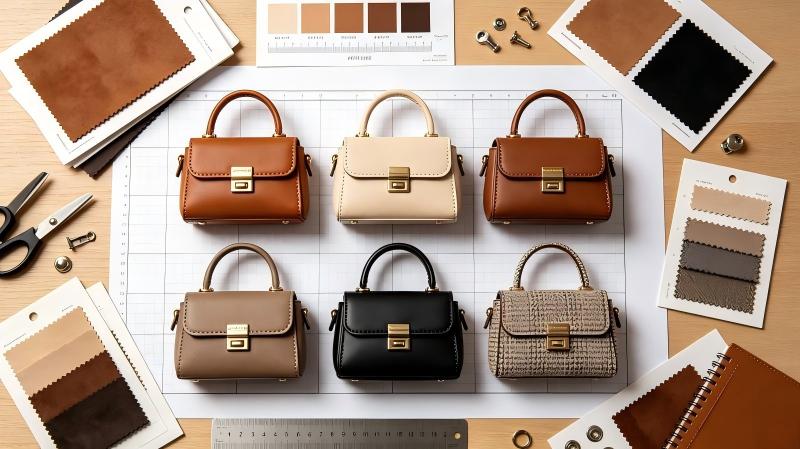
An original brand can use this contrast model without borrowing Valentino’s appearance. Begin with three written roles: a tactile everyday family, a decorative story family, and an owned continuity family. Define the customer, occasion, target retail band, carry format, visual intensity, and expected volume for each. Then decide how many SKUs are needed to make the distinction clear.
For the tactile lane, prioritize proportion, hand feel, drape, opening behavior, and wearable strap geometry. A custom leather bag development brief should specify leather category, thickness range, reinforcement zones, lining relationship, edge treatment, and acceptable natural variation. Approve the whole bag under realistic load rather than relying on a small material swatch.
For the decorative lane, build a surface map before sampling. Mark placement, stitch paths, attachment spacing, backing, fold exclusions, seam allowances, garment-contact zones, and allowable weight. An original custom handbag program also needs independent artwork files, color standards, and ownership records. Test representative decorated panels for abrasion and attachment security before expanding into many colorways.
For the continuity lane, choose a brand-owned construction or detail rule that can travel across formats. Confirm that it remains recognizable at different scales and does not create a disproportionate assembly or repair burden. The custom handbag sampling process should compare the code on at least two product sizes before it becomes a range-wide standard.
Finally, set buy depth by role. Editorial pieces may need narrow depth and strong imagery; tactile commercial products may justify deeper neutral colors; continuity products may support replenishment after evidence appears. A private-label bag manufacturing brief is more useful when target quantities, color ratios, launch windows, and approval priorities are linked to this merchandising plan.
Buyer Questions Before Approving the Range
- Separation: Can a buyer explain the role of each family in one sentence without relying on a logo?
- Overlap: Which two SKUs compete for the same customer, occasion, price, and carry format?
- Display: Does the Valentino bag assortment analysis suggest a useful contrast principle, while the proposed products remain entirely original?
- Depth: Which products deserve inventory depth, and which should remain limited editorial signals?
- Sourcing: Are material, decoration, attachment, and tolerance requirements measurable at factory approval?
- Ownership: Are all graphics, fittings, construction codes, names, and surface elements independently developed and documented?
The current Valentino bag assortment is compelling because difference is organized rather than hidden. Panthea offers tactile calm, DeVain turns decoration into a ladder, and Rockstud supplies continuity across categories. Recent runway coverage adds a broader creative frame built from light, eccentricity, memory, and change. For retailers and original brands, the practical lesson is to give every family a distinct job, then align display, price, inventory depth, and product engineering with that job.
Assortment-planning CTA: To develop an original three-lane handbag range, prepare customer profiles, target retail bands, owned design codes, material directions, SKU counts, and channel quantities, then send your RFQ for a structured assortment and sampling discussion.
This article is an independent educational analysis. It is not affiliated with Valentino. We do not produce counterfeit or replica goods, and we do not reproduce protected logos, trademarks, patterns, proprietary designs, hardware, silhouettes, or brand-identifying elements.