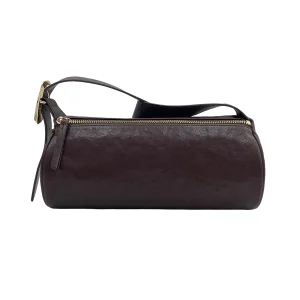
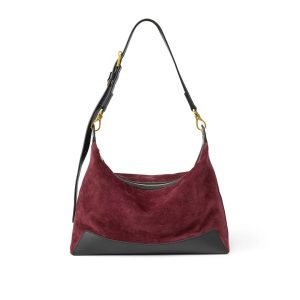
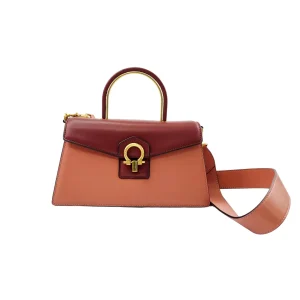
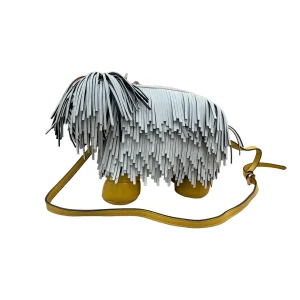
Chanel bag details in 2026 reveal a new design tempo built around opening, layering, enlarging, and movement. Matthieu Blazy’s Spring-Summer 2026 debut introduced crumpled open flaps, supersized proportions, framed shopping forms, and relaxed suede, while later collections extended those ideas through double locks, mobile chains, curved handles, and vintage-style frames. From a handbag factory perspective, the useful lesson is how an original brand can make hardware and construction perform a narrative role without reproducing Chanel’s protected designs or identifiers.
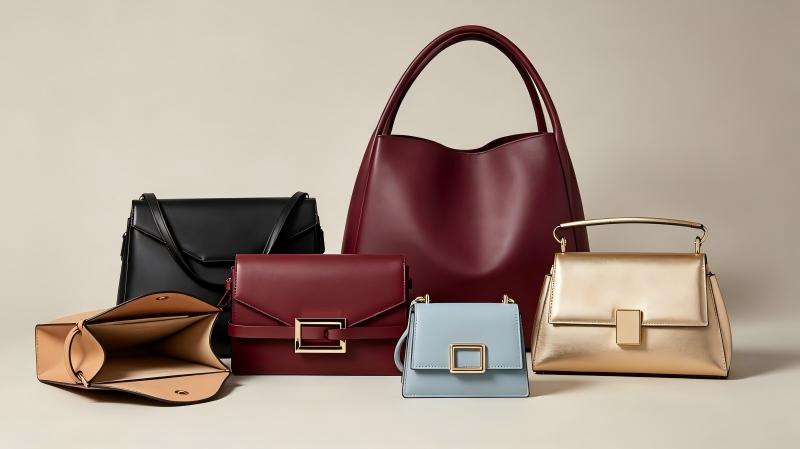
This article reads publicly documented handbags across three recent chapters: Spring-Summer 2026, the New York Métiers d’Art 2026 collection, and Fall-Winter 2026. Together they show a creative transition in which familiar codes are not erased, but handled differently. The emphasis moves away from a perfectly fixed icon toward bags that look touched, opened, layered, enlarged, or caught in motion.
The analysis relies on runway reporting and published collection coverage. It does not claim access to Chanel’s specifications, suppliers, proprietary techniques, or commercial plans. References to construction are visual interpretations intended to help independent brands ask better questions about their own lawful designs.
Chanel Bag Details Set the Pace of the Blazy Era
Matthieu Blazy’s first Chanel ready-to-wear show arrived at Paris Fashion Week in October 2025. Handbags carried unusual weight in the conversation because the house has a highly recognizable accessories archive and because a creative-director debut invites immediate comparison with what came before. British Vogue’s close look at five Spring-Summer 2026 bags documented the key changes clearly: a boutique shopping bag reinterpreted in ribbed fabric with a metal frame and 1950s-style clasp, a crushed and open 2.55, an XXL Flap, a soft suede duffle, and a sleek shoulder bag with a Y2K inflection.
Those five products do not share one material, size, or use case. What joins them is a shift in behavior. The shopping form turns packaging into an object with a frame and closure. The 2.55 appears less ceremonially closed. The Flap grows beyond conventional handbag scale. The duffle relaxes into travel volume. The shoulder bag shortens the distance between archive and contemporary nightlife styling.
That distinction matters. A brand can refresh an established category by changing the way the user encounters it, not only by adding decoration. The first view may be an exposed lining instead of a closed front. A chain may pool across a body rather than simply suspend it. A clasp may recall vintage luggage or evening bags while controlling a modern opening. Hardware, surface, and carry system become verbs.
Market attention followed the debut into the boutique phase. A March 9, 2026 Vogue Business report described the suspense between runway response and retail reality under the headline “Inside the Chanel Frenzy in Paris.” Separately, PurseBop cited limited stock and waitlist activity around the Spring-Summer launch in Paris. These reports are evidence of concentrated early interest, not proof of global sales performance, but they help explain why the new handbag language became a high-value search topic.
Spring-Summer 2026: The Flap Is No Longer Static
The “crumpled” 2.55 is the most direct statement of the debut. British Vogue described a crushed effect and an open flap revealing the leather interior. A flap bag is normally communicated through closure: the front panel, lock, and controlled geometry deliver the first impression. Styling it open reverses that hierarchy. The interior becomes visible, the flap projects outward, and the body is allowed to look handled rather than preserved.
This is not merely distressing. A convincing open-bag gesture depends on the relationship among material memory, edge flexibility, lining tension, flap weight, and hinge behavior. Too much stiffness and the opening appears forced; too little support and the bag loses the intended profile. Visually, the crushed surface adds evidence of touch. Functionally, it raises questions about how the product returns to shape, how the flap aligns with the closure, and what the user sees when access is immediate.
XXL Scale Makes Every Detail Public
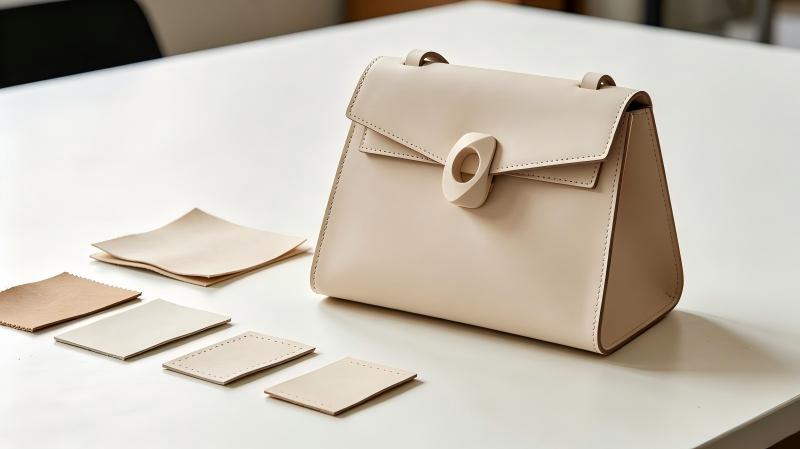
The XXL Flap enlarges a familiar category until each component has a different visual responsibility. British Vogue noted runway versions in multiple shades and textures, while Pedro Pascal arrived at the show carrying a supersized example. At that scale, a closure is no longer a small focal point; it must hold its own against a broad front panel. Strap width, attachment spacing, quilting pitch, and edge definition become legible from a distance.
Large scale also changes use. A generously sized bag may be photographed as a statement, but it still needs to manage weight, base sag, shoulder pressure, and the movement of contents. Spring-Summer 2026 treated the oversized Flap as a stylistic proposition, then later collections developed the idea through new materials and related silhouettes. That continuity suggests a product family rather than a single runway joke.
A Frame Turns a Shopping Gesture into a Handbag
The reinterpreted shopping bag used ribbed fabric, a metal frame, a clasp with a mid-century character, and a chain strap, according to British Vogue. Its interest lies in category translation. A paper shopping bag is normally open, light, temporary, and defined by folded planes. A framed handbag must introduce repeatable access, load support, edge control, and a secure carry system while preserving the clarity of that everyday reference.
The metal frame is therefore structural and semantic at once. It stabilizes the mouth while telling the viewer that an ordinary container has become a deliberate accessory. The clasp provides a small ritual at the point of entry. For independent product teams, this is a useful distinction: a frame should be selected because it controls the intended opening and reinforces the concept, not because a vintage-looking component has been added after the silhouette is complete.
Suede and the Duffle Lower the Formality
The soft suede duffle brings travel volume into the same debut while reducing the sense of hard protection. Suede absorbs light, displays directional nap, and encourages a more relaxed body. In a duffle, that softness affects the zipper line, end-panel shape, handle anchoring, and the way the bag settles when partially filled.
Placed beside the XXL Flap and framed shopping form, the duffle broadens the collection’s detail spectrum. One bag enlarges a polished front-facing code; another makes a commercial container rigid and precious; the duffle allows the material to communicate ease. The collection is coherent because each item changes the expected behavior of its category.
Métiers d’Art 2026 Turns Hardware into Character
Blazy’s second major Chanel outing took place on December 2, 2025, in New York’s decommissioned Bowery subway station. PurseBop’s detailed Métiers d’Art 2026 report describes a character-led collection animated by city references, craft textures, and accessories designed for specific fictional lives. The bags range from oversized suede totes and animal motifs to vintage-inspired minis and sculptural minaudières.
Here, Chanel bag details operate like props. They locate a product in New York, attach humor to a familiar format, or signal the personality of the wearer. This does not mean function disappears. Instead, functional components acquire a second narrative job.
The Chain Leaves Its Usual Route
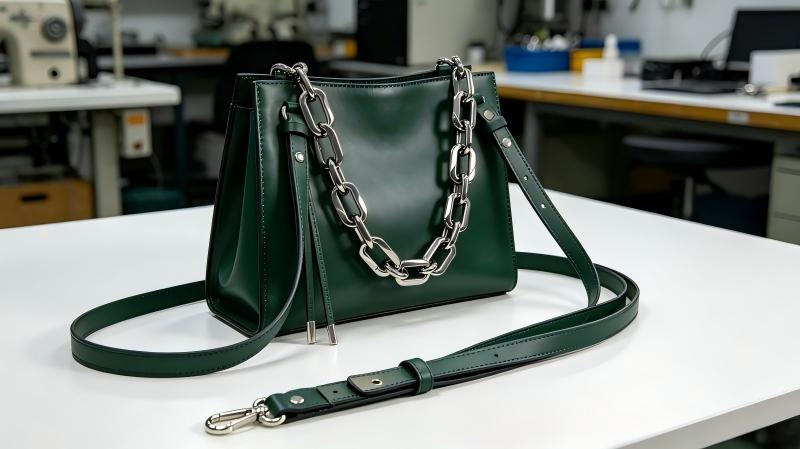
PurseBop recorded a Classic Flap whose chain extended into a dog-leash reference and was styled around the wrist. Other bags used draped chains, chain-wrapped exteriors, charm-bearing straps, or double-chain handles. The important pattern is displacement: chain is not confined to the conventional shoulder path.
Once chain moves across a body, hangs free, or changes carry position, it creates new contact points. It can rub a surface, concentrate load at an eyelet, catch on clothing, or change the bag’s balance. That makes routing a design decision. Link profile, articulation, weight, plating thickness, leather integration, and attachment reinforcement all affect whether the movement feels intentional.
For Chanel, the chain remains a house-identifying code, so its exact visual arrangements are not generic development instructions. The transferable insight is broader: take a familiar functional component and ask whether its route can express a story. An independent brand might develop its own webbing path, modular cord, original link geometry, or adjustable connector to produce movement without borrowing a protected signature.
Charms Become Scene-Setting Devices
The New York collection used subway, skyscraper, coffee, animal, and city references across accessories and garments. The handbags included literal animal forms, a coffee-cup holder, an apple minaudière, and multiple charm-led pieces. These objects do more than decorate a base bag; they establish place and character.
That strategy has merchandising value because it creates a ladder of commitment. A shopper may choose a practical tote with a small narrative detail, a classic-format bag with a more visible charm treatment, or a hard-case novelty object that functions as a collectible statement. The same story can therefore occupy different price, capacity, and occasion roles without every SKU using the same motif.
Curved Handles and Vintage Frames Change Posture
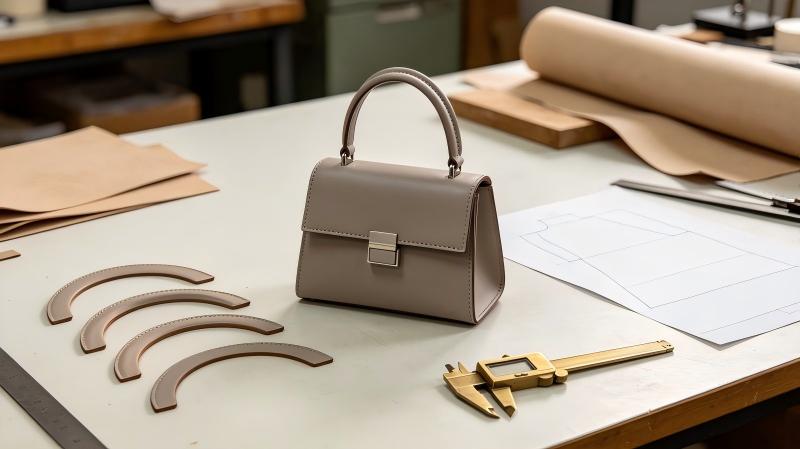
Métiers d’Art introduced and repeated curved top handles attached with stud-like hardware, kiss-lock purses, cylindrical forms, and framed clutches. A curved handle lifts a bag into a more upright, handheld posture. A kiss-lock concentrates interaction at the center of a frame. A cylinder redirects attention to its end panels and the relationship between handle and axis.
These choices create different gestures at retail and on the body. The customer holds, opens, and places each form differently. That is why hardware cannot be assessed only as a finish color or logo carrier. Its placement determines posture, and posture affects the perceived character of the bag.
Fall-Winter 2026 Builds Meaning Through Layers
Chanel presented Fall-Winter 2026 on March 9 at the Grand Palais. The collection moved between metallic color, feathers, fringe, lace, tweed, monochrome restraint, and a construction-site atmosphere. Vogue Runway’s collection record establishes the timing and runway context, while PurseBop’s Fall-Winter 2026 handbag report documents the extensive bag lineup.
The new season does not reset the Spring vocabulary. It repeats the Maxi Flap, suede softness, open styling, top-handle forms, and city-developed ideas while adding layers and new surface treatments. This continuity is one of the most commercially relevant signals in the current Chanel bag details: the language can evolve across seasons without requiring a completely new foundation each time.
Two Locks Create a Visual Sequence
The layered Flap combines two front flaps and two different closure positions, turning entry into a visible sequence. It also combines different chain treatments in the strap. Even without handling the object, the viewer reads a hierarchy: upper layer, lower layer, one locking point, then another.
Layering can add function, but it also adds thickness, hardware weight, alignment risk, and potential friction. The lower flap must remain accessible; the upper flap must sit cleanly; closures must not compete for hand space. In visual terms, the second lock creates density. In functional terms, it demands tighter tolerance management.
Draped Chains Become Surface Composition
Fall-Winter coverage describes a 2.55 Reissue with bold chain strands draped across its body and anchored near the lock. This converts chain from suspension hardware into surface composition. The effect reinforces the season’s interest in ornament, movement, and the visible construction of an icon.
A surface chain must be considered under motion. Where does it rest when the bag is upright? Does it strike the closure? Can it mark soft leather or snag an embroidered textile? Does it shift into an unintended position? These questions are part of the aesthetic outcome, because uncontrolled movement quickly changes a deliberate composition into visual noise.
Flat Quilting Lets Other Details Speak
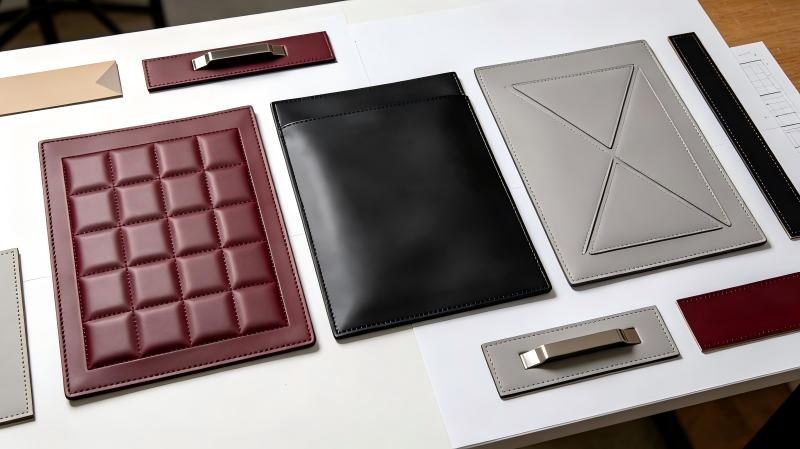
The Fall-Winter selection repeatedly uses flatter quilting, alongside smooth unquilted leather, suede, tweed, embroidery, sequins, satin overlays, and croc-embossed calfskin. Reducing loft changes the visual volume of the front panel and allows a closure, trim, handle, or strap path to take more attention.
Flat quilting also links the structured and relaxed ends of the range. On a trapezoid flap it can support architectural clarity; on a hobo it can follow a softer curve. The same surface family therefore behaves differently according to reinforcement and panel geometry. That flexibility helps a collection maintain recognition while expanding into new categories.
Trapezoids, Hobos, and Clutches Test the Same Vocabulary
The new trapezoid Flap takes the Maxi’s clean architectural direction into a more structured outline, with versions in flat quilting and grained calfskin. The Fall-Winter report also identifies a rotating closure variation, metal-edged smooth flaps, semi-structured hobos with rigid bases, and vintage-inspired clutches built around rigid bars or curved metal bands.
These are distinct silhouettes, yet their details share an approach: the hardware clarifies the geometry. A metal outline emphasizes a trapezoid. A plated side slot explains how a strap passes through a hobo. A rigid band controls a crescent clutch. The hardware is placed at the point where the form needs definition.
This is a stronger collection principle than repeating one decorative item everywhere. It lets each bag solve a different structural problem while maintaining a shared attitude toward visibility and movement.
A Six-Part Detail Vocabulary for Collection Planning
Across the three collections, six families organize the visible change:
- Exposed access: open flaps, visible interiors, and closures that make entry part of the styling.
- Layered closure: doubled flaps, multiple locking points, and front panels that create a sequence.
- Mobile hardware: chains that drape, wrap, extend, or become part of the surface composition.
- Posture hardware: curved top handles, frames, rigid bands, and side slots that determine how a bag sits and is held.
- Scale contrast: XXL flaps, compact minis, and collectible minaudières that make detail density change by size.
- Surface hierarchy: flat quilting, distressed effects, suede, overlays, and embellishment that decide whether hardware leads or supports.
This vocabulary also explains why the accessories feel connected despite their variety. Each product does not need every feature. One bag can be about exposed access, another about mobile hardware, and another about posture. The collection remains legible because the same actions recur in different combinations.
Original Hardware Development for Private Label Bags
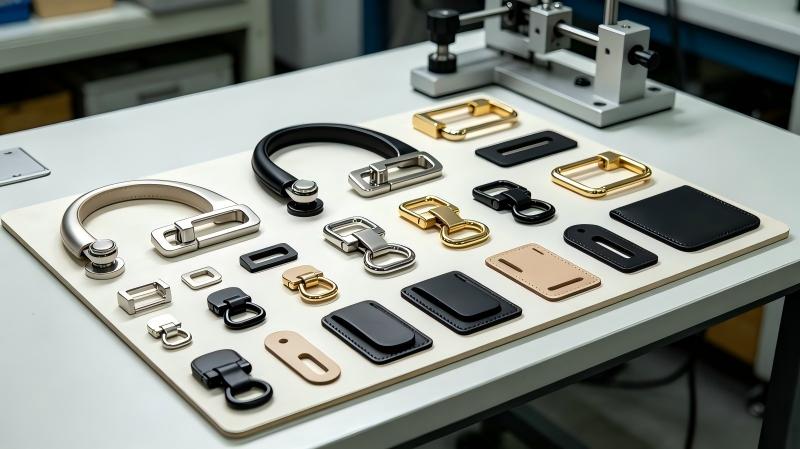
Independent brands should translate the six actions into requirements, not Chanel references. For an original custom handbag, “mobile hardware” might mean a proprietary swivel path or modular connector designed around the client’s own identity. “Layered closure” might become an independently drawn envelope system with a single original clasp. “Posture hardware” might lead to a custom handle mount whose geometry is specific to a new body shape.
The brief should state what the component must accomplish: opening angle, cycle life, target weight, attachment load, plating performance, sound, edge clearance, and contact with the bag surface. A component that looks refined in isolation can still fail if it rotates, scratches, loosens, or pulls the panel out of shape.
Early prototypes should isolate the risky interaction. The custom handbag sampling process can test a closure on a simplified panel, a chain route on a weighted mock-up, or a curved handle on several reinforcement layouts before a complete premium sample is built. This reduces confusion between a material problem, a component problem, and an attachment problem.
Hardware Brief Questions
- Which user action should the detail make clearer: opening, carrying, adjusting, placing, or organizing?
- Which part moves, and what surfaces can it contact during normal use?
- Does the component remain balanced at the intended bag scale and filled weight?
- Can the design be serviced or replaced without damaging the primary body?
- Which dimensions and visual features establish the client’s original identity?
- What testing evidence should a sourcing team review before approval?
Buyers evaluating luxury handbag OEM manufacturing solutions should also separate standard engineering choices from protected brand expression. Generic functions such as a frame, swivel, magnet, zipper, or handle mount can support many original designs, but a distinctive branded lock, chain arrangement, quilting layout, silhouette, or total visual impression should not be reproduced.
Why the Detail Shift Has Lasting Value
Chanel’s 2026 handbag direction demonstrates that heritage can feel current when interaction changes. Spring opened and enlarged the icon. Métiers d’Art made components carry character and place. Fall-Winter layered the vocabulary, flattened some surfaces, and extended it into trapezoids, hobos, clutches, and sculptural minis.
The most useful conclusion is not that chains, double locks, or oversized flaps should appear in every collection. It is that a detail deserves a defined job. It can reveal access, establish posture, create movement, control geometry, or carry narrative. When its job is clear, material, construction, testing, and merchandising decisions become easier to align.
For private-label teams, Chanel bag details are therefore valuable as evidence of a broader design principle: the smallest visible component can reset the behavior of a familiar category. The lawful opportunity is to identify an action relevant to a brand’s own customer, then develop original hardware, proportions, panel structures, surfaces, and identifiers around that action.
Original-design reminder: Public runway research can identify category movement and functional questions, but commercial products should use independently developed silhouettes, patterns, hardware, quilting, surface treatments, graphics, and brand identifiers. Appropriate intellectual-property review should be completed for intended markets before production.
This article is an independent educational analysis. It is not affiliated with Chanel. We do not produce counterfeit or replica goods, and we do not reproduce protected logos, trademarks, patterns, proprietary designs, hardware, silhouettes, or brand-identifying elements.