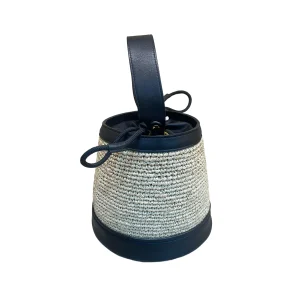
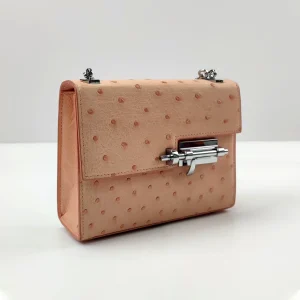
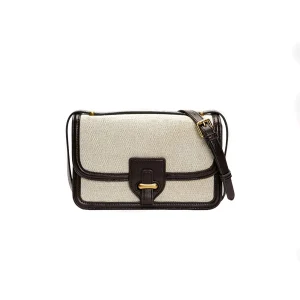
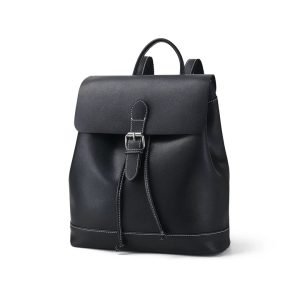
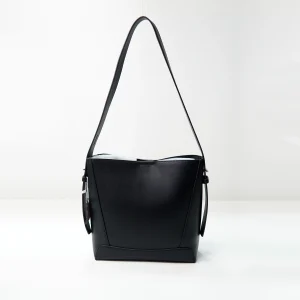
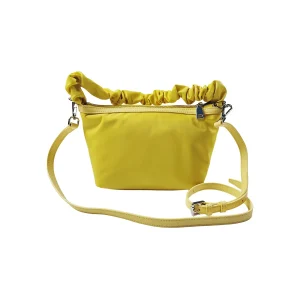
The Bridge leather style is built on a productive contrast between Italian material culture and an English-inflected language of practical elegance. The brand’s official Spring-Summer 2026 presentation keeps that identity current through a seasonal edit of women’s bags and accessories rather than abandoning its established codes. For private-label teams and sourcing managers, the useful lesson is how a clear material promise, recognizable functional categories, and controlled seasonal change can support an original leather-goods range.
The Bridge Leather Style Is a Two-Part Brand Code
The clearest description of the brand comes from The Bridge’s official website: it combines refined Italian craftsmanship with a romantically retro English aesthetic, while declaring that leather is the protagonist. Those ideas are not interchangeable. Italian manufacture provides the material and craft foundation; the English reference gives the collection a visual and functional frame. Together they position the product between the warmth of a Florentine leather workshop and the orderliness of a traditional satchel, briefcase, portfolio, or travel piece.
This dual code helps explain why the assortment can feel coherent across women’s bags, backpacks, work accessories, small leather goods, gifts, and home objects. The customer is not asked to understand a different design thesis in every category. Instead, familiar themes recur: leather that is meant to be seen and handled, shapes that communicate purpose, restrained ornament, and details that suggest long-term use. The categories may change, but the worldview does not.
That consistency is commercially important. A leather brand becomes memorable when shoppers can predict the experience before recognizing a specific item. They expect a certain balance of warmth and structure, nostalgia and utility, refinement and daily practicality. The Bridge leather style therefore operates less like a single signature bag and more like a system. It can accommodate seasonal introductions without making every launch responsible for reinventing the brand.
Italian Manufacture Provides the Material Foundation
The brand’s public language places Italian craftsmanship at the center of its value proposition. It also repeatedly presents leather as the star rather than treating it as a neutral substrate for conspicuous decoration. That distinction matters. When material leads, the design must leave room for grain, color depth, edge treatment, seams, handle attachment, and the way a surface changes under light. Even a relatively simple bag can carry visual richness when the leather and construction are allowed to remain visible.
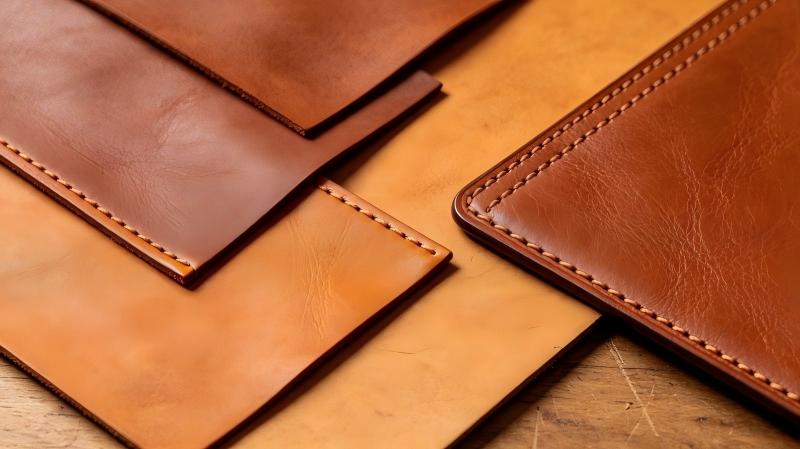
For an observer, this creates several visible product expectations. Panels should appear intentional rather than unnecessarily fragmented. Edge finishing must suit the desired degree of formality. Stitch lines become part of the graphic composition. Hardware should support closure and carrying functions without overwhelming the leather. Color needs enough depth to work across a large uninterrupted surface. None of these observations discloses how The Bridge produces its goods; they are design-reading principles available from the brand’s public presentation.
Leather-centered positioning also creates a particular relationship with time. A highly polished fashion surface can be evaluated at first glance, while a natural-looking leather article invites the customer to imagine wear, touch, and gradual character. The emotional promise is not simply durability. It is continuity: a work bag, shoulder bag, document case, or accessory can become associated with routines and travel. This is one reason warm browns remain powerful in heritage leather markets, even when seasonal colors rotate around them.
The manufacturing implication for an original collection is to define the desired aging behavior before selecting a leather category. Teams should discuss whether the range calls for a clean uniform surface, a visible natural grain, a soft hand, a firm structured temper, or a finish that develops character with handling. Abrasion response, color transfer, water sensitivity, edge performance, and care guidance must then align with the intended use. A compelling material story is credible only when sampling and testing support the promise made to the customer.
English Retro Utility Supplies the Visual Framework
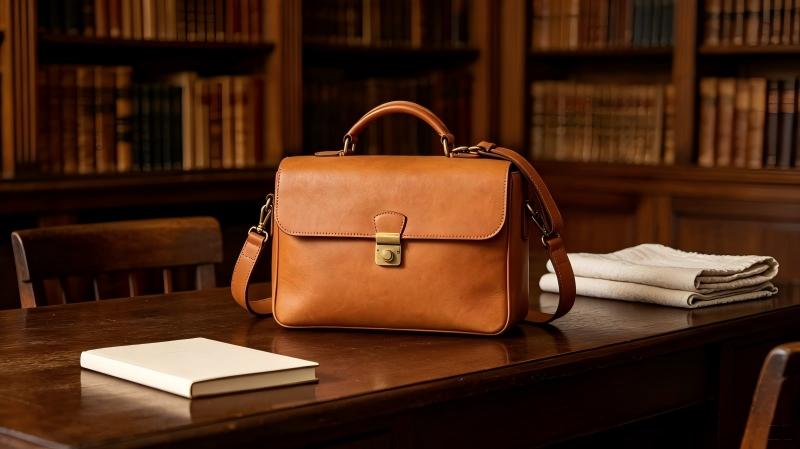
The English side of the brand code is best understood as an organizational language. Traditional school satchels, document carriers, field bags, portfolios, and travel cases share an emphasis on legible purpose. Their forms tend to be easy to read: a flap protects an opening, a buckle or tab marks closure, a handle signals hand carry, and a shoulder strap expands mobility. The reference is romantic because it evokes libraries, travel, work, and accumulated personal objects; it remains useful because those categories still solve contemporary needs.
Retro does not have to mean costume. The strongest heritage products edit historical cues rather than stacking them. A clean rectangular body may carry one expressive closure. A curved shoulder silhouette may retain a practical gusset. A backpack can borrow the visual gravity of a leather work case while adopting a more comfortable carrying system. The design discipline lies in deciding which cue carries the story and which elements should recede.
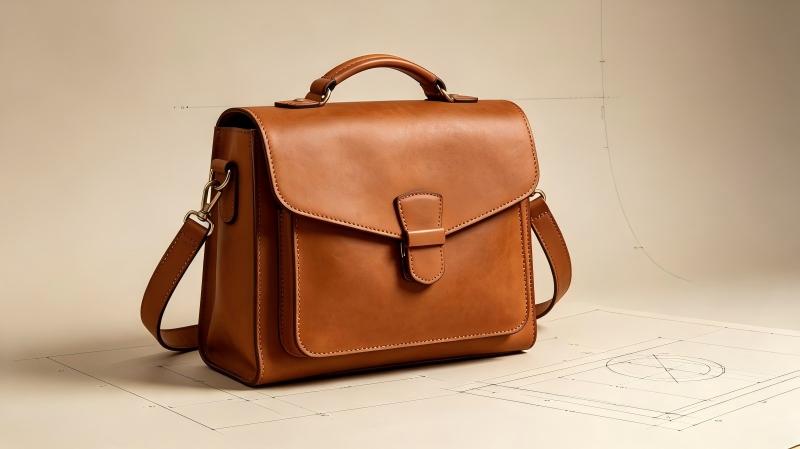
This framework gives The Bridge a natural vocabulary for both professional and leisure use. The official site maintains visible categories for women’s bags, backpacks, and envelope portfolios, alongside broader accessory and gift groupings. That architecture reinforces the idea that the brand equips a lifestyle instead of competing only through occasional fashion statements. A shopper can move from a day bag to a work piece or a small gift without leaving the same material world.
For brand positioning, category adjacency is as important as silhouette design. A portfolio can make a shoulder bag feel more professional; a backpack can make the overall offer more mobile; a desk or home accessory can extend the leather story beyond dressing. The result is a network of use occasions. The Bridge leather style gains depth because its retro note is attached to practical objects, not applied as surface decoration alone.
Spring-Summer 2026 Refines the Code Instead of Replacing It
The official Spring-Summer 2026 women’s collection page presents new bags and accessories for summer. The brand’s Italian new-arrivals page similarly describes the season through an authentic, considered style. These are modest statements, but they reveal a useful strategy: seasonality is framed as a new interpretation of an established identity, not a rupture.
That approach is especially suitable for leather goods. Bags often remain in use longer than apparel, and customers may encounter permanent and seasonal products together. If every season changes the fundamental design language, the assortment can look fragmented at retail. A heritage-positioned brand instead has room to update scale, color, carrying mode, softness, or occasion while keeping the core material and functional story stable.
For spring and summer, visual lightness can be achieved without abandoning substance. A smaller body, a softened gusset, a shorter flap, an open-top construction with secure internal organization, or a more flexible strap can change how a bag feels in warm-weather dressing. Color can move beyond dark professional tones into sun-washed neutrals, muted greens, softened reds, or other seasonally relevant shades, provided the palette still complements the leather-led identity. The point is controlled movement, not novelty for its own sake.
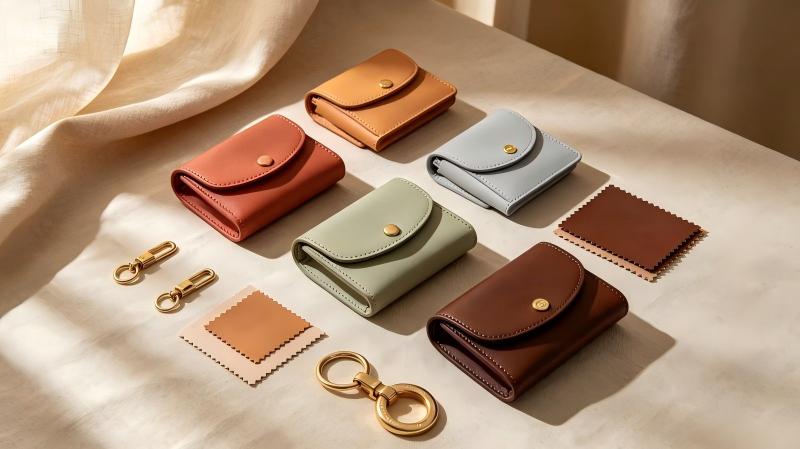
This pattern has search value because customers looking for a current collection still want to understand what makes the brand distinct. A seasonal page attracts immediate interest, but the enduring answer remains the same combination of leather, craft, and useful retro forms. Editorial content should connect those two levels. Describing only new colors would miss the positioning; describing only heritage would miss the reason a shopper is searching now.
Bags, Backpacks, Portfolios, and Accessories Form One Lifestyle System
The official women’s assortment is broader than a single handbag family. Its navigation highlights women’s leather bags, while separate categories cover women’s backpacks and envelope portfolios. The site also extends into other leather accessories, gifts, agenda covers, and home decor. This breadth is a current merchandising signal: the central idea is portable across multiple objects.
A coherent system benefits both customer acquisition and retention. An entry purchase might be a small accessory or gift, while a later purchase could be a work bag or travel piece. Different categories allow the same customer to express the identity at different price and commitment levels without requiring the brand to dilute its message. The breadth also makes gifting more natural because the product universe contains practical objects for varied recipients and occasions.
The merchandising lesson is not simply to add more SKUs. Each category should reinforce the same promise while earning its place through a distinct use case. A portfolio should organize documents efficiently. A backpack should distribute weight and protect contents. A shoulder bag should balance access with security. A small leather good should make frequent handling satisfying. When function is vague, category expansion becomes noise; when function is precise, it adds evidence to the brand position.
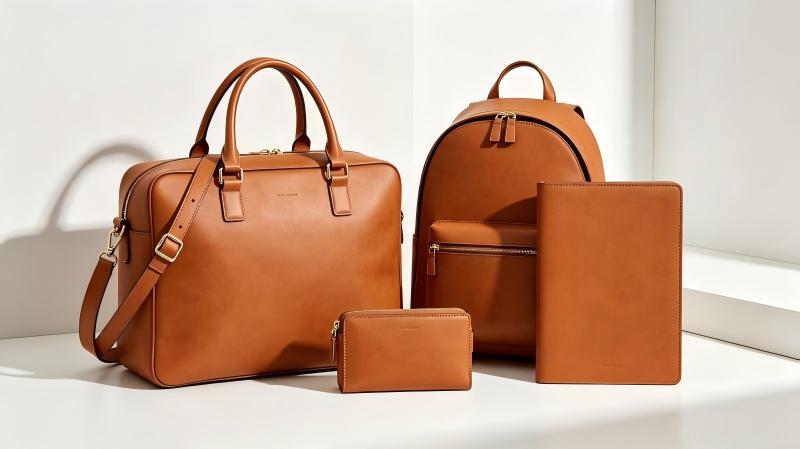
Range planners can map this system as a matrix of occasions and carrying modes. Work, commuting, weekend, travel, gifting, and home use occupy one axis; hand carry, shoulder carry, crossbody, backpack, and stationary use occupy another. Gaps in the matrix can reveal opportunities, but they should be filtered through the brand code. The strongest extension is not always the largest market category. It is the category that makes the existing story more believable.
Structure, Closures, and Pockets Make the Promise Tangible
Heritage utility is convincing only when the bag behaves well. Structure determines whether the product reads as formal, relaxed, or adaptable. A firm base and controlled gusset can preserve a professional outline; a softer body can support casual use but may require additional internal organization. The opening must match the customer’s pace. A layered flap creates security and a strong visual cue, while a zip or open top changes access speed and construction demands.
Closures deserve particular attention because they unite appearance and interaction. A buckle can signal tradition but may frustrate frequent access unless the operational mechanism is simplified. A turn lock or magnetic closure can improve convenience, yet its visible design should remain proportionate to the leather surface. Designers should evaluate the closure both as a two-dimensional detail and as a repeated hand movement. The sound, resistance, alignment, and durability of that movement influence perceived quality.
Pocket planning is equally strategic. Laptop sleeves, document dividers, phone pockets, key retainers, and zipped security compartments can turn a handsome shell into a reliable daily tool. However, organization adds layers, weight, and sewing complexity. An overbuilt interior can make a medium bag feel cramped. Prototype reviews should therefore use representative contents and realistic carrying durations rather than relying only on an empty tabletop inspection.
Straps and handles complete the functional system. Attachment points must carry expected loads without distorting the body. Drop length should account for clothing and regional customer preferences. Removable straps increase flexibility, but rings, hooks, and reinforcement must be integrated into the design rather than added late. These decisions are transferable to any original leather range; they do not require borrowing a protected silhouette or branded detail.
Color and Surface Can Carry Seasonal Change
A stable silhouette does not have to produce a static collection. Color and surface provide a lower-risk way to express the season, especially when the brand already owns a strong functional vocabulary. Core shades can support continuity, while a small group of seasonal tones creates display freshness. The assortment should still make sense when permanent and seasonal items share one shelf, one campaign, or one ecommerce collection page.
Surface variation can also adjust the emotional register. Smooth leather tends to emphasize precision and formality. Visible grain can feel tactile and forgiving. Softer leather can make a structured category more relaxed, while a firmer temper can give an everyday shape a professional character. The same color may appear dramatically different across these surfaces, so palette approval should use production-representative material rather than digital swatches alone.
The Bridge leather style demonstrates why color should serve positioning instead of behaving as an isolated trend layer. A saturated seasonal shade can still belong if the finish, proportion, and detailing preserve the brand’s material-first tone. Conversely, a classic brown product can feel disconnected if its hardware, scale, and construction communicate a different market promise. Coherence is the result of relationships among decisions, not the presence of one heritage color.
Brand-Positioning Lessons for an Original Private-Label Range
For a private-label brand, the transferable principle is to build a contrast that can generate many products. The Bridge publicly articulates Italian craft and English retro aesthetics; another business needs its own pair of ideas, grounded in its customer and capabilities. It might combine architectural restraint with outdoor practicality, soft tactility with precise organization, or urban mobility with low-impact material choices. The combination should be specific enough to guide decisions and broad enough to support a range.
Start by writing the brand code as observable rules. Define the preferred silhouette geometry, surface character, hardware presence, color temperature, degree of organization, and intended use occasions. Then identify a few exclusions. A brand that promises quiet material quality may exclude decorative hardware that competes with the surface; a mobility-led brand may reject closures that demand two-handed operation. Exclusions protect coherence when multiple designers or suppliers are involved.
A capable private-label bag manufacturing partner can help convert those rules into development options, but the brand should retain ownership of its original creative direction. Early material boards should be evaluated beside proportion studies and capacity targets. The first sample should answer whether the concept works in three dimensions, not merely whether the factory followed a drawing. Later rounds can refine edge quality, reinforcement, stitch density, strap comfort, hardware action, and packaging requirements.
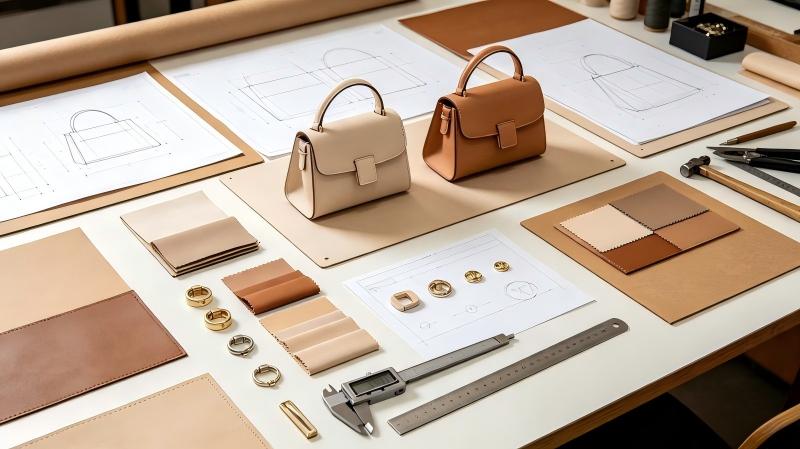
Teams developing an original leather program can review custom leather bag options and align the material brief with the intended price, performance, and care story. When the range requires broader engineering support, luxury handbag OEM manufacturing solutions should be assessed against sampling communication, material traceability, component control, testing plans, and repeatability. These are sourcing criteria, not claims of equivalence with any analyzed luxury brand.
The legal and creative boundary must remain explicit. Brand teams should develop their own proportions, panel architecture, hardware, artwork, naming, and visual identifiers. Reference research can reveal general market movements such as demand for work-ready organization, warm leather surfaces, or versatile carrying modes, but it should never become an instruction to reproduce a protected product. Original design is both a compliance requirement and the basis for a defensible long-term position.
Buyer Questions Before Briefing a Leather Collection
What makes The Bridge leather style strategically coherent?
Its public positioning connects Italian craftsmanship and leather-centered value with a romantic English retro aesthetic. The category architecture then reinforces that combination through bags, backpacks, portfolios, accessories, gifts, and home objects. Seasonal updates sit inside this stable framework rather than replacing it.
Which elements can a private-label brand learn from without imitating products?
Teams can study abstract principles: how a material promise guides design, how functional categories support a lifestyle position, how closures communicate use, and how seasonal color refreshes a stable range. They should create proprietary shapes, construction architecture, hardware, graphics, and brand identifiers.
How should a sourcing team evaluate leather for a heritage-positioned bag?
Specify the intended visual character and aging behavior, then test physical performance relevant to the use case. Review color consistency, crocking, abrasion, flexing, finish adhesion, water response, edge behavior, odor, and compatibility with reinforcement and adhesives. Care instructions should accurately reflect the selected material.
How many categories should an original launch include?
There is no universal number. A focused launch should cover distinct customer occasions while remaining manageable for sampling, minimum quantities, color planning, and quality control. One strong day bag, one mobility option, and a small coordinating item may tell a clearer story than a broad but repetitive assortment.
What should be resolved before requesting factory quotations?
Provide target dimensions, intended contents, material direction, construction expectations, hardware finish, lining and pocket requirements, colorways, quantity assumptions, target market, compliance needs, packaging, testing expectations, and timing. Unresolved choices should be labeled as options so quotations can state their assumptions.
Build a Position That Can Outlast One Season
The lasting insight is not a particular satchel, shade, or closure. It is the discipline of making every category express the same relationship between material and use. The Bridge shows how a leather-first identity can absorb a Spring-Summer 2026 update, extend from bags to professional and lifestyle objects, and remain recognizable through controlled change.
For an original collection, begin with a clear proprietary brand code and test it across the products customers actually need. Dongguan Junhao Handbag Co., Ltd. can support development conversations around material direction, structure, carrying comfort, organization, and assortment feasibility. To discuss an original concept, prepare the positioning rules and key use cases, then send your RFQ with the decisions already made and the questions that sampling must answer.
This article is an independent educational analysis. It is not affiliated with The Bridge. We do not produce counterfeit or replica goods, and we do not reproduce protected logos, trademarks, patterns, proprietary designs, hardware, silhouettes, or brand-identifying elements.