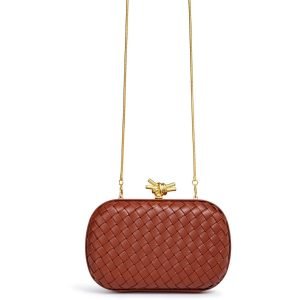
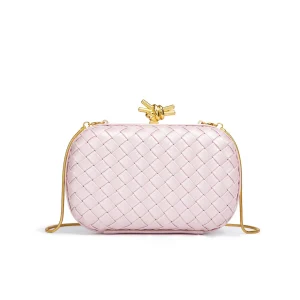
Cuyana System Tote offers a clear 2026 case study in merchandising one adaptable work bag as a complete customer system. Cuyana’s current homepage gives prominent space to a System Tote anniversary collection alongside new arrivals, a fall lookbook and a work-bag finder. From a private-label and OEM perspective, Cuyana System Tote shows how an original hero product can support sizes, inserts, accessories, colors and services without turning the assortment into disconnected styles.
Why Cuyana System Tote is a merchandising system
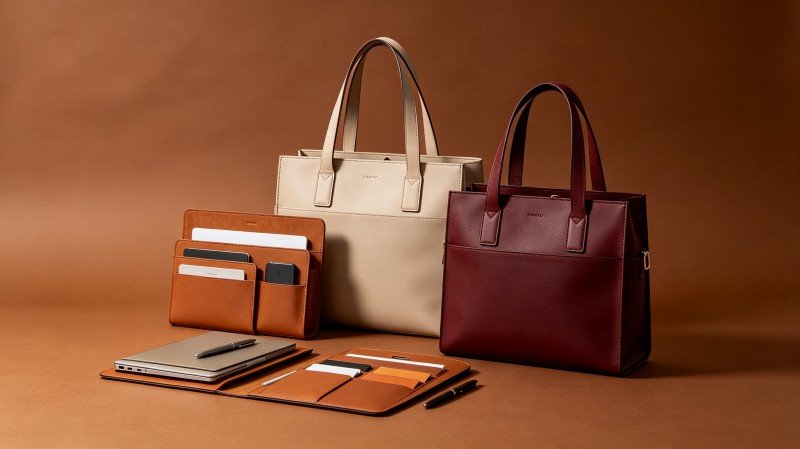
A hero tote becomes a system when the customer can understand what stays constant and what can change. The public System Tote anniversary presentation gives the product family a timely retail reason to return to the foreground. The anniversary framing creates editorial relevance, while the modular idea gives shoppers practical reasons to compare configurations.
Cuyana System Tote is useful to study because the product proposition extends beyond a single exterior. The wider public assortment connects totes with organization, work use, small leather goods and accessories. That relationship encourages a customer to begin with a core bag and then refine it for a laptop, daily essentials, travel or a particular season.
For an independent brand, the transferable principle is range legibility. Define the hero silhouette, its intended load and the customer problem it solves. Then add only modules that make that promise clearer. A second size, an insert or a strap should answer a different need, not merely increase the number of stock-keeping units.
Cuyana System Tote also demonstrates the value of a stable name architecture. A customer should be able to recognize the base family across a product page, store fixture, email and care guide. Private-label teams can create their own names and owned visual cues while applying the same discipline to assortment structure.
Six current hotspots around the anniversary range
The first hotspot is the anniversary collection itself. The Cuyana homepage currently announces a new anniversary collection and links directly to new arrivals. An anniversary creates a natural moment to refresh photography, materials or colors while preserving the familiarity of the hero product.
The second hotspot is the dedicated System Tote celebration in the main navigation. Giving a product family its own editorial destination signals that the story deserves more space than a standard collection filter. For retailers, this creates an opportunity to explain the system, compare components and reduce uncertainty.
The third hotspot is work-bag discovery. The homepage links to “Find Your Work Bag,” placing customer tasks ahead of a purely aesthetic classification. Cuyana System Tote fits this discovery logic because shoppers can evaluate capacity, organization and carry rather than browsing only by color.
The fourth hotspot is the fall lookbook. A lookbook lets the same tote appear in an outfit and seasonal context. It can show scale, movement and color coordination, which are difficult to communicate through isolated product shots.
The fifth hotspot is the visible relationship between totes, small leather goods and accessories. A modular hero can create useful cross-category merchandising when pouches, organizers or straps have a defined role. The factory implication is dimensional compatibility and controlled attachment geometry.
The sixth hotspot is Cuyana’s “Fewer, better” positioning and the Revive resale destination linked from its site. Together, these public signals frame longevity, wardrobe editing and continued product life as parts of the customer relationship. Any sourcing interpretation should remain cautious: the relevant lesson is to design, describe and service a product so that customers can use it for longer.
Build the hero before extending the range
Cuyana System Tote begins with a recognizable tote function: an open, useful volume supported by handles and an organized interior option. Before planning a family, an original brand should approve the hero in its most demanding use case. That means loading the bag with the stated work objects and testing the opening, handle roots, base, lining and balance.
Set five non-negotiable attributes for the hero. They may include the front-to-side ratio, handle drop, opening behavior, base stability and an original seam or edge language. These constants keep the family recognizable. Color, insert layout, strap option and size can then change within controlled limits.
A tote often looks simple because it has large uninterrupted panels. That simplicity raises the standard for leather selection, cutting, reinforcement and edge consistency. Test whether the body should stand, soften or fold when empty. Show that behavior honestly in photography; do not force a relaxed product into a rigid presentation.
Cuyana System Tote provides a retail example of why the base bag and organization component must be evaluated together. The insert should not distort the exterior, block the opening or add excessive weight. Its dimensions need tolerances that work across production lots, not only with one approved sample.
A size ladder based on customer jobs
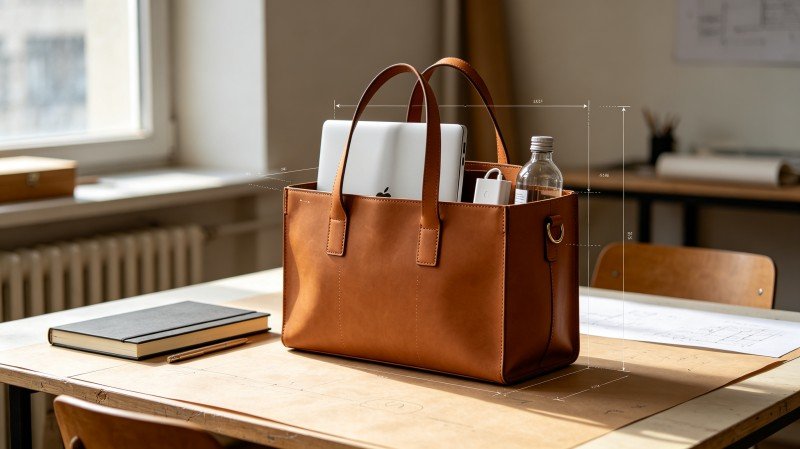
A coherent size ladder begins with jobs, not percentages. The largest member may serve a laptop, documents, charger and personal items. A medium version may prioritize a tablet and daily essentials. A compact version may act as a light workday or weekend tote. Each needs its own capacity block and opening test.
Cuyana System Tote illustrates why scaling cannot be mechanical. If every dimension changes by the same percentage, handle clearance may become uncomfortable, pockets may become unusable and the bag may look too deep. Redraw the opening, handle position, base reinforcement and pocket spacing for each size.
Publish an object list that separates “fits inside” from “fits comfortably while organized.” A laptop that technically enters at an angle may be difficult to remove in a meeting. A bottle pocket may consume the space required for a charger. Retail content should explain the trade-off instead of promising unlimited capacity.
Use a comparison table internally, even if the customer page uses a simpler visual. Record body dimensions, opening width, handle drop, empty weight, target load, device size, insert compatibility and channel role. This prevents two neighboring sizes from solving the same problem.
Cuyana System Tote can therefore be read as a range-planning lesson: preserve a familiar identity while giving each size a precise reason to exist. That clarity helps buyers forecast inventory by customer job rather than by visual preference alone.
Modular inserts should improve, not consume, capacity
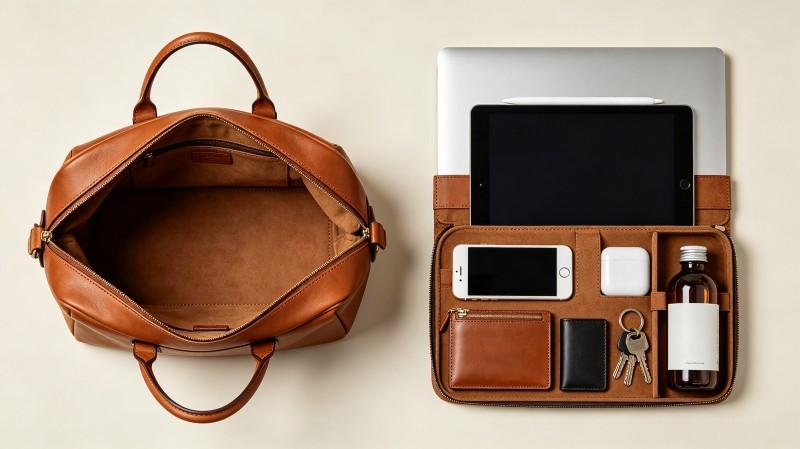
Organization is commercially appealing because it turns a simple tote into a tailored work tool. Yet every insert adds seams, foam, zippers and dividers that reduce usable volume. Build the interior system around physical objects, then measure how much capacity remains after the module is installed.
Cuyana System Tote makes compatibility a key part of the shopping decision. An independent system should clearly identify which insert works with which bag and whether it can be transferred between sizes. Use a visual compatibility matrix and exact product codes. Never expect the customer to infer fit from photographs.
Test the insert as a removable object. It should enter without scraping the lining, remain stable during carry and lift out without spilling contents. Handles or tabs must be reachable. If hook-and-loop, snaps or magnets are used, check their effect on the body material and nearby electronics.
Interior color can help customers see contents, but it needs transfer and abrasion testing. Pocket edges should remain smooth where phones and glasses move repeatedly. Zipper pulls should be easy to find without damaging a laptop or tablet.
Cuyana System Tote also supports a useful merchandising sequence: first explain the hero bag, then show what the module changes. Side-by-side loaded views are more persuasive than a list of pocket counts because they reveal the actual customer benefit.
Color, texture and an anniversary refresh
An anniversary edition should feel timely without making the core product unrecognizable. A new color, texture, trim combination or accessory can provide freshness while the approved body and customer job remain stable. This limits pattern risk and gives existing customers a reason to revisit the family.
Cuyana System Tote sits naturally within a wardrobe-led palette. Core neutrals can support work and repeat orders, while seasonal shades can connect the tote to a fall lookbook or gifting moment. The important B2B decision is the role of each color: permanent, seasonal, limited or test.
Approve body material, edge paint, lining, thread and hardware under several lighting conditions. A quiet neutral can expose small mismatches more clearly than a saturated shade. Record physical standards and acceptable dye-lot variation; digital color values alone are not sufficient for production approval.
Texture changes perceived form. Smooth leather can make a large panel feel formal and precise, but it may show scratches. Pebbled leather can support daily use and soften visual scale. Suede or textile may create seasonal interest while changing reinforcement, cleaning and packaging requirements.
Cuyana System Tote shows how editorial freshness can come from the complete presentation rather than an entirely new silhouette. An original brand can build a launch around a new material story, insert color or styling context while maintaining its own product identity.
Merchandising the system across channels
A collection page should answer the sequence of decisions a customer actually makes. Begin with the intended job, then compare size, organization, color and accessories. Keep the hero product visible as the anchor. Do not present every component as an equal tile, because customers may not understand which item is required.
For Cuyana System Tote, the homepage pathways provide a useful public model: an anniversary destination creates relevance, the work-bag finder supports functional discovery, and the fall lookbook provides styling context. These routes serve different customer questions while returning to the same product family.
In a boutique, use one fully assembled example beside separate components. Show the insert outside the bag and label compatibility. Provide a device template so customers can confirm laptop fit without handling store equipment. Train associates to explain weight and capacity honestly.
On a product page, include front, side, base, open, loaded and carried views. Add dimensions, handle drop, empty weight, target device, closure, lining and care. A short video should show how the insert enters and how the bag behaves when loaded. Cuyana System Tote demonstrates why system comprehension is as important as visual attraction.
For wholesale, prepare a range sheet that separates core replenishment from seasonal storytelling. Identify the base bag, compatible modules, recommended opening order and display requirements. Retailers need to know whether an accessory can sell independently or requires the hero.
Inventory logic for a modular anniversary range
Cuyana System Tote highlights an inventory advantage that must be managed carefully: one hero body can support several customer outcomes, but every additional size, color and insert creates a new forecasting decision. Build the opening order around complete customer combinations rather than buying every possible component in equal quantities. A core tote may need deeper stock than a seasonal organizer or limited color.
Map dependencies before committing inventory. If an insert only fits one size, its demand is bounded by the installed base and the planned tote order. If a pouch can sell independently, give it a separate retail role and packaging plan. State compatibility on the product label, wholesale sheet and online page so a return is not caused by an avoidable fit misunderstanding.
Cuyana System Tote also shows why bundles should be easy to understand. Offer a complete work configuration when it simplifies the decision, but retain separate components for customers who already own the hero. Compare the bundle price, total weight and included functions transparently. Do not hide a necessary component inside product photography while selling it separately without explanation.
Track sell-through at the system level as well as the item level. A strong tote with a slow accessory may indicate weak content, excess complexity or incorrect compatibility rather than a failed hero. Use those signals to revise the range, reduce duplicate modules or improve demonstration. Cuyana System Tote is most valuable as a merchandising reference when every extension earns its inventory space through a distinct customer job.
Longevity, care and circular merchandising
Cuyana’s public “Fewer, better” message gives product longevity a visible place in its brand story. The linked Revive resale destination extends that conversation beyond the first purchase. These signals do not prove a particular lifespan for every item, but they show how care and continued use can become part of merchandising.
Cuyana System Tote can support this logic when the components are understandable and serviceable. Provide storage guidance for handles, inserts and straps. Explain how to remove dust, protect surfaces and prevent heavy objects from deforming the base. Care claims should come from actual material tests.
Design the product record so a future service team can identify material, color, hardware and production revision. Replacement components should match functional specifications even when a cosmetic batch varies slightly. State what can and cannot be repaired before accepting a service request.
For private-label brands, circular storytelling must be supported by operations. Do not promise resale value, indefinite repair or environmental results without evidence. A more credible approach is to publish construction facts, care information and available services, then update them as the program develops.
Cuyana System Tote remains useful here because modularity can separate wear. An organizer may be replaced without discarding the exterior, or a new module may adapt the bag to a changed routine. An original design should make that compatibility explicit and technically reliable.
OEM range planning for an original modular tote
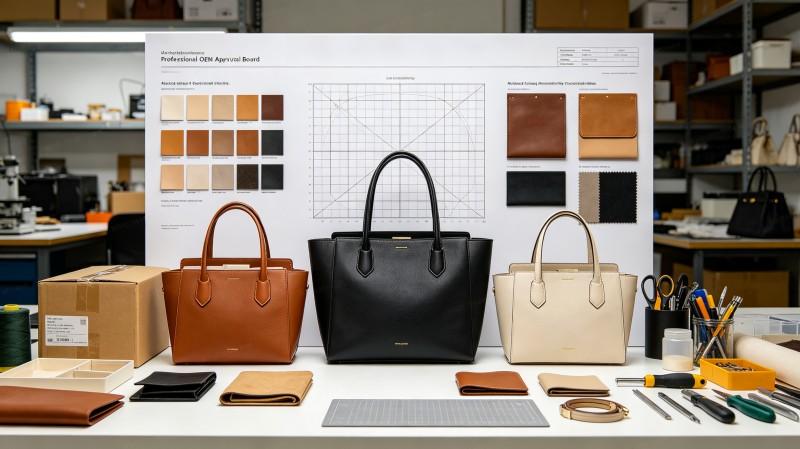
A buyer translating this retail lesson should begin with a range brief, not a reference sample. Define the target user, hero job, size ladder, object list, material role and compatibility rules. Create original proportions, pocket logic, hardware and branding. Do not request protected Cuyana names, marks or recognizable product expression.
Our custom handbag development can support buyer-owned concepts through controlled sampling. A custom handbag sampling process should validate the hero first, then the insert, then every compatible combination. The private-label bag manufacturing service can organize approved components into a range once the buyer confirms rights and specifications.
Use three commercial gates. The hero gate confirms shape, load and comfort. The system gate confirms insert fit, compatibility and total weight. The retail gate confirms photography, naming, packaging, care and range-sheet accuracy. Cuyana System Tote is the public merchandising reference; the resulting product must remain independently designed.
Sampling tolerances matter because a small difference in bag width or insert thickness can cause buckling. Measure multiple points and test combinations from different sample rounds. Package modules so hardware cannot mark the body during transport.
Before production, review the complete bill of materials, approved color standard, capacity result, test record and compatibility matrix. These documents give sourcing teams an actionable basis for inspection without assuming any confidential knowledge about Cuyana.
Range planning notes for buyers
- Hero: What single customer job makes the base tote necessary?
- Sizes: Does each size have a distinct object list and channel role?
- Modules: Which insert or accessory changes a real customer outcome?
- Compatibility: Can shoppers and inspectors verify fit from clear codes?
- Color: Which options are core, seasonal, limited or experimental?
- Content: Do loaded views prove capacity and organization?
- Service: Are care, replacement and repair boundaries documented?
- Originality: Are proportions, details, artwork and naming independently owned?
These questions keep Cuyana System Tote in the role of an educational retail case while moving the buyer toward an original and commercially coherent modular range.
Cuyana System Tote turns one hero into a range
Cuyana System Tote shows that assortment growth does not require constant silhouette creation. A stable hero can gain relevance through sizes, organization, color, styling and service when every extension has a clear customer job. The anniversary collection makes that system visible at a timely retail moment.
Brands planning an original modular work-tote range can send your RFQ with target users, capacity blocks, owned drawings, material preferences, compatibility goals and launch channels. Our luxury handbag OEM manufacturing solutions can review the brief against the intended range architecture.
Cuyana System Tote can guide merchandising research, but the final design, names, components, artwork and customer claims should be independently created and validated.
Independent disclaimer: This article is an independent educational analysis. It is not affiliated with Cuyana. We do not produce counterfeit or replica goods, and we do not reproduce protected logos, trademarks, patterns, proprietary designs, hardware, silhouettes, or brand-identifying elements.