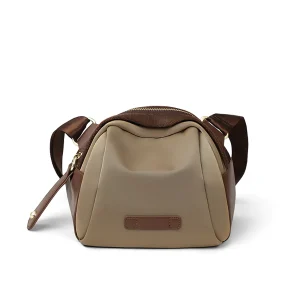
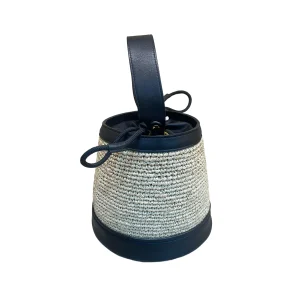
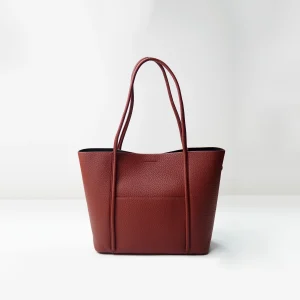
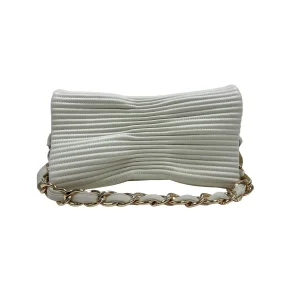
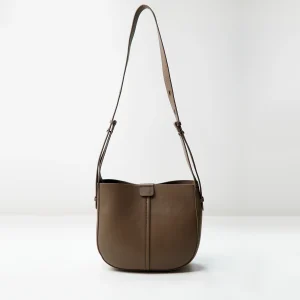
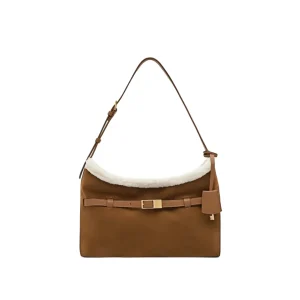
JW Anderson bag shapes provide an innovative 2026 study in turning familiar objects, stretched proportions and soft volume into a coherent accessories range. The official assortment currently places an expanded Loafer family beside Bulb, Twister and Anchor formats, basket collaborations and object-led clutches shaped around birds, animals and shells. For private-label and OEM teams, JW Anderson bag shapes offer a useful framework for developing original silhouettes without reproducing protected products, details or brand identifiers.
Why JW Anderson bag shapes deserve a silhouette study
A silhouette can communicate before a customer sees the logo, material description or interior. JW Anderson bag shapes use this effect across two very different directions. One direction stretches recognizable bag categories through elongated, bulbous or twisted proportions. The other turns an everyday object or creature into a carry product. Both approaches make outline and volume central to the buying decision.
The official JW Anderson bags collection currently shows how a strong shape can become a family rather than a single novelty. The Loafer name appears across small, medium, messenger, cabas and elongated cabas formats, with leather, suede, canvas and woven leather variants. Bulb appears in large, small and beaded versions. Anchor expands through large, stretch and extra-large canvas-leather totes.
JW Anderson bag shapes therefore create a useful B2B question: which part of a silhouette should remain constant as size, material and carry mode change? If everything changes, the family loses recognition. If nothing changes, the product may not work at a new scale. Successful extension depends on a controlled proportion system.
For an original brand, the transferable lesson is not a particular loafer, pigeon or shell form. It is the discipline of defining an owned shape rule, testing its practical limits and deciding where the rule should bend. That process creates a defendable collection language instead of a set of unrelated references.
The Loafer family turns one idea into multiple carrying roles
The current official directory lists Loafer bags in black and tan leather, suede, canvas-leather combinations and woven leather colors. It also lists small, medium, messenger, cabas, elongated cabas and tote variants. Availability changes over time, so this is a current merchandising snapshot, not proof of demand or sales.
JW Anderson bag shapes are instructive here because the family stretches horizontally and vertically. A small shoulder format needs compact access and stable strap attachment. A messenger needs hands-free balance. A cabas needs a larger opening and base support. An elongated cabas makes horizontal proportion the visual feature, but that feature must still allow the customer to reach the contents.
To build an original family, begin with three ratios: width to height, opening to body width and handle drop to body depth. Keep one ratio relatively stable, deliberately change another and test the third for ergonomics. This creates relationship without mechanical scaling.
JW Anderson bag shapes also show why material cannot be separated from proportion. Woven leather adds texture and may change stretch. Suede softens edges and can make a horizontal body appear less rigid. Canvas reduces perceived formality and may need a different support map. The same pattern should not automatically be applied to every material stack.
Build full-scale paper or textile mock-ups before cutting expensive material. Load them with a phone, wallet, glasses, keys and the largest intended item. Check whether the opening remains usable at the chosen width. An elongated silhouette can look dramatic while hiding inefficient capacity at the corners.
Bulb volume shows how softness can remain recognizable
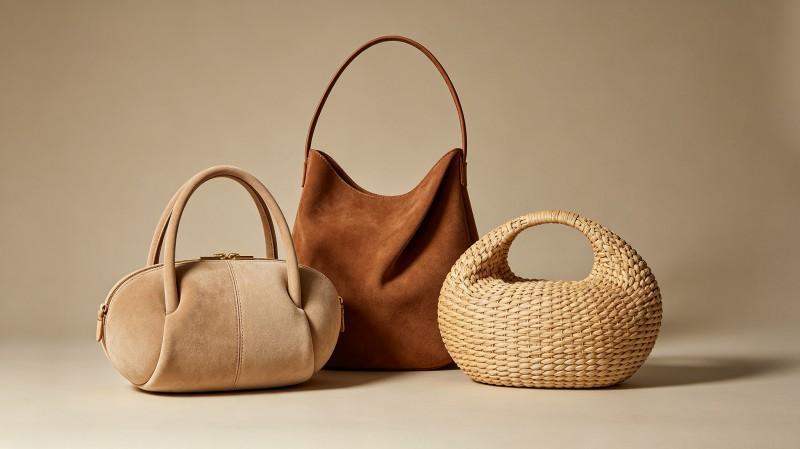
The official assortment includes large and small Bulb bags in a natural brown direction, plus small beaded Bulb versions in bright colors. JW Anderson bag shapes use rounded volume here as the family signal. That gives the product a distinct profile even when surface treatment changes.
A bulbous body needs more than extra fullness. Pattern panels must distribute volume deliberately, seams must land where they support the intended curve, and the base must recover after loading. If the body collapses randomly, the shape reads as under-structured rather than expressive.
JW Anderson bag shapes suggest a useful test for soft volume: compare the bag empty, lightly filled and fully loaded from the same camera angle. Mark the widest point, base line and opening angle. The profile should change naturally without losing the family’s visual center.
Beading changes the same volume. A beaded surface adds weight and limits how freely panels can compress. It also changes seam allowances and can create uncomfortable contact points. An original soft bag may use beadwork, embroidery, knit or smooth leather, but each version needs its own pattern and reinforcement review.
For a large rounded bag, add a usable-capacity test. Soft volume can appear generous while the closure or lining reduces access. Insert standardized blocks, then test carrying and placement on a flat surface. Decide whether the bag should stand, lean or deliberately settle, and communicate that behavior honestly.
Twister and asymmetric volume create movement without graphics
Current product handles include medium and small Twister bags in leather finishes. JW Anderson bag shapes use the name and visible construction to signal rotation or directional movement. This is an important alternative to printed graphics: seam direction and body twist can create energy through structure alone.
An asymmetric bag needs reference points. Define the center of gravity, opening direction, strap anchor relationship and the position where the bag should rest against the body. A twist that looks balanced on a table may rotate awkwardly when suspended.
JW Anderson bag shapes can inspire an original asymmetric brief by starting from a customer action. Perhaps the bag should tuck under the arm, open toward the wearer or lean forward for easier access. The final seam path should solve that action rather than imitate an existing outline.
Prototype the body in a material with similar stretch to the final choice. Paper cannot show how leather or textile will torque. Add temporary reinforcement at the opening and handle roots, then remove or reduce it in later samples. This reveals which zones genuinely need control.
Asymmetry also affects photography and merchandising. Show the front, back, both sides, top and carried view. One hero angle may hide the actual capacity or make the closure unclear. Accurate imagery helps customers understand that the shape is intentional.
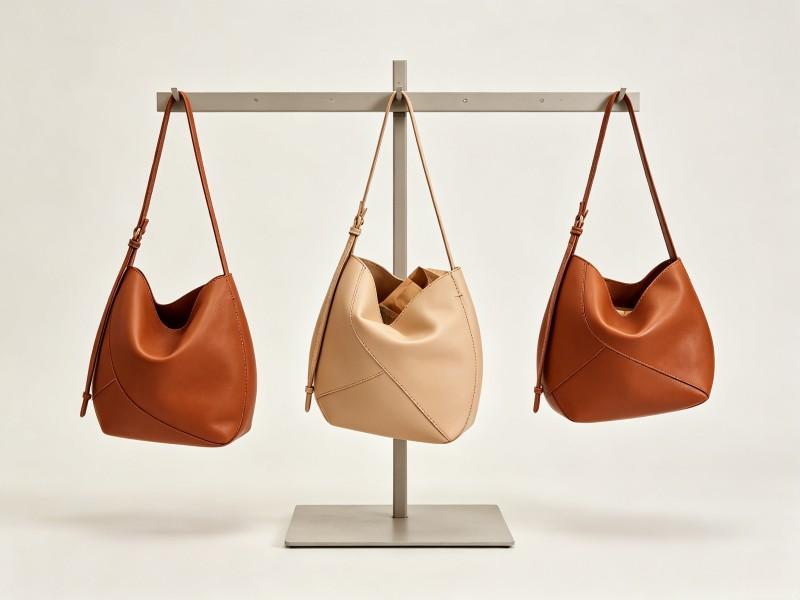
Anchor totes show scale as a merchandising tool
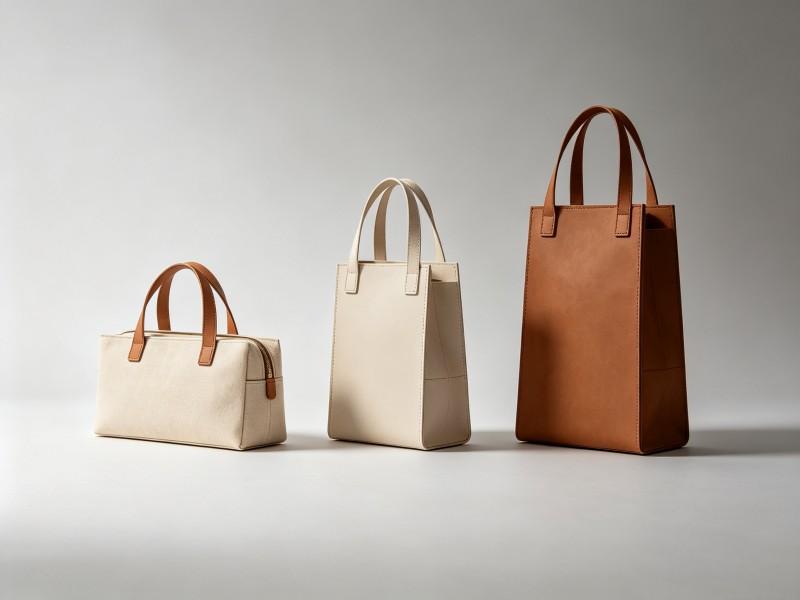
The official directory currently lists large, stretch and extra-large Anchor canvas-leather totes in navy and multicolor combinations. JW Anderson bag shapes use size and horizontal stretch to turn a functional tote into a more expressive proposition.
Scaling a tote is not simply multiplying dimensions. Handle clearance, empty weight, base sag, opening control and body contact all change. An extra-large bag may photograph dramatically but become uncomfortable if the handle is narrow or the base places contents far from the wearer.
For original development, use a load ladder: daily essentials, work load, short-trip load and maximum advertised load. Measure deformation and handle pressure at each level. A stretch tote should keep its deliberate horizontal character without becoming a long unsupported pouch.
JW Anderson bag shapes also highlight the relationship between canvas and leather. Leather can define the opening, handles and high-stress zones, while canvas creates lighter visual volume. Test seam slippage, color transfer, shrinkage and differential movement where the materials meet.
Large bags need precise product information. Publish dimensions, empty weight, handle drop, closure and a realistic packing example. If a bag is oversized for visual impact rather than heavy loads, state the intended use. This protects customer expectations and makes the silhouette more credible.
Basket collaboration converts craft into controlled geometry
The current official product directory includes a JW Anderson x Eddie Glew basket bag. This public collaboration signal places hand-built basket structure inside the wider accessories conversation. JW Anderson bag shapes demonstrate that craft can be read through outline, spacing and rhythm rather than surface print.
Basket construction introduces natural variation in fiber thickness, color, spacing and curve. A buyer needs an approved range rather than one perfect sample. Photograph acceptable examples, define maximum gaps, inspect edges and make sure the handle attachment does not split the structure.
JW Anderson bag shapes suggest a hybrid opportunity: a rigid basket body can be paired with a softer pouch, lining or leather component. The junction must be tested for abrasion and movement. A removable interior may improve cleaning, but it also needs a secure and intuitive attachment.
For original craft-led products, document the source and composition of natural materials and verify any sustainability claim. Do not assume that handmade automatically means low impact or durable. Care instructions should address humidity, crushing, sharp objects and storage.
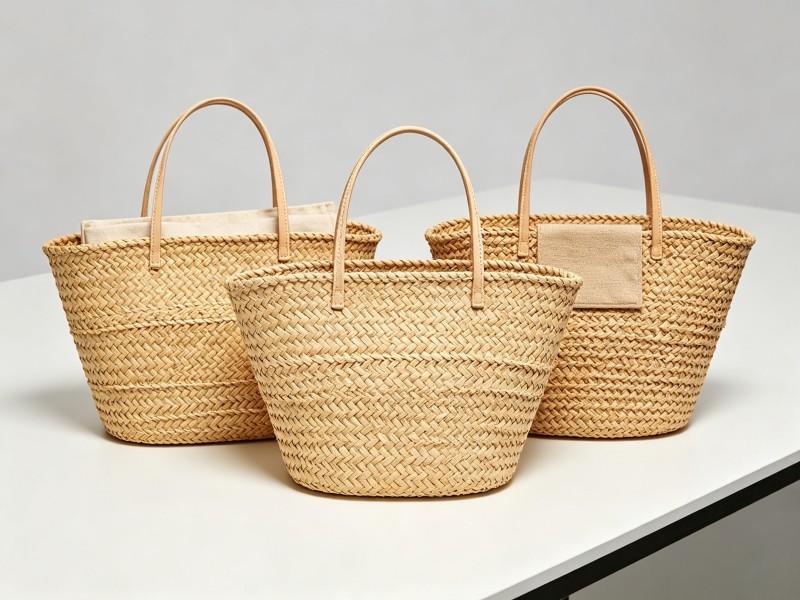
Object clutches separate conversation pieces from daily bags
The current directory includes Pigeon, Hedgehog, Canary and Shell clutches. JW Anderson bag shapes become literal objects in this part of the range. These products generate a strong editorial signal, but their practical criteria differ from a shoulder bag or tote.
An object clutch begins with recognition, then must solve access, grip, capacity and stability. The opening should not destroy the intended form. The customer needs a clear place to hold the product without pressing a fragile projection. The base should rest safely when the clutch is set down.
JW Anderson bag shapes show why novelty needs a capacity statement. A sculptural clutch may fit only cards, keys and a small personal item. Accurate internal dimensions and an object list are more useful than vague wording such as “fits essentials.” Build a capacity block before the outer sculpture is finalized.
Material selection changes the risk profile. A hard shell can preserve detail but scratch or crack. Leather can soften the form but require complex molding and seams. Textile or crochet can create charm but may not support a precise opening. Choose the material that serves the owned concept rather than the closest visual reference.
Object shapes also require stronger originality review. A recognizable creature or common object may be broadly available as a concept, but a specific pose, proportion, surface treatment and opening can create distinctive expression. Develop independent sketches and avoid reproducing another brand’s exact interpretation.
Charms create a lower-commitment shape layer
The directory currently includes hand-crocheted chameleon, lemon and pigeon charms, plus a leather beetle, leather snowdrop and a multicolor beaded charm. These small objects extend JW Anderson bag shapes beyond the body of the bag.
A charm can test a motif at lower material volume, support gifting and let customers personalize a core product. It can also create snagging, weight and attachment issues. Specify the connector, maximum pull load, projection, surface contact and whether the charm should be removable.
JW Anderson bag shapes use charms as an assortment bridge between accessory and bag. An original brand can develop its own motif library derived from its story, location or customer community. Keep artwork ownership documented and avoid another brand’s recognizable object treatment.
Test small parts for the intended market and consider age-related safety requirements where relevant. Inspect beads, knots, stuffing, sharp edges and connector gaps. Packaging should prevent the charm from pressing into delicate leather or becoming tangled with a chain.
Translating JW Anderson bag shapes into original OEM briefs
The useful translation is a silhouette matrix, not a reference image. List the intended role, width-to-height ratio, depth, opening, base behavior, carry mode, empty weight and target objects. Then identify the one owned shape rule that connects the range.
Buyers using our custom handbag development service can bring an original shape brief, sketches and capacity goals. Our custom handbag sampling process can support mock-ups, structure maps and loaded carry trials. These services are independent of JW Anderson and do not imply a relationship with the brand.
JW Anderson bag shapes should prompt three approval gates. The first is outline: verify front, side, top and carried profiles. The second is volume: verify actual usable capacity and recovery. The third is interaction: verify opening, grip, strap position, placement and packing.
Material variants must repeat the gates. Woven leather, suede, canvas, beading, basket fiber and hard shells do not behave alike. If the material changes the outline substantially, approve a new pattern rather than forcing the original sample into a different stack.
Teams can review our luxury handbag OEM manufacturing solutions when planning a multi-format range, and use the handbag factory capabilities page as an initial capability reference. Final requirements should be confirmed for the specific project.
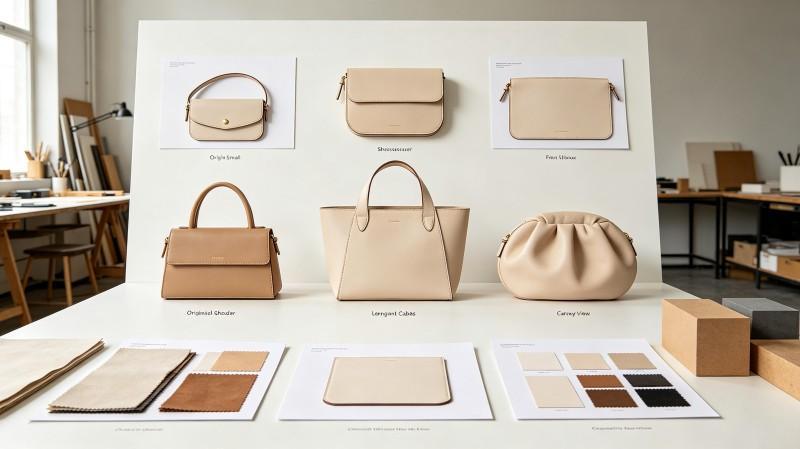
Merchandising shape with proof
JW Anderson bag shapes are visually strong, but product content must explain how they work. Show every bag empty, loaded, open, closed, standing and carried. Include a side view because depth often determines practical capacity more than the front outline suggests.
Use filters for carry mode, size, structure, material and occasion. A customer comparing an elongated cabas with an object clutch should see that they solve different needs. A clear role prevents editorial novelty from being mistaken for universal utility.
Publish external and usable internal dimensions when the shape is complex. State the opening width, handle drop, strap range and empty weight. For natural basket or hand-worked surfaces, explain expected variation. For hard shells, provide care and impact guidance based on actual tests.
JW Anderson bag shapes also show that one recognizable outline can support multiple materials, but the product page should explain the difference. Suede, woven leather, smooth leather and canvas create different care, structure and seasonal use. Customers need more than color names.
Original-design compliance for silhouette-led collections
A general category such as tote, clutch, messenger or basket is not owned by one brand. However, confusing similarity can arise from the combined outline, proportions, opening, hardware, surface and branding. Review the complete product before approval.
Do not request an identical Loafer, Bulb, Twister, Pigeon, Hedgehog, Canary, Shell or Anchor product. Do not reproduce signature hardware, logo placement, distinctive craft treatment or a protected object interpretation. Build from original customer research and owned sketches.
Our private-label bag manufacturing service can work from buyer-owned concepts and specifications. Buyers remain responsible for rights to supplied artwork, trademarks and designs. Keep dated sketches, capacity studies, pattern revisions and similarity reviews as evidence of an independent development path.
Practical buyer checklist for JW Anderson bag shapes
- Role: What customer occasion and object list justify the silhouette?
- Ratio: Which width, height, depth and opening ratios define the family?
- Volume: Does the bag keep its intended profile when empty and loaded?
- Access: Can a first-time user find and operate the opening?
- Carry: Is the center of gravity comfortable across intended users?
- Material: Does each surface require a new pattern, support or care plan?
- Content: Are all views, dimensions, weight and capacity shown accurately?
- Compliance: Is the complete product original in shape, details and branding?
These checkpoints keep JW Anderson bag shapes in the research stage while the final range develops its own identity. They also give design, sourcing, quality and merchandising teams a shared approval language.
Shape becomes valuable when it survives use
JW Anderson bag shapes demonstrate several ways to build recognition: stretch a familiar category, organize soft volume, introduce asymmetry, scale a tote, translate craft into geometry or turn an object into a clutch. Each route requires different capacity, structure and interaction tests.
An original brand should begin with the customer role, then define an owned shape rule and prove that it works across material, load and carry. Buyers ready to develop a silhouette-led assortment can send your RFQ with original sketches, target dimensions, capacity objects, preferred materials and launch requirements.
Independent disclaimer: This article is an independent educational analysis. It is not affiliated with JW Anderson. We do not produce counterfeit or replica goods, and we do not reproduce protected logos, trademarks, patterns, proprietary designs, hardware, silhouettes, or brand-identifying elements.